Search 2.0

Showing posts with label Film Review. Show all posts

Monday, November 29, 2010

Now available on DVD: "Babies"

The French globe-trotting documentarian Thomas Balmès has taken up a delicate and treacherous assignment in this film. Fanning out around the world — to the plains of Mongolia, the dusty grasslands of Namibia, the high rises of Tokyo and the streets of San Francisco — Balmès and his crew set out, about three years ago, to probe a network of mysterious creatures who speak a common idiom barely comprehensible to the rest of us. The film’s subjects are hard to understand and nearly impossible to resist. They project weakness and innocence, yet they also possess almost terrifying powers. And they are just so gosh-darn cute!

Frankly, it’s hard to know just what to say about Babies, which episodically chronicles the first year in the lives of four far-flung infants. “Awwwwww” would be a start and will no doubt be the sound you hear most frequently from those (especially if they ae parents) watching this DVD with you, along with an occasional “ewwww,” a stray gasp of concern or disapproval — you know how anxious and judgmental parents can be — and intermittent laughter. If you have read any child-rearing manuals (or just stared guiltily at a bedside stack of them while dragging yourself toward the squalling bundle of wee-hours need in the next room), Babies may be both a puzzle and a relief.

It offers no advice or analysis, no talking-head rumination or voice-over explanation. The occasional snippets of grown-up dialogue are not accompanied by subtitles, which would be superfluous in any case. Babies is exactly what its title promises. It’s babies. And if you love babies you will find it very hard not to love Babies.

Is it that simple? I mean, who doesn’t love babies? Why isn’t this just a smattering of YouTube videos (“Baby Pulls Cat’s Tail,” “Baby Eats Banana,” etc.) stitched together into a feature film and accompanied by a peppy musical score? That’s kind of what it is, but the utter accessibility of the movie — even babies will enjoy watching Babies! — results as much from Balmès’s canny formal intelligence as from the intrinsic adorability of his subjects.

Which is not to be denied. Their names are Hattie, Mari, Bayarjargal and Ponijao, and they show themselves to be natural-born comedians, single-minded researchers, action heroes and disciplined workers, each in his or her own special way. They seem to possess distinctive personalities from the very beginning, and as they make their way through infancy, you watch their temperaments grow from bud to blossom.

You also note that while parental love transcends differences of geography and tradition, various cultures cultivate their fledgling members in different ways. Bayarjargal, in Mongolia, is first tightly swaddled and then, as his mobility increases, tethered to his yurt by a long cloth cord. Ponijao, in Africa, crawls about surrounded by a group of women, and her play mimics their daily tasks of grinding meal and preparing food.

In the metropolises of the developed world, Mari (in Japan) and Hattie (in California) are part of a structured world of work and leisure, surrounded by cellphones and computers and exposed to organized group activities that in some cases self-consciously try to mimic the rituals of agrarian and tribal societies.

In the one scene that can be taken as infantile satire, Hattie, at a music class featuring songs of praise to “the earth, our mother,” stands up and makes for the exit, as if fed up with the New Age mumbo-jumbo to which she has been subjected. Another brilliantly funny sequence cuts between Mari’s frustration as she tries to thread a wooden spindle onto a disc with a hole in it and Bayarjargal’s patient wrangling of a roll of toilet paper, which he bites into once it has arrived in his grasp. There is something profound and poignant in these struggles, which illustrate one of the fundamental tasks of babyhood: the mastery of the physical environment.

Other challenges confront these intrepid young travelers on what a philosopher once called the long forced march toward humanity: the aggression (and affection) of siblings and peers; the ways of other animals (cats in particular); the recognition and communication of basic emotions. And though they do their share of crying — they are babies, after all — Hattie, Ponijao, Bayarjargal and Mari all demonstrate remarkable stoicism in the face of a complicated universe. And the ultimate lesson of Babies, at least for non- (which is of course to say ex-) babies, is that being small, helpless and brand new is hard.

But hardly impossible. They grow, they learn, and they remind the rest of us of the astonishing power that is our common birthright. We are cast into the world as a bundle of reflexes, unable to focus our eyes, control our limbs or influence our environment in any way. Twelve months later we can walk, kiss, utter basic words and comprehend complicated utterances. It may be downhill from there: a movie called Adolescents or, heaven knows, Grownups, would hardly be as charming as Babies. But Babies just might restore your faith in our perplexing, peculiar and stubbornly lovable species.

Tuesday, November 23, 2010

Currently available on DVD: "Ondine"

You know it's an Irish fairytale when the mists swirl and the sea churns around the harsh beauty of the Emerald Isle. You know it's a Neil Jordan Irish fairytale when at the center of all that harsh beauty is a working-class family broken apart by alcoholism.

That is Ondine, starring Colin Farrell as Syracuse, a local fisherman with a grudge-holding, heavy-drinking ex-wife and a spirited daughter on dialysis. Syracuse is long past having dreams when he snares a beautiful woman in his nets and reality and Irish mythology soon tangle in ways both magical and frustrating. It can sometimes feel as if the director is the one lost at sea.

Nevertheless, there is much to recommend Ondine, Jordan's love letter to Castletownbere, the fishing village on Ireland's southern coast where he lives and where the film was shot; and the notion that no matter how bruised and battered by life, love is still possible, still the answer.

It's a small film, and there's a spare, dreamlike quality that's a departure for a writer-director who tends toward densely detailed stories stuffed with moral complications, The Crying Game, Mona Lisa and Michael Collins among them. Sometimes, the simplicity of the story confounds him, with young Annie (Alison Barry) saddled with a wheelchair, a failing kidney and most of the exposition of the story — too much to ask of a child.

The mysterious woman at the heart of this tale is Ondine, Alicja Bachleda of Trade, who's perfectly cast as an ethereal creature that may be a selkie — in the way of mermaids, they are seals able to transform into seductively gorgeous humans when the circumstances are right. There are, as might be expected, all sorts of strings attached involving seven tears, sealskins and long-term commitments.

All Syracuse knows is that Ondine is running from something, that her haunting songs increase his daily catch and that she seems to be falling in love with him. Annie is more interested in a selkie's wish-granting powers, while Syracuse's ex, Maura (Dervla Kirwan), is more concerned with where she's sleeping.

Jordan uses the push and pull between real life and legend to explore ideas of social ills, retribution, justice, family bonds and miracles in an age in which it seems there are none. For the filmmaker, optimism and a happy ending are not things he gives away easily, if ever, and there are any number of difficulties he's thrown in along the way, with Ondine's shadowy past rising up right alongside Syracuse's to rough things up.

The filmmaker creates a world so real that you can feel the chill of the water, smell the sweat in the bar. There is so much beauty too, with Jordan clearly ecstatic to be kicking around his hometown, where he uses its weathered nooks and crannies as a gritty contrast to the wild coast and bucolic fields of wildflowers and green as he moves between reality and myth. Director of photography Christopher Doyle follows closely along, capturing both in ways that keep the film's heart beating and that will no doubt boost the region's tourism as well.

At times, the narrative flows beautifully, particularly in the growing connection between Syracuse and Ondine, the slow reveal of who they really are, the delicious tension in their tentativeness. Farrell exposes much with those dark eyes and wary hesitations. It's hard not to wish more filmmakers would tap into that quieter, more vulnerable side.

At other times, the road is rocky when the story speeds up to take care of business, with the end a mad dash to tie up loose ends. Still, there is enough saving grace on these craggy shores to let the mists and the legends roll in and envelop you for a while.

Thursday, November 18, 2010

Currently available on DVD: "The Secret in Their Eyes"

What are the odds that the year's most compelling mystery would end up hanging its hat on the year's richest love story?

From Argentina, The Secret in Their Eyes won this year's Academy Award for best foreign language film, besting such formidable titles as The White Ribbon and A Prophet. All three offer lessons in combining pulp and sociology, bringing to life geographically specific and richly detailed worlds on screen. Of the three, though, it's this one — co-written, co-produced, edited and directed by Juan Jose Campanella — that, if not the best fiilm, really delivers as entertainment.

Campanella's resume is fascinating: He was born in Buenos Aires, where most of this legal drama takes place, but he has done a lot of American television in what could broadly be defined as workplace procedurals, ranging from Law & Order and House to 30 Rock. The Secret in Their Eyes ranges nearly as widely within its own 129 minutes.

You never quite know where it's going, yet its mixture of tones and colors and melodrama and mature, mellow romance is irresistible.

It takes a while to get the hang of its two-track narrative structure, adapted by Campanella and Eduardo Sacheri from Sacheri's novel. A divorced, 60-ish and recently retired criminal court investigator has undertaken a writing project, a fictionalized version of a 25-year-old rape and murder case never solved. Benjamin Esposito — played by Ricardo Darin — revisits his old haunts to bring the past into some kind of focus. His former colleague (Soledad Villamil), now a judge, has tantalized Esposito since they first met. He remains haunted by this woman, no less than the murder victim's grieving husband (Pablo Rago) is haunted by his own loss.

The movie works for many reasons. Each major character registers, both as written and as acted by this superb cast, and is vivid enough to deserve a film of his or her own. The wry, funny interaction of these midlevel bureaucrats, including Esposito's alcoholic but wily colleague (Guillermo Francella), moves and sounds and feels like life. (At times you might think you're watching two terrific episodes of Law & Order back to back, if Law & Order were set in Buenos Aires.)

Half the film unfolds in flashback in 1970s Argentina, as Esposito and his intrepid colleagues buck the system and try to solve a murder case rapidly growing cold. When they do catch up with their prime suspect, the scene's a fantastic showpiece: a chase all over a packed soccer stadium, seamlessly connecting several long takes, the most memorable of which follows the suspect onto the field during the match. (A key scene preceding this, one of ugly sexual goading behind closed office doors, is in its explicit way no less arresting.)

The mystery's resolution may remind you of Dennis Lehane's crime and morality tales. The script's exploration of a corrupt judicial system recalls the best of Sidney Lumet's ensemble works. But the love story is what sets The Secret in Their Eyes apart. Make no mistake, the film's a bit shameless: The poetic, running-to-say-goodbye-at-the-train-station prologue and its bookend sequence carry a whiff of the romance novel ethos. Yet Darin and Villamil are wonderful together, playing actual, three-dimensional grown-ups. It's a shock to the system, let me tell you.

There's nothing high-minded or consciously elevating about this picture. It's simply the best kind of pulp, done with feeling and smarts and behavioral details usually left out of both crime films and love stories.

Wednesday, November 17, 2010

Currently available on DVD: "Afterschool"

You have a choice when sitting down to watch Afterschool, an arresting feature by Antonio Campos about death at a snooty prep school. You can put a figurative lens in front of your eyes with the words “The guy was only 24 when he made this” stenciled on it and have everything you see colored by that. Or you can just absorb the movie as you would any other, giving it a chance to catch your interest and creep you out.

The film first attracted attention at festivals, some of it from people who apparently had that lens in place. They have written at length about the stylistic quirks Campos loads into the movie, detailing who used them before and better (like Gus Van Sant, Michael Haneke and the documentarian Frederick Wiseman). The subtext is, “See, the kid’s not really that talented.”


But such dissecting of influences (all of which Campos has acknowledged anyway) doesn’t shed much light in this age of cultural overproduction, when almost nothing is truly original and everybody is imitating or sampling or homaging or ripping off someone else. So let’s instead consider the real question: Is Afterschool any good?

The film focuses on Robert (Ezra Miller), a withdrawn underclassman who consumes Web videos, though “focuses on” isn’t perhaps the best choice of words. Campos goes in heavily for unconventional shots, the characters being barely in the frame, the camera lingering on legs or empty hallways. He also likes the stationary long shot, like something a security camera might take. It all makes for a slow-evolving tale, especially since Campos has yet to learn when such gimmicks wear out their welcome and plain-old storytelling is required. But it sure does build ominousness.

Robert joins an after-school video-production club, and while shooting footage in a stairwell he accidentally captures the deaths of two fellow students, popular twin girls who have taken bad drugs. Paranoia settles over the institution, even as Robert is asked to make what his adviser assumes will be a celebratory video tribute to the dead students. Campos plays with viewpoint, time and everything else as he chronicles Robert’s increasing instability.

In truth there isn’t much story here, or much insight either; the kind of alienated teenagers wandering through this film exist in movies far out of proportion to their number in real life. But those with the patience to wait out Campos’s overindulgences will definitely finish watching Afterschool unnerved, which is probably exactly what he had in mind.

Currently available on DVD: "Looking for Eric"

There are two Erics in Looking for Eric. One is Eric Bishop (Steve Evets), a middle-aged Manchester, England, postal worker whose existence has been a chronicle of hardship and disappointment, much of it self-inflicted. We first see him driving the wrong way around a traffic circle, as if trying to outrun decades of accumulated anxiety. The inevitable accident is almost redundant, since he was already pretty much a wreck.

Eric lives in a messy house with two teenage stepsons (Gerard Kearns and Stefan Gumbs) who seem to be en route from ordinary adolescent sullenness to outright criminality. He also has an infant granddaughter and a grown-up daughter (Lucy-Jo Hudson), whose mother, Lily (Stephanie Bishop), he abandoned many years before, but who is enough of a presence in Eric’s life to keep him in a perpetual state of guilt.

Once upon a time, he was young and handsome, a gifted dancer full of potential. (He met Lily at a dance contest glimpsed in lyrical flashbacks.) Now he is angry, stressed out and miserable, in spite of his friends’ efforts to cheer him up with jokes and self-help exercises.

The other Eric, who becomes this Eric’s confidant and guru (though he is also a hallucination), is Eric Cantona, the real-life former star of the Manchester United soccer team. Cantona, an executive producer of this film (directed by Ken Loach from a script by Paul Laverty), was, at least on the strength of the movie’s own testimony, the greatest center forward ever. Evidence for this is provided by clips showing some of his memorable goals, and also by the adulation expressed by Eric and his pals at the post office, for whom football is both a great cause and a steady source of consolation.

Cantona shows up from time to time in Eric’s bedroom, where the two men drink wine, smoke a little grass and exchange philosophical insights.

“We always have more choices than we think,” the footballer observes. “You must always trust your teammates.”

The sentimentality of these scenes is undercut by their frank, understated absurdity, and by the way Evets, a nimble and instinctive actor, slides back and forth between incredulity and shrugging acceptance of his famous, imaginary friend’s presence.

And since this is a Ken Loach film, there is plenty of grit and working-class stoicism, and also the hovering threat of violence and repressive state power. Loach is a proud and passionate old-school British leftist, but the recent films he has done with Laverty display a gratifyingly flinty conservatism, both aesthetic and cultural.

He is grumpy about much of the modern world — the nihilism of youth culture in particular — and also committed to formal and visual traditionalism. But the clarity of his view of the world, and his absolute mastery of cinematic storytelling, endows films like Sweet Sixteen and The Wind That Shakes the Barley with an authoritative feeling of solidity and coherence.

Loach’s touch is a bit lighter here. Sweet Sixteen is a coming-of-age story shot through the lens of social tragedy, while The Wind That Shakes the Barley is an epic of historical disaster. Looking for Eric is, by comparison, gentle and sweet and often very funny. The filmmakers recruited a squad of fleshy, foul-mouthed Manchester comedians to play Eric’s mates, whose easy camaraderie and shared passion for the United team make them embodiments of the class solidarity that is Loach’s main (or possibly only) source of hope. They are also genuinely hilarious, especially Meatballs (John Henshaw), whose down-to-earth good sense backs up Cantona’s loftier wisdom.

And the film’s riotous climax deftly turns grim social realism into action-slapstick revenge farce. Not something Loach has tried before, and something he turns out to do rather well.

Sunday, November 14, 2010

Currently available on DVD: "Casino Jack and the United States of Money"

Convicted super lobbyist Jack Abramoff was so corrupt, there's no easy summary of his crimes. He and his cronies were masters of "astroturfing" - creating phony grass-roots campaigns to hide big corporate money - and the old-fashioned flimflam, playing one client against another. They persuaded Christian activists to fund anti-gambling campaigns against Indian tribes, who then paid Abramoff to muster congressional support in defense of their casinos. His crimes were ideally adapted to the age of complex derivatives: The web was so complicated and opaque that only when it began to collapse did its true extent become apparent.

Alex Gibney, who took home an Oscar for the 2007 documentary Taxi to the Dark Side, struggles to get his arms around the amorphous, appalling and yet shockingly banal schemes of Abramoff in Casino Jack and the United States of Money. Not to be confused with George Hickenlooper's fictional treatment of the same scandals (starring Kevin Spacey) scheduled for release Dec. 17, Gibney's documentary strains to make sense of the minutiae without losing the audience's attention over its formidable, two-hour length.

Fact may be stranger than fiction, but Gibney's account comes to life only when Abramoff's bankrupt soul is revealed in strokes bold enough for satire. His e-mails, bursting with contempt for his own clients, are some of the best material in the film. And there are other golden moments, though many of them are already familiar: When we learn he committed to Orthodox Judaism after seeing Fiddler on the Roof, that his Pennsylvania Avenue restaurant Signatures offered "liberal portions in a conservative setting," that one of his large and important-sounding front organizations was headed by a Rehoboth Beach lifeguard who charmingly confesses, "I'm not qualified to run a Baskin-Robbins."

But Gibney's efforts at a larger narrative are problematic, in part because it seems that Abramoff, who is scheduled to be released from federal prison next month, was a nasty, cynical, devious lowlife right from the start. There was no Lady Macbeth whispering in impressionable Jack's ear, no road paved with good intentions, no Rake's Progress. He rose quickly in college Republican circles, forged a powerful nexus with Christian conservative Ralph Reed and anti-tax campaigner Grover Norquist, and then started cashing in once Republicans came into congressional power with the 1994 elections. Close ties to former House majority leader Tom DeLay, other top Republicans (and a handful of Democrats) in Congress, plus Bush administration officials helped Abramoff form one of the most powerful networks ever to warp the ways of democracy.

Gibney's larger thesis - that Abramoff wasn't exceptional, but rather a manifestation of an openly acknowledged alliance between moneyed interests and elected officials - undermines his efforts to build outrage. This is the new normal, and there's DeLay all but saying (without a hint of shame) what should sound outrageous: that if public officials are bought openly and transparently, well, what's wrong with that? Isn't that capitalism?

Gibney reaches into the usual bag of tricks to keep things light and snappy as he tries to connect the many dots. He throws in clips from old films (please, no more using Jimmy Stewart's Mr. Smith Goes to Washington), and he uses wry chapter headings such as "Treasure Island" for a section of the film detailing Abramoff's lobbying efforts on behalf of sweatshop owners in the Northern Mariana Islands (something I became intimately familiar with), and lots of retro music with funny lyrics. The tone of much of the film has that knowing, cynical, can't-shock-me-anymore flavor of liberal political satire on cable television.

The presence of several of the major players in the scandal helps keep the film from becoming a screed. Former Rep. Bob Ney, an Ohio Republican who went to jail in 2007 for his involvement with Abramoff, talks openly about his participation, as does Ney's former chief of staff, Neil Volz, who is the only person in the film who sounds convincingly chastened. DeLay also sits for an interview, nervously rubbing his hands but standing his ground.

But it's hard to assume Gibney's ironic tone and still expect to scandalize your audience into outrage. It's hard to make these dull, hollow, scheming men, who live in the perpetual testosterone-soaked locker room of adolescence, who seem to have no intellectual or spiritual depth, who take sophomoric pleasure in golf trips, sky boxes and private planes, into cinematic villains. They are pond scum - they are Washington - yet not quite interesting enough to be characters in a film.

So Gibney expands his focus, going for breadth when depth, at least in terms of character, is elusive. The film swells with Russian oil execs, Chinese sweatshop owners and Miami hit men. It swells in length, too, taxing the patience of even the most committed student of corruption. Ultimately, it becomes a Rorschach test of the viewer's cynicism: Does it shock you? You must not live in Washington, read the newspaper or follow politics. Are you horrified? Congratulations, and now wise up.

Saturday, November 13, 2010

Currently available in theaters: "Unstoppable"

The thrill of Tony Scott’s Unstoppable, in which a runaway freight train hurtles through rural — and toward not-so-rural — Pennsylvania, is that its setup asks us to believe only in human ineptitude. There are no scheming terrorists, no lone crazies: Just one numbnuts who decides to jump from the engine he’s driving, fully intending to jump back in before the thing really gets going. No one in Unstoppable actually wants this train — which happens, by the way, to be loaded with hazardous substances — to wreak havoc on the countryside and its attendant population. But everyone, including the moron who set the thing on autopilot in the first place, wants to stop it.

No one wants to stop it more than Frank Barnes (Denzel Washington), a longtime engineer who on this particular day finds himself stuck baby-sitting a rookie conductor, Will Colson (Chris Pine). These two aren’t, at first, anywhere near the runaway train — they’re driving another one that’s headed straight for it, on the same track — which gives them some time to work through the inevitable getting-to-know-you portion of Unstoppable. Frank has two almost-20 daughters whom he clearly loves very much — at the beginning of his shift, he hangs a photo strip of the two of them in his cab. (A moment of minor hilarity ensues when it’s revealed that both girls are waitressing their way through college — at Hooters.) Will is estranged from his wife and child as the result, we learn, of a misunderstanding; he spends much of his workday morning (too much, Frank seems to think) on his cell phone, trying to work out his myriad personal problems.

Washington and Pine are predictably likable, together and separately: Washington is wonderful at playing a great tease, and Pine’s grouchy, troubled character is eminently teasable. But what about that out-of-control train? Eventually, Will and Frank learn it’s headed their way, and Frank — working via radio with a no-nonsense yardmaster, played by the as-always marvelously expressive Rosario Dawson — hatches a plan that just might slow down the speeding behemoth. Or it might just kill him and his colleague. But in true Denzel Washington fashion, he’s just got to try it.

Unstoppable was inspired by true events — the script is by Mark Bomback, the writer behind Race to Witch Mountain and Live Free or Die Hard — and although many of the plot details seem plenty jacked up, it’s easy enough to believe that something like this could possibly happen. Of course, we’re in Tony Scott territory, so the runaway train just has to be carrying highly toxic gluemaking supplies. There’s also some folderol with a trainful of boisterous schoolchildren who, of course, do not get creamed by the oncoming loco-locomotive.

But Scott doesn’t get hung up on those specific clichéd details — he and cinematographer Ben Seresin treat them with a wink and move on, devoting most of their energy to building not-so-subtle layers of tension and suspense. The movie’s last half is beautifully sustained — the action isn’t so much fast-paced as it is discreetly, marvelously taut. And while the camerawork and the cutting are, in some ways, action-movie typical — there’s lots of zig-zaggy editing and clever, oblique camera angles — Seresin doesn’t just go for the obvious. As Frank and Will begin their workday, the engine they’re driving makes its way around an elevated curve of track in Stanton, Pa., and Seresin makes the landscape look dewy and gleaming in the morning light. He sees beauty in the surrounding working-class clapboard houses and old brick industrial buildings. This isn’t one of those “Why would you wanna live in this crap town?” visual essays; it’s more of a casual postcard with some real affection for the American landscape.

Even the unmanned train itself — it goes by the jazzy number 777 — has a personality of its own. Seresin and Scott are fond of showing it head-on, a red-faced beast with slanted windows staring us down like a pair of menacing eyes. If this were a Stephen King story, the 777 would have an evil heart and an even more evil mission. As it is, though, it’s just a powerful machine that has been let down by human dorkiness. The people who want to stop it include a know-it-all inspector (played, wonderfully, by Kevin Corrigan) whose unabashedly nerdy pronouncements grease the works with just the right amount of comic relief. “Will the portable derailing whichamajigger succeed in halting the train, thus preventing what could be the greatest railway disaster in history?” one character might ask him, to which he’ll reply, after a deep and thoughtful pause, “Possibly.” There’s no surefire cure for a runaway train. Plus this one is, as one character puts it, a missile the size of the Chrysler Building. It’s a thing of majesty and menace, just like the movie around it. Unstoppable is one gleaming machine paying tribute to another.

Thursday, November 11, 2010

Currently available on DVD: "The Exploding Girl"

Ivy (Zoe Kazan), present in virtually every frame of The Exploding Girl, Bradley Rust Gray’s sweet and tentative film, is home from college for the summer, back in a New York suffused with leafy green in the daytime and red neon at night. Her life is fairly uneventful — she hangs out, works with some children, talks on her cellphone, goes to a party or two, visits a doctor who monitors her epilepsy — but nonetheless complicated.

Ivy’s boyfriend, Greg, is somewhere else, and his sporadic calls and awkward pauses suggest emotional as well as physical distance. An old friend named Al (Mark Rendall) is staying in the apartment Ivy shares with her distracted mother (Maryann Urbano), and a tiny current of sexual possibility — to call it tension would be false to the film’s studious slackness of tone —connects these two timid young people.

Since Ivy’s emotions are, for the most part, muffled and indirectly expressed, the movie’s title may seem ironic, even as it clearly refers to her medical condition. The threat of a seizure hovers over the movie, as does the specter of an outburst of pent-up, half-understood feeling. Both things happen, but the film is driven less by plot than by a desire to explore, intimately and yet from a tactful distance, the quiet moods and quotidian interactions of its characters.

Influenced by the contemplative, observant strains in Japanese and European cinema — Hirokazu Kore-eda’s example is especially strong here — The Exploding Girl is a companion piece to In Between Days, which Gray wrote with his wife, So Yong Kim, who directed it. Both movies follow a young woman through a period of indecision, and both respect their main characters’ lack of direction almost to the point of sharing it.

Kazan, who has been popping up all over the place in memorable small roles — she was one of Meryl Streep’s kids in It’s Complicated, an aspiring writer in Me and Orson Welles and Leonardo DiCaprio’s office fling in Revolutionary Road — is careful not to give away too much of Ivy’s inner life. And Gray does not probe too deeply, which is both a fair aesthetic choice and a limitation. Ivy’s half-swallowed utterances make mumblecore look like melodrama by comparison: “Yeah, O.K.” “Yeah, I guess.” “O.K., sure.”

Which is not to say that The Exploding Girl is entirely lacking in energy or affect. Gray has a sensitive eye and a graceful sense of pace, and the film’s best moments — hushed conversations between Ivy and Al; extended close-ups of Kazan’s soft, oddly shaped face — have an almost exquisite delicacy.

But to put the slightest pressure on something so delicate is to risk breaking it, and the film’s reticence can be frustrating as well as charming. Gray’s achievement — and Kazan’s, too — is to make you care enough about Ivy to be curious about her. But The Exploding Girl can also make you feel bad about wishing that she were just a little more interesting.

Monday, November 8, 2010

Now available on DVD: "That Evening Sun"


That Evening Sun moves slowly, deliberately, like its lead character, Abner Meecham, a crusty old coot who escapes the old-folks home his son has put him in.

Played with exquisite skill by the sorely underrated Hal Holbrook, Abner lives his life in the same straightforward manner in which he executes his escape - by simply walking out the door.

He wants to go back to his Tennessee farm to live out the rest of his life, so he persuades the taxi driver who comes to deliver him back to the old-folks home to take him there. Once he arrives, however, he encounters a problem: Someone else is living there.

Abner's lawyer son, Paul (Walton Goggins), has leased the place to the Choats, for whom Abner has no use, and the old man is not shy about letting the family know it.

You even walk like it, he tells Lonzo Choat (Ray McKinnon).

Walk like what?

"White trash.

Abner is determined to get his home back, but for the time being, he has to settle for being a squatter in the sharecropper's shack out back. He's not happy there, and Lonzo's certainly not happy about him being there.

Lonzo's long-suffering wife, Ludie (Carrie Preston), is a little friendlier, while their daughter, Pamela (Mia Wasikowska), reaches out to Abner - he's a mean old goat; you get the sense that no one has made a friendly overture his way in a long time, so he's not quite sure how to respond.

Lonzo's a drunk, and a mean one. When Abner sees him whipping Ludie and Pamela with a garden hose one night, mad about a date Pamela has gone on, Abner's had enough. He fires a shot Lonzo's way and lets him know he'll be in touch with the sheriff the next morning.

From there, the movie is a test of wills between Abner and Lonzo. It takes a while for that to play out; this is the rural South, after all, so no one's in much of a hurry. The characters simply move forward, at their own pace, and there is a kind of nobility to that. Scenes in which Abner shoots the breeze with his neighbor Thurl (Barry Corbin) linger and are a treat. Just watching the two men drawl about life is time well spent.

Director Scott Teems, who also wrote the script, based on the short story by William Gay, finds some humanity in all the characters, even Lonzo, who indeed may seem like a lazy redneck. But there are reasons, and we see, in brief moments, how tortured he is - he's more self-aware than we realize.

The beauty of Holbrook's performance is that Abner is not a particularly likable character. He's not without a certain Southern charm, but he has a vindictive streak - as he tells Paul, he has never been one to let things lie, and that will cost him.

But we also recognize in him a real fear of losing his independence, his dignity, compounded by flashbacks of time spent with his wife (Holbrook's real-life wife, Dixie Carter).

There is a predictability to the story, but that's OK. The acting is superb, Holbrook in particular, making That Evening Sun an understated pleasure.

Saturday, November 6, 2010

Currently available on DVD: "Harry Brown"

Vigilante justice has long been a popular movie theme, but seldom has the central figure in such stories been of retirement age. Harry Brown (Michael Caine), a veteran of the Royal Marines who lives alone in a dangerous housing project in southeast London, would probably be just as happy not to play the hero. But circumstances dictate otherwise.

Brown prefers not to talk about his violent past and claims that he has become a different man than he was in his military days. But when local thugs murder his friend Leonard (David Bradley), Brown can't stop himself from seeking revenge. That puts him at odds with detective Alice Frampton (an intense and intriguing Emily Mortimer), who is investigating Leonard's death. Brown is bitter that the police are interested in a crime that, in his mind, they didn't do enough to prevent.

Disdainfully, he stalks the thugs on the streets. And as the body count mounts, Brown finds that he's in danger of losing the identity that he's worked so hard to build.

Harry Brown largely succeeds in transcending the clichés of the Death Wish genre, portraying the conflicted emotions of a man who takes little joy in the mayhem he perpetrates. Working from a screenplay by Gary Young, director Daniel Barber delivers a film that's as much a character study as it is a crime drama. At the heart of it is Caine's hauntingly memorable performance.

Despite his two supporting-actor Oscars — for Hannah and Her Sisters (1986) and The Cider House Rules (1999) — Caine remains somewhat underrated. It's unlikely that Harry Brown will do much to change that. But the film reasserts what his fans have known all along: that when it comes to combining vulnerability and menace, nobody does it quite like Caine.

Wednesday, November 3, 2010

Currently available on DVD: "Red Riding" trilogy

The powerfully disturbing Red Riding trilogy will haunt you waking and sleeping, night and day. If you survive the watching of it, that is, which is no easy thing.

It's not the five-hours-plus length of this trio of devastatingly bleak modern British noir films that's daunting. Far from it. Strongly made by three different directors with three different crews but using scripts from the same writer and the same cast for its recurring characters, these films are put together with so much ability and skill that the time simply melts away.

Rather, the hard paradox of this project is that what makes these merciless films at times almost unbearable to watch also makes them frankly impossible to get out of your mind. Not only do they create a gritty, compelling world thick with the fetid air of venality, corruption and desperation, but they also periodically traffic in ghastly and horrific torture, sometimes shown, sometimes merely described, but always circling back to a series of sadistic, soul-destroying murders of women and little girls.

All this and more comes from a quartet of intense, chaotic novels by David Peace ("fictions torn from facts that illuminate the truth," he says) that in turn were inspired by events surrounding northern England's real-life Yorkshire Ripper murders.

While each book was initially supposed to get its own film, budget cuts at British TV giant Channel 4 meant that only three could be made. Each novel is named after a year, but when the film title comes up on-screen, the phrase "In the Year of Our Lord" is added, as if to ironically remind us that we are entering a world where godly behavior is going to be difficult to find.

Though the search for murderers is the engine of Tony Grisoni's driving scripts, that's not what the Red Riding films are about. With the meaning or even exactly what's happening in specific moments often intentionally unclear, these are unsettling, multi-layered investigations of character and society, described by the screenwriter as akin to "Dickens on bad acid." In this thoroughly corrupt society, no one is pure enough to cast the first stone, but the drive to end unspeakable evil is still a powerful one, even if it runs through fatally compromised individuals.

These intensely atmospheric pieces are set in Leeds and embedded root and branch in what the films present as the brutal culture of the North of England, where accents are hard to decipher, where the cold -- spiritual as well as physical -- gets in your bones and where the motto of the police is "This is the North, where we do what we want." The Red Riding title comes from the Ridings, a trio of administrative areas in Yorkshire, with the addition of red likely calling attention to the violence of the murders and the allusion to the fairy tale, reminding us that young girls were involved.

The first part, 1974, directed by Julian Jarrold, follows cocky and ambitious young Yorkshire Post crime reporter Eddie Dunford (Andrew Garfield) as he starts to suspect that the torture deaths of little girls over several years could be linked. His investigations lead him to surly chief detective Billy "The Badger" Molloy (Warren Clarke), powerful developer John Dawson ( Sean Bean), local vicar Martin Laws (Peter Mullan), mysterious rent boy BJ (Robert Sheehan) and the beautiful, haunted young widow Paula Garland (Rebecca Hall). But no good will come of it, no good at all.

Directed by James Marsh, the second part, 1980, involves a second series of murders, the ghastly Ripper attacks on women. The Home Office, worried about the pace of the Yorkshire Police investigation, sends in a key operative from Manchester, Peter Hunter (Paddy Considine), to try to figure out what's going on. He comes up against a resentful, resistant police culture, typified by the sadistic detective Bob Craven ( Sean Harris). "How deep does the rot go?" Hunter wonders. "Who stops it?"

Attempting to answer that question, the third part, Anand Tucker's 1983, follows two characters, solicitor John Piggott (Mark Addy) and top cop Maurice Jobson (David Morrissey), as they both are compelled against their better judgment and even their self-interest to staunch the flood of corruption, to attempt to get to the source of evil that always seems just out of reach.

Though there are differences in visual and directorial style in the three parts, on a first viewing at least they seem all of a piece, more united by themes, scripts and actors than divided by individual flourishes. The acting is exceptionally convincing and adds an air of verisimilitude. It's remarkable to find out that Hall, almost unrecognizable as a North Country Marilyn Monroe type, came directly from Woody Allen's fluffy Vicky Cristina Barcelona to this, which must have been the most mind-bending of transitions.

Though the sadism and torture laced throughout the Red Riding trilogy is only fitfully present, when it does arrive it is graphic and upsetting enough to make watching this exceptionally well-made series very much a devil's bargain. You take the risk and hope the price you pay is worth it. Which, given the agonizing subject matter, is perhaps just as it should be.

Saturday, October 30, 2010

Currently available on DVD: "The Girl Who Played With Fire"

That Swedish Girl with the Dragon Tattoo has gone a bit Hollywood. With The Girl Who Played with Fire, the anti-heroic heroine of Stieg Larsson’s series of thriller novels has a Hollywood-paced story, but also tidbits of Hollywood melodrama tossed in.

There are coincidences and cleverly timed “shocking” revelations. Characters are conveniently knocked out by villains who don’t quite finish this or that “job.” There’s lots of gun-play, even a car chase, through the Stockholm streets, on the sidewalks, the works.

A bit conventional, as far as thrillers go. But a little Hollywood doesn’t hurt this sequel, which has a different director (Daniel Alfredson). He sees to it that the story rushes by at a much faster clip, delivers its first jolts moments after the opening credits and serves up surprisingly tender moments amidst the suspense and heart-pounding action.

A brief memory sequence re-acquaints us with Lisbeth Salander, still played with feral, cigarette-sucking glee by Noomi Rapace — 28 years old, 88 pounds of bitter, paranoid fury. A year has passed since the missing person case she helped Mikeal Blomqvist (Michael Nyqvist) solve, by hook or by crook. Her computer “research” skills have made her wealthy, but there’s still that beastly “guardian” in her life, still has issues with one and all that keeps her distant, in hiding.

Blomqvist’s magazine is about to publish a story on sex trafficking when the reporter and grad student who wrote it are murdered. Another death has the cops sure it’s Lisbeth. She hides and starts to sniff around. And Blomqvist, without ever making contact, starts sniffing around himself. As in Dragon Tattoo, their digging turns up skeletons from Sweden’s past. The twist here is that Lisbeth’s troubled back story — foreshadowed in both films — begins to come to light.

The performances have a crusty shell to them. Lisbeth has sex, but never love. She uses people, but regrets it. Blomqvist has an affair with a colleague, but he won’t let it get serious. And as he tries his tricks of the journalistic trade to get people to talk, he lets us in on what a hardcase he is.

“Do you realize my life with be destroyed if you publish this?”

“Yes.”

Yes, it’s pretty much a must to have seen the first film. Where Dragon Tattoo felt like fall, Played with Fire was shot in the Swedish summer, which suits the faster pace, ramped up violence and fresh collection of supporting players — cops, a kickboxer, and a couple of borderline Bond villains. But just as in The Girl With the Dragon Tattoo, The Girl Who Played with Fire (in Swedish and French with English subtitles) boils down to two characters, their parallel quests and those magic moments these two very different people make contact, physical or electronic.

Wednesday, October 27, 2010

Currently available on DVD: "Yoo-Hoo, Mrs. Goldberg"

“The Oprah of her day” is one talking head’s description of the broadcasting pioneer Gertrude Berg in Yoo-Hoo, Mrs. Goldberg, Aviva Kempner’s engrossing documentary portrait of a once-beloved radio and television star who died in 1966 and today is barely remembered. The film could be described as Exhibit A in a study of media celebrity and collective forgetfulness in the age of information overload.

On Nov. 20, 1929, less than a month after the stock market crash, The Rise of the Goldbergs, a 15-minute family sitcom Berg wrote, produced and starred in, was first heard on the radio. With its name later shortened to The Goldbergs, the show, chronicling the domestic life of a struggling Jewish family in a Bronx tenement, remained on the air for the next 17 years and earned its creator the nickname the First Lady of Radio.

When it moved to television in 1949 in a time slot later taken over by I Love Lucy, it established the character-driven domestic sitcom as a staple television genre and won Berg the first Emmy for best actress.

At the show’s peak of popularity in its radio incarnation, Berg, who adopted a Yiddish accent to play the malapropism-spewing Bronx Jewish matriarch Molly Goldberg, was voted the second-most-admired woman in America, after Eleanor Roosevelt, according to the film. The signature gesture of the homey, gregarious Molly was to lean out her apartment window and call out “yoo-hoo” to neighbors with whom she exchanged the urban equivalent of back-fence gossip.

Before and during World War II, the show had its serious moments. In one episode a rock was thrown through the window as the family held a Passover Seder. Other shows included references to overseas relatives threatened by the Holocaust.

Berg, who was born Tillie Edelstein in 1898, was not at all like her character. Elegant and well dressed, a workhorse and a taskmaster with a home on Park Avenue, she wrote 12,000 scripts for the show, which consumed her life to the point that in a Person to Person interview with Edward R. Murrow, excerpted in the documentary, she muses that she spent more time researching, writing and playing Molly than being herself.

The daughter of a Catskills hotelier, Berg developed her talents writing and directing sketches to entertain guests during rainy weather. At 18 she married Lewis Berg, an older Englishman and chemical engineer, with whom she had two children.

The Goldbergs flourished until the publication in 1950 of Red Channels: The Report of Communist Influence in Radio and Television named Philip Loeb, who played Molly’s husband, Jake, as a Communist sympathizer. When the show’s sponsor, General Foods, delivered an ultimatum that Loeb be fired within two days, Berg stood by him and threatened to persuade the public to boycott the company. Although General Foods backed down, the show was canceled several months later.

Berg went so far as to appeal for help to Cardinal Francis Spellman, who agreed only on the condition that she convert to Roman Catholicism, which she refused to do. A broken man, Loeb committed suicide in 1955. Although a replacement was later found, and The Goldbergs returned to television, it was never the same, and when its setting was moved to the suburbs, it lasted for only one season.

Forging on, Berg joined a cast of blacklisted actors in a TV presentation of The World of Sholom Aleichem, a show that helped break the blacklist, and went on to triumph on Broadway, winning the 1959 Tony Award for best actress in a play for A Majority of One. She was heartbroken when Rosalind Russell got her role in the movie adaptation.

Yoo-Hoo, Mrs. Goldberg has a generous helping of old kinescopes of The Goldbergs and respectful recollections of grandchildren, acquaintances and admirers, including Supreme Court Justice Ruth Bader Ginsburg. But the only significant footage of Berg not playing her character is her Person to Person interview, in which she comes across as a gracious grande dame with a dry sense of humor.

Describing a real mother’s creation of a fictional one, she declares: “Molly learned everything from me. I taught Molly everything she knows.”

Currently playing in theaters: "The Social Network"

David Fincher's extraordinary The Social Network opens with a simple scene that serves as a template for everything that is to follow. In a crowded restaurant, two college kids are out on a date. Mark Zuckerberg (Jesse Eisenberg) goes to Harvard, while his girlfriend Erica (Rooney Mara) attends Boston University. Over drinks, Mark prattles on about having gotten a perfect score on his SAT and the difficulties of getting into final clubs (Harvard's oldest and most elite fraternities).

Erica moans about having a lot of homework to plow through, but Mark dismisses her complaint ("You don't have to study because you go to B.U."). "Dating you is like dating a StairMaster," Erica observes about Mark's rat-tat-tat thought process and is left agog at his capacity for casual, thoughtless cruelty. The scene ends with an angry Erica breaking up with Mark, eviscerating him with an observation so cutting it sets in motion events that will lead to the creation of Facebook - and make Mark the youngest billionaire in the world.

The Social Network was written by Aaron Sorkin (The West Wing, Sports Night), who packs two movies' worth of dialogue into two hours at a rollicking, dare-you-to-keep-up speed. Directed in plain, unobtrusive style by Fincher, the film consists mostly of people talking as it cuts back and forth between Harvard in 2003-04 and the legal depositions that take place several years later.

But despite the ceaseless yammering, The Social Network delivers the heady, rib-tickling rush of an action picture, and it gradually builds to an emotional wallop that blindsides you. When it's over, you immediately want to watch it again to figure out how the filmmakers pulled off the trick.

Initially, the movie seems to be a detailed recreation of the motivation that led Zuckerberg - an intensely awkward, fiercely intelligent kid with perhaps a touch of Asperger's and a restless ambition - to create a website for Harvard students to chat and interact. According to the movie, Zuckerberg stole the idea for the site from the twin jocks Tyler and Cameron Winklevoss (both played by Armie Hammer in a wonderfully witty, entertaining manner), who rowed crew for Harvard, and their frat brother Divya Narendra (Max Minghella). The three first approached Zuckerberg for his computer skills and later successfully sued him for $65 million.

To fund his website, which was initially called thefacebook.com, Zuckerberg turned to his only true friend Eduardo Saverin (Andrew Garfield), who became his business partner and tried to monetize the enterprise as the website's popularity grew. But Saverin, too, ended up suing Zuckerberg, settling for an undisclosed amount rumored to be in the hundreds of millions.

The story behind the creation of Facebook is interesting enough, but what makes The Social Network soar - what makes it easily the best movie of the year thus far - is its insights into human behavior. Harvard is depicted as a privileged microcosm with a set of rigid social and class delineations mirroring those of the outside world. When lonely, bitter Zuckerberg holes up in his dorm room, the film cuts to decadent parties across campus (are they real, or are we seeing what he imagines popular kids are like?). His alienation and longing to belong curdle into disdain.

Eisenberg plays Zuckerberg as a genius incapable of suffering fools. He only maintains eye contact with people he looks up to or respects: Eduardo, visiting lecturer Bill Gates (playing himself) or Napster founder Sean Parker (an exceptionally suave Justin Timberlake), who eventually secures the funding necessary for Facebook to expand globally. Zuckerberg is a prickly, secretive outcast - a nerd smarter than everyone else in the room - and through his story, The Social Network captures the way society casts people in roles that are often difficult, if not impossible, to escape without radical action. There is no small irony in the fact that Zuckerberg decided to build a network for interacting with the world the way in which he was most comfortable - via a computer keyboard - and 500 million people followed him.

The Social Network doesn't take sides on the ethics or morality of what Zuckerberg did, although Saverin, played with great empathy and likability by Garfield, could be considered the film's true hero - a man who stood by his friend when no one else did and trusted him, only to be stabbed in the back when his services were no longer needed. Because of the subject matter, The Social Network has the feel of a zeitgeist movie: "You write your snide bullshit from a dark room because that's what the angry do," Zuckerberg's ex-girlfriend snarls at him, essentially defining - and decimating - much of the contemporary blogosphere. In cyberspace, the lonely and unloved have an outlet for their rage and pain. Zuckerberg just happened to figure out a way to get rich voicing his.

The Social Network is a snapshot of our brave new world and its permutations of eternal human emotions, and, in Zuckerberg, it finds a perfect poster child for its message. "I'm not a bad guy,'' he says at one point in his own defense. By the end of this rich, dense, dazzling movie, you agree with him

Wednesday, December 30, 2009

Recently released on DVD

The three leads, Daniel Radcliffe (Harry, right), Rupert Grint (Ron) and
EmmaWatson (Hermione), give their most charming performances to date.

HARRY POTTER AND THE HALF-BLOOD PRINCE
Grade: B
Harry Potter and the Half-Blood Prince opens with the boy wizard, now a hunky young man, hurriedly checking his breath after securing a date with a pretty Muggle waitress. And that’s just the beginning of the sixth film in the series based on J.K. Rowling’s novels of a wizard’s magical education. They should have called it Harry Potter and the Teenagers in Heat: Hermione fancies Ron! Ron can’t keep his hands off Lavender Brown! Harry has a crush on Ron’s sister Ginny! Love potions, common-room snogging, adolescent heartbreak; such is the film’s infatuation with teenage coupledom that even ancient confirmed bachelor Dumbledore, a man with, you’d think, more crucial things on his mind, asks after Harry’s romantic prospects.

It’s hard to blame Half-Blood Prince screenwriter Steve Kloves or director David Yates for focusing on the romance. After all, as young-adult adventures go, the sixth book in the Harry Potter series is awfully light on the adventure, offering only one action sequence at the end of its exposition-packed 652 pages. It must have seemed a daunting challenge to adapt for an audience of casual moviegoers who don’t know a quaffle from a bezoar. The film’s sacrifice of Horcruxes in favor of hormones yields some comic highlights: The three leads, Daniel Radcliffe (Harry), Rupert Grint (Ron) and Emma Watson (Hermione), give their most charming performances to date. Ron is particularly funny under the addling effects of a love potion, and Hermione is sad and sweet in a moment of romantic disillusionment, sitting at the bottom of a set of stone stairs, conjuring a flock of twittering birds to circle above her head.

All of which is to say that Half-Blood Prince, with its romantic triangle (square? pentagon?), its Quidditch high jinks, its gorgeous production design and its bang-up final action sequence, might be the most enjoyable Harry Potter movie yet for people who don’t particularly care about Harry Potter movies. Whether die-hard fans of the books will love it, though, is another story. Count me as one who wasn’t enchanted.

My problems with Half-Blood Prince don’t feel like the kinds of quibbles that franchise fanatics often raise. I’m not upset about Hermione’s hair or the excising of a minor character. While I imagine the perfect Potter adaptation as a 30-hour miniseries in which every scene in the book is reproduced verbatim, I’m willing to accept that Hollywood adaptation is the art of omission and collage. A screenwriter struggles to excise everything nonessential from a book and then assembles the rest into a shape that’s pleasing to the eye.

But while previous Harry Potter movies have ranged in quality, each has managed, at least, to convey the basic spirit of the novel from which it was adapted, from 2001's Harry Potter and the Sorcerer’s Stone which got across the wonder Harry feels at his new magical life, to 2007's Harry Potter and the Order of the Phoenix which effectively outlined the growing political intrigue and rebellious fervor that drives the fifth book. Alas, Harry Potter and the Half-Blood Prince, though not without its excellent moments, doesn’t tell the two stories that, at heart, the book tells. It doesn’t present a compelling portrait of the birth, life and descent into inhumanity of the villain who has haunted this series from its opening scenes: Voldemort. And it doesn’t make the budding romance between Harry and Ginny feel inevitable and true.

There’s still plenty of magic in Half-Blood Prince. Jim Broadbent is the latest in the long line of beloved British actors to finance a country home through an effortlessly wry performance in a Potter film. New Hogwarts professor Horace Slughorn is an avid collector of talented and famous students — the kind of influence-peddling prof who loves to brag about the connections and accomplishments of his charges.

Director Yates brings the same energy and grit to Half-Blood Prince that he did to its predecessor, and though he’s no Alfonso Cuarón — the auteur whose 2004 Harry Potter and the Prisoner of Azkaban remains the on-screen pinnacle of Potter -- he shares Cuarón’s delight in the creation of a believably magical world. And Yates’s cinematographer, Bruno Delbonnel (Amélie), has certainly shot the most lovely of the Harry Potter films. Hogwarts has never looked more ravishing, as a reflective Harry acknowledges at the movie’s close, while the trio prepare to say goodbye to the school that has molded their characters for six eventful years.

The ways in which Half-Blood Prince failed to satisfy me and the ways it will surely satisfy many, many other moviegoers are a healthy reminder that adapters of beloved stories cannot, should not, target the fanatics in the audience. And it suggests the fanatics might be much happier if they stopped expecting them to.

Thursday, May 22, 2008

Indy's return is "good enough"


By PHILIP WUNTCH
Film Critic Emeritus

Even on a list of four, being second-best is no disgrace.

That's the lesson to be culled from "Indiana Jones and the Kingdom of the Crystal Skull." On the Indy scale, it ranks substantially below the magical "Raiders of the Lost Ark" but far above such slapdash pretenders as "Indiana Jones and the Temple of Doom" and "Indiana Jones and the Last Crusade." Great, it's not. But it's more than "good enough."

Since the film arrives with a price tag of roughly $180 million and reunites the triumvirate of Steven Spielberg, George Lucas and Harrison Ford, the first thing everyone wants to know is the irreverent but irresistible "What's wrong with it?"

For starters, the attempts at verbal humor are fairly feeble, with too many first-act "oldster" jokes. By now, most moviegoers know that Ford is 65 years old, and the screenplay's repetitive references to his vintage are gnawing. Also, the film has a perhaps inescapable "been there" air. In some ways, that's reassuring and even endearing. In other ways, it's cloying. In format, it most closely echoes "Raiders of the Lost Ark," with more than just a trace of such 1950s sci-fi thrillers as "Invasion of the Body Snatchers." The plot is both serpentine and outlandish although, in fairness, none of the previous Indy movies has been economically plotted

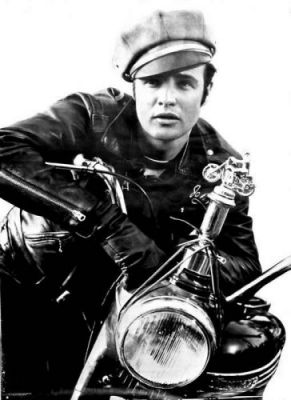
Yet much of the film works gracefully. The action occurs in 1957, and the mood is lovingly recreated, with Elvis' "Hound Dog" heard on the soundtrack even before Indy's familiar theme. In keeping with the Cold War, the baddies are Commies rather than Nazis. Although Spielberg and Lucas are staunch Democrats, they even allow an "I like Ike" homage in the dialog, while Shia LaBoeuf is introduced in a visual homage to another '50s icon, the leather-clad, motorcycling Marlon Brando of "The Wild One."

And in case anyone remains an infidel, Spielberg once again proves himself a terrific action coordinator. The chase scenes crackle with inspired chaos. While the jungle segments have such anticipated ingredients as quicksand, carnivorous ants and one large -- very, very large -- snake, they're choreographed with with freshness. The action vignettes frequently boast a wit that the dialogue lacks, and the entire enteprise shines with an enjoyably retro '80s style, appropriate for a franchise that was a high point of 1980s film technology.

Chief among the heavies is Cate Blanchett as ironclad Col. Irina Spalko, who wants well-worn Professor Jones to lead her to the mysterious skulls that hold the secret to mind control. It seems that Stalin was fascinated by psychic research, much akin to Hitler's preoccupation with the occult in "Raiders." Indy finds himself pursued by both the KGB and the FBI, not to mention some other-worldly alien weirdos.

Blanchett makes a dandy dominatrix, but you can't shake the suspicion that she's in this extravaganza strictly for the bucks. Some pundits foresaw failure in the casting of 22-year-old LaBeouf as Indy's wisecracking sidekick Mutt. Actually, he registers cockiness and confidence without the taint of obnoxiousness. After some initial bickering, Indy and Mutt get along great -- until they discover they're really father and son.

Which brings us to Karen Allen's return appearance as Marion Ravenwood, "Raiders of the Lost Ark"'s two-fisted heroine and, very possibly, the enduring love of Indy's life. Allen hasn't made a major feature since small roles in 2001's "In the Bedroom" and 2000's "The Perfect Storm." She still has an engaging presence and a beguiling smile even if you sense she's overcompensating for her lengthy absence.

And, of course, there's Indy himself, who Ford plays to an agreeable hilt. Both his sly attitude and physical dexterity have mellowed, but he's still convincing as an adventurer, a college prof and a somewhat roguish raconteur. He remains likable even after you realize that Indy's treatment of Marion was indeed shabby.

Ford, Allen and LaBeouf are all likable, and so is Spielberg's direction. All of which makes "Indiana Jones and the Kingdom of the Crystal Skull" more enjoyable than most reunions.

Friday, May 16, 2008

A sneak peak at the newer, more comfortable, Inwood Theater


By PHILIP WUNTCH
Film Critic Emeritus

The official grand opening of the Inwood Theater's renovated downstairs auditorium will coincide with next Thursday's debut of "Indiana Jones and the Kingdom of the Crystal Skull." But I got a sneak peak -- and it looks great.

Being the theater of my youth, the Inwood has a special place in my movie lover's heart. Between the ages of 10 and 18, I probably saw more movies there than at any other theater. The nude mermaids on the lobby ceiling were topics of conversation on schoolyard playgrounds although they weren't suggestive enough to throw over-zealous parents into a panic mode.

Nostalgists need not worry. The mermaids are still are on view. But almost everything else in the main auditorium has changed. As an Inwood loyalist, I never felt that the auditorium lived up to the picturesque lobby's promise. But now the auditorium has never looked better or felt more comfortable. It has all the comforts of home, assuming that you're accustomed to an affluent lifestyle.

The lobby's nautical sirens were not the only Inwood touch that made schoolboys smirk. The 61-year-old showplace was the first Dallas theater to feature loveseats, situated on alternate rows of aisle seats. The renovated auditorium has loveseats that would even make the Incredible Hulk feel cuddly. They create a mood that's conducive to "making out," as we cool kids used to say.

The furnishings truly make the theater, and they're the creations of Lovesac, an alternative furniture company that has shops in the Dallas Galleria and in Stonebriar Mall in Frisco. The different types of seats have varying degrees of cushiness. So try to arrive early and discover -- yes, readers, I'll go ahead and say it -- discover which cush suits your tush. Among the selections are bean bags, bean bag chairs and sectional sofas, enhanced by tables, removable cupholders, throw pillows, back cushions and blankets, complete with "leggos" for your feet. The auditorium also provides different seating arrangements.

The Inwood's onetime balcony long ago became two small theaters. About three years ago, they were renovated into the city's most comfortable small screening rooms. The renovated main auditorium extends the smaller theaters' sense of luxury. It makes for a great moviegoing experience.

LOST "VEGAS": Those who visit the comedy wannabe "What Happens in Vegas" will come up losers.

Cameron Diaz and Ashton Kutcher play opposites who meet on a wild Las Vegas weekend and marry in haste. They may "repent in leisure," but there's nothing leisurely about this tame farce. Every plot twist is predictable, and the losing enterprise is mercilessly over-directed by novice Tom Vaughan.

As an overly organized careerist, Diaz still has a strong, likable presence. But Kutcher, playing a rich, pampered slacker, tries too hard to trade on his presumed "cuteness." At 30, he's getting a little old for juvenile jocularity. The filmmakers apparently think that merely casting Queen Latifah as a marriage counselor who says things like "I've had enough of your bullshit!" will bring down the house. Like everything else in the movie, it doesn't work out that way.

Thursday, April 3, 2008

"Presses" gloriously spotlights newspapers' plight

By PHILIP WUNTCH
Film Critic Emeritus
"Stop the Presses: The American Newspaper in Peril" got a thunderous ovation in its world premier showing Wednesday at the AFI Dallas International Film Festival.

Outstanding documentaries have been a highlight of this year's fest, and "Stop the Presses" belongs in the front rank. Co-produced and co-directed by Dallas documentary filmmaker Mark Birnbaum and former Dallas Morning News staff critic Manny Mendoza, the film offers a rich history of American journalism and a probing dissection of print journalism's current precarious state.

Wednesday evening's Magnolia audience was filled with journalists, obviously sympathetic to the cause. But "Stop the Presses" will appeal to anyone who's ever enjoyed the ritual of reading a daily newspaper. Without being pedantic, it should also enlighten viewers who open a newspaper only to peruse the ads. Additional screenings are today at 4 p.m. at the Angelika, and Saturday, 1 p.m., also at the Angelika.

So can I be objective when discussing "Stop the Presses"? Hell, no!

I toiled for four decades in Dallas newspapers, the first two years at the Dallas Times-Herald, the remaining 37 years at the Dallas Morning News. In December of 1974, I became the first employee to have the title of Film Critic, a job I loved.

I sensed the quiet desperation of the early 21st century and watched it grow into noisy desperation by the middle of the current decade. I accepted Belo's buyout offer in September 2006 after upper management made it clear how movies would be handled in the future. Since then, I have watched the quantity and quality of film coverage diminish with excessive use of wire stories from non-Dallas sources. This practice violates the personalized love/hate relationship that should exist between local moviegoers and their hometown movie critics.

But the print journalism chaos is nationwide and not limited to the local scene. "Stop the Presses" covers the territory admirably, mixing archival film and television footage with contemporary interviews. The movie clips feature legends such as Humphrey Bogart, Cary Grant, Clark Gable, Rosalind Russell and Kirk Douglas, highlighting the era when newspaper reporting was considered a "glamorous" profession. Television clips range from "Lou Grant" to "The Simpsons" and "The Sopranos." All the juxtapositions are clever and revealing. As a piece of sheer film making, "Stop the Presses" shines.

Former Dallas Morning News employees interviewed in the film include Charles Ealy, now of the Austin American-Statesman, who eloquently states that "the press is a fundamental key to democracy"; Ed Bark, who now commandeers the popular and newsworthy Unclebarky.com Website; Craig Flournoy, now an SMU journalism prof; and Michael Precker, who now manages the "gentleman's club" The Lodge, following a wide-ranging journalism career. It also includes comments from former Mayor and New York Daily News/Dallas Times Herald/Dallas Observer/D Magazine columnist Laura Miller.

As an increasing number of newspapers have "gone public," executives have become answerable to large corporations, which many observers feel hinders aggressive investigative reporting. As a result, blogs have become more popular, providing the unbiased reporting many feel the mainstream press tries to avoid.

However, neither Mendoza nor Birnbaum feels it is curtains for newspapers, and "Stop the Presses" ends on an optimistic note.

"For the next 10 or 20 years, we will still have printed newspapers," Mendoza said following the screening. "But printed newspapers may become an elitist product, with more and more readers turning to the Internet."

"But there will always be a human need for news," Birnbaum confirms.

On Saturday, April 12, Ed Bark will interview Birnbaum and Mendoza on the Uncle Barky Show. Beginning at 4 p.m., the show will include extensive outtakes from Dallas Morning News staffers. The gathering will take place at Stratos Global Greek Tavern, 2907 W. Northwest Highway. Admission is free.

Tuesday, March 25, 2008

"Married Life" works, 'Miss Pettigrew' doesn't


By PHILIP WUNTCH
Film Critic Emeritus

Two current movies are soaked in atmosphere, and one almost drowns in it.

"MARRIAGE" MAYHEM: To say that "Married Life" has a provocative premise would be an understatement. An ostensibly happy husband plots his wife's murder to spare her the humiliation of a divorce.

The film is a wry, dry and frequently intriguing film-noir comedy. But there's a downside. Director/co-writer Ira Sachs definitely knows what he's doing, and so does the audience. Camera angles and scene compositions seem too carefully calculated. Despite clever, unexpected plot twists, the film lacks spontaneity.

However, "Married Life" boasts an abundance of upsides. These include droll dialog, outstanding performances and delicious ambiance. The unconventional plot occurs in 1949, and the automobiles, office buildings, home furnishings, hairstyles, clothes and jewelry perfectly accent the time frame. Hey, there's even a single-screen movie theater for those of us lucky enough to remember such a relic.

More important is the skill with which Sachs captures the era's moral hypocrisy. The film's depiction of post-World War II suburban mores echoes that of Stanley Kubrick's "Lolita" although without the potent Kubrick sting.

Chris Cooper plays the pivotal character of morally conflicted Harry. He likes his wife Pat (Patricia Clarkson) but adores his mistress Kay (Rachel McAdams), a young war widow who lives near their weekend cabin. Besides, Pat equates love with sex and can't get enough, whereas Harry, poor fellow, frequently comes home exhausted. He wearily reasons that poison would be kinder than seeking a divorce.

Harry makes the mistake of introducing Kay to longtime friend Richard (Pierce Brosnan), to whom he confides almost everything. Richard, a charmingly dissolute bachelor, falls under the spell of Kay's speckled face and winsome smile. He convinces himself that the morally upright solution would be to steal Kay from Harry, and that's only the first of a series of complications.

The performances are superb. Without pleading for our sympathy, Cooper registers every inch of Harry's pain. Brosnan, showing his age to just the right extent, has wicked fun providing the film's unusual moral center. The marvelous Clarkson captures each nuance of Pat's chameleon character, while McAdams plays the sometimes enigmatic Kay with the right balance of innocence and guile. All four provide expert silent reactions and small, revealing gestures. And with this storyline, there's plenty of reaction shots.

"Married Life" is disturbing and thought-provoking. And, more often than not, a lot of fun.

"PETTIGREW" PROBLEMS: Like "Married Life" but with much less success, "Miss Pettigrew Lives for a Day" attempts to recreate the mood of the films that were popular during the era it illustrates.

Ravishingly evoking 1930s London, the madcap comedy wannabe is great to look at. It's even great to listen to, but with one important qualification. Concentrate on the nostalgic soundtrack instead of the lame dialog.

The movie wastes several first-rate actresses as it feebly strives for screwball effect. It's all about one day in the previously unexciting life of Guinevere Pettigrew, played by Frances McDormand as a humorless Mary Poppins.

The unemployed Miss Pettigrew bluffs her way into a job as Delysia Lafosse's social secretary. Delysia, played by Amy Adams, is a scatterbrained aspiring actress, kept by one man while fancying herself in love with at least two others. Within 24 hours, Miss Pettigrew solves everyone's problems, including her own. In the unlikely event of a sequel, even Miss Pettigrew will no longer be a "Miss."

Obviously, the film is buried in cliches. But the filmmakers apparently hope that we'll find reassurance in the cliches and welcome them like old friends. Sorry, but it doesn't work. The film's pace alternates between plodding and frantic and never finds the right tone. The result is less an old friend than a boring old relative.

McDormand, of course, can deliver a quip with comic ease, but the quips lack a zest that not even McDormand can provide. Adams, so memorable in "Junebug," has the more difficult job. She strains for the captivating style of such dizzy heroines as Katharine Hepburn in "Bringing Up Baby" and Carole Lombard in "My Man Godfrey." But when playing this type of dizziness, there's a thin line between captivating and annoying. Adams fails to navigate that line gracefully.

Also wasted is Shirley Henderson, fondly remembered from the underrated "Wilbur Wants to Kill Himself." She's on target as Delysia's cunning rival, but it's a one-note role.

There's little suspense regarding which eligible male will win Delysia's hand with assistance from matchmaker Pettigrew. Comic momentum is not this movie's strong point.

Monday, March 3, 2008

Boleyn, Bonneville and big, big mammals


By PHILIP WUNTCH
Film Critic Emeritus

As all pop-culture mavens know, the Tudors are in full bloom. "The Other Boleyn Girl" is an ornamental addition to the Tudor collection.

Not a magnificent addition, nor even a significant one. But ornamental it most certainly is. Great costumes, ornate sets, lovely ladies and dashing horses decorate this tale of back-stabbing and head-chopping during the early years of Henry VIII's blood-stained reign.

Based on Philippa Gregory's best-seller, the movie traces the sagas of Boleyn sisters Anne and Mary and, to a lesser extent, their randy brother George. Several well-known twists and even some surprises enhance the story, which highfalutin historians have greeted with sneers. Still, it makes a beguiling, lusty tale.

Scarlett Johansson plays sensitive Mary, while Natalie Portman is the cunning, witty Anne. Johansson, usually cast in brassier roles, gently registers Mary's soulful spirit, which somehow allows her to hold her own in a regal nest of jeweled vipers. Portman so sharply convinces us of willful Anne's swollen head that her eventual fate seems like poetic justice.

Their ambitious father and wicked uncle use the young sisters as pawns to win the Boleyn family favor at court. Henry, played as a brooding male peacock by Eric Bana, has wearied of his current wife, the weepy Katherine of Aragon, who has committed the unpardonable sin of providing no male heir. Both Boleyn girls ignite the monarch's libido, albeit at different times. Court intrigues loom in every picturesque nook and cranny of the castle interiors.

Director Justin Chadwick, making his feature debut, is guilty of overkill, much like King Henry himself. A close-up of a sharp chopping knife precedes the king's first meeting with Anne. Even the most clueless non-historian will grasp the symbolism. But he clearly respects his actors, and they respond with uniformly strong performances. Kristin Scott-Thomas is particularly moving as the sisters' mother, outspoken in her support of her frequently hapless daughters, while Jim Sturgess also delivers as the doomed Boleyn brother.

Screenwriter Peter Morgan showed his skill at government procedures with superior screenplays for "The Queen" and "The Last King of Scotland" and with "Frost/Nixon" currently before the cameras. "The Other Boleyn Girl" does not belong at the top of the crown, but he keeps the court complications from becoming garbled. It's a beautiful, slightly shallow pond, but it never insults your intelligence.

NEEDS A TUNE-UP: Those nasty varmints known as film critics are going to have fun with "Bonneville." They'll dub it "Thelma and Louise Lite," "Crimes of the Heart Lite" or even "Boys on the Side Lite" (assuming anyone remembers 1995's "Boys on the Side").

Whatever the reference, the emphasis will be on Lite. Jessica Lange, Kathy Bates and Joan Allen play longtime friends who embark on an Idaho-to-California trek with an urn carrying the ashes of Lange's recently deceased husband. They travel in a 1966 Bonneville convertible, which the dead spouse cherished. Does anyone even need to be told that it will a journey of self-discovery for all three?

The women make a couple of detours, all of which can be predicted. With her lovely if shopworn features, Lange gets the most close-ups as the devoted widow who knows how to lighten her grief. As a sassy ex-schoolteacher, Bates gets the best lines. Be warned, though, that even the best lines also are easily predictable. Allen, as a prim, sanctimonious organizer, has the most dramatic character arc. All three actresses have the talent, invaluable in this film, of making the dialog seem sharper than it really is.

But, oh, how that Bonneville sparkles!

GET TO KNOW YOUR WHALE: "Dolphins and Whales 3D: Tribes of the Ocean," currently at Cinemark 17's IMAX auditorium, is academic in approach but stunningly visual in presentation.

Director Jean-Jacques Mantello, in Dallas for advance screenings, spoke glowingly of dolphins, described as people-friendly, intelligent and agile. So agile, in fact, that they can play catch with seaweed without tearing it.

The whales are another story. You have to earn their trust, and each whale has a different personality. Mantello and his crew spent 600 hours underwater during three years of making the film. They got to know their whales by studying them carefully before displaying any camera equipment.

Although the killer whale is featured in the 42-minute 3D IMAX film, director and crew avoided trying the animal's nerves. The killer whale is undisputed king of the ocean. Being its largest predator, the sea beast dines on other whales.

All the creatures are lovingly photographed. Take kids, grandkids, nieces and nephews for a painless, often exuberant zoology lesson.