
 Posts
Posts


Showing posts with label Economy. Show all posts
Showing posts with label Economy. Show all posts
Friday, November 7, 2014
Help for the middle class
In 2008, Time magazine named Robert Reich one of the 10 best cabinet members of the century (he was Secretary of Labor during President Bill Clinton's first term). He has a list of credentials too long for me to list in this space but, if you want to check him out, you can learn all about him here.
This is his analysis of Tuesday's election and it makes a lot of sense to me:
"If you want a single reason for why Democrats lost big Tuesday it’s this: Median family income continues to drop, the first "recovery" when this has occurred. Meanwhile, all the economic gains are going to the richest Americans. If the Republicans think they can reverse this through their supply-side, trickle-down, fiscal austerity policies, they’re profoundly mistaken. The public will soon discover this. But if the Democrats believe they can reverse it simply by raising taxes on the rich and redistributing to everyone else, they are mistaken, too.
"We need to raise the minimum wage, invest in education and infrastructure, lift the cap on income subject to Social Security payroll taxes, resurrect Glass-Steagall and limit the size of the banks, make it easier for low-wage workers to unionize, raise taxes on corporations with high ratios of CEO pay to average worker pay, and much more. In other words, we need an agenda for shared prosperity. Over the next two years the Democrats have an opportunity to advance one. If they fail to do so, we’ll need a new opposition party that represents the interests of the vast majority."
Just though I'd pass it along.


Wednesday, November 9, 2011
The bad news about American jobs: they're gone, all gone
So if you're gonna leave your town where the north wind blow
To go on down where that sweet soda river flow
Well you better think twice on it Jack
You're better off buyin' a shotgun dead off the rack
You ain't gonna find nothin' down here friend
Except seeds blowin' up the highway in the south wind
Movin' on movin' on it's gone gone it's all gone
 The Boss was telling people not to come to Texas expecting to find oil company jobs when he wrote this song more than a quarter of a century ago. And, indeed, things were pretty bleak in Houston, which was where Springsteen was talking about in this song, back in the mid-80s when the energy industry went bust. I was in the crisis consulting business at the time and I remember flying into Houston around 8 a.m., picking up my rental car at Hobby Airport, motoring up the Gulf Freeway to downtown and seeing, perhaps, two or three other cars on the freeway the entire time. And this was during what was supposed to be morning rush hour! It was so bad in Houston the pawn shops were going out of business.
As a country, we have not sunk quite that low, but it has gotten pretty bad. The cry echoing throughout the land is "What about jobs! Where are they? Where have they gone?"
I’ve got some bad news for you. You ain’t gonna find nothin’ down here friend, except seeds blowin’ up that highway … those jobs are gone, they’re all gone.
What happened? Trickle down economics happened, that’s what.
Here was the idea behind trickle down economics as perpetuated by a series of misguided Republican presidents beginning with Ronald Reagan 30 years ago. Give massive tax breaks to the major corporations and their leaders because these generous folks will not only contribute to Republican political campaigns but they will re-invest all this money they don’t have to pay to the government in building additional factories and facilities that will create jobs.
And it worked! Only one problem. The Greedy Bastards (GBs) who ran these corporations built all these factories and facilities outside the United States where they created jobs for people willing to work for a fraction of the pay of U.S. workers. So where did all U.S. jobs disappear to? To Korea, India, Indonesia and, most of all, China. And they aren’t coming back.
The United States has become a service-based economy. For the most part, the jobs now available to U.S. citizens are in retail, the restaurant or hotel industries and the like. Oh, of course, there are a slew of high technology jobs for the taking out there, but our education system has de-evolved to such an extent that the only ones qualified for those jobs are those who have been educated outside the United States.
Is there a solution? Outside of major public works programs akin to the ones created by Franklin Roosevelt, there is not one that will put a significant amount of unemployed Americans to work. And a major public works program is not going to happen for a number of reasons. First and foremost: The Republicans running Congress won’t let it happen. Working stiffs don’t make political contributions, at least significant ones, and if they vote at all, it’s probably going to be for a damned Democrat, so Republicans are not about to be doing any favors for the average American working man or woman. Another reason is that there’s not much out there that needs to be built. We need less dams, not more. Fewer miles of highways, not more. Of course the United States could join the rest of the civilized world and construct a nationwide high speed rail system. But the Republicans won’t let that happen either because the GBs that run the oil companies as well as the Republican Party won’t let it happen. In fact, the wrongheaded Republican Presidential candidates are all advocating completely eliminating passenger rail service in this country!
Perhaps the best option for young Americans these days is a career in the military, especially if we can extricate ourselves from all these messy wars. The pay’s not great, but you get three square meals a day, housing and medical care all tossed in and, as long as you behave, you can do 30 years easy, then retire in your mid-50s with a nice, comfortable pension. Plus you get to travel. As available jobs go, it’s a helluva lot better than slinging fries at Henry’s Hamburger Haven, or even yelling "Next in line, please!" at Best Buy.
Cities will always need police and firefighters. Many communities can’t find enough dependable drivers with CDLs to man garbage trucks. (With options such as these, it’s easy to understand why so many of today’s youth opt for the illegal drug trade and a guaranteed six-figure, minimum, annual income.)
As for the dream of a standard of living superior to that of your parents: For the overwhelming majority of today’s American workforce it’s "gone, gone. It’s all gone."
To go on down where that sweet soda river flow
Well you better think twice on it Jack
You're better off buyin' a shotgun dead off the rack
You ain't gonna find nothin' down here friend
Except seeds blowin' up the highway in the south wind
Movin' on movin' on it's gone gone it's all gone
–Bruce Springsteen, Seeds

As a country, we have not sunk quite that low, but it has gotten pretty bad. The cry echoing throughout the land is "What about jobs! Where are they? Where have they gone?"
I’ve got some bad news for you. You ain’t gonna find nothin’ down here friend, except seeds blowin’ up that highway … those jobs are gone, they’re all gone.
What happened? Trickle down economics happened, that’s what.
Here was the idea behind trickle down economics as perpetuated by a series of misguided Republican presidents beginning with Ronald Reagan 30 years ago. Give massive tax breaks to the major corporations and their leaders because these generous folks will not only contribute to Republican political campaigns but they will re-invest all this money they don’t have to pay to the government in building additional factories and facilities that will create jobs.
And it worked! Only one problem. The Greedy Bastards (GBs) who ran these corporations built all these factories and facilities outside the United States where they created jobs for people willing to work for a fraction of the pay of U.S. workers. So where did all U.S. jobs disappear to? To Korea, India, Indonesia and, most of all, China. And they aren’t coming back.
The United States has become a service-based economy. For the most part, the jobs now available to U.S. citizens are in retail, the restaurant or hotel industries and the like. Oh, of course, there are a slew of high technology jobs for the taking out there, but our education system has de-evolved to such an extent that the only ones qualified for those jobs are those who have been educated outside the United States.
Is there a solution? Outside of major public works programs akin to the ones created by Franklin Roosevelt, there is not one that will put a significant amount of unemployed Americans to work. And a major public works program is not going to happen for a number of reasons. First and foremost: The Republicans running Congress won’t let it happen. Working stiffs don’t make political contributions, at least significant ones, and if they vote at all, it’s probably going to be for a damned Democrat, so Republicans are not about to be doing any favors for the average American working man or woman. Another reason is that there’s not much out there that needs to be built. We need less dams, not more. Fewer miles of highways, not more. Of course the United States could join the rest of the civilized world and construct a nationwide high speed rail system. But the Republicans won’t let that happen either because the GBs that run the oil companies as well as the Republican Party won’t let it happen. In fact, the wrongheaded Republican Presidential candidates are all advocating completely eliminating passenger rail service in this country!
Perhaps the best option for young Americans these days is a career in the military, especially if we can extricate ourselves from all these messy wars. The pay’s not great, but you get three square meals a day, housing and medical care all tossed in and, as long as you behave, you can do 30 years easy, then retire in your mid-50s with a nice, comfortable pension. Plus you get to travel. As available jobs go, it’s a helluva lot better than slinging fries at Henry’s Hamburger Haven, or even yelling "Next in line, please!" at Best Buy.
Cities will always need police and firefighters. Many communities can’t find enough dependable drivers with CDLs to man garbage trucks. (With options such as these, it’s easy to understand why so many of today’s youth opt for the illegal drug trade and a guaranteed six-figure, minimum, annual income.)
As for the dream of a standard of living superior to that of your parents: For the overwhelming majority of today’s American workforce it’s "gone, gone. It’s all gone."
Thursday, October 13, 2011
Republican serial killers

So what do Congressional Republicans do? They kill the legisation and offer nothing in its place.
Fourteen million Americans are out of work, wages are falling, poverty is rising and many are forecasting the coming of a second recession. And the Republicans, who care only about removing the first black President from office, refuse to do anything to help. Their only response is "cut regulations and everything will magically be okay." Cutting regulations does nothing to put people back to work. It’s all talk and no action.
This is criminal.
The last Republican presidential debate — the one earlier this week in New Hampshire — was supposed to be about the state of the economy, but what they debated had nothing to do with the economy that exists in America today. There was Herman Cain’s absolutely asinine "9-9-9" plan that would do nothing but cut taxes for the rich, increase them for the poor, raise the national debt and have absolutely no effect on economic growth.
Then along comes Gov. Hair who is so out of touch he thinks the entire country should have an environment as dirty as we have here in Texas by proposing to drill oil wells on every acre in America.
Was Obama’s bill the panacea to completely rescue the economy to the level it was before No. 43 and his Wall Street cadre destroyed it? No, but at least it was a solid plan combining a middle-class tax break and public works projects that would have created actual jobs and given the economy a needed jolt.
I just hope the American people are smart enough to realize who is coming up with solid plans to revive the economy and who is systematically killing them.
Wednesday, August 31, 2011
Obama to go up against GOP presidential debate
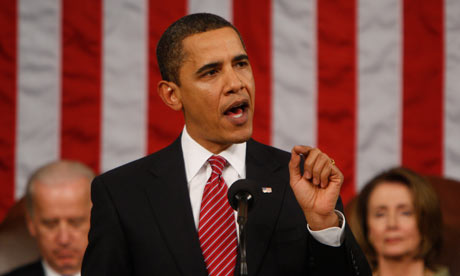
I haven’t decided whether this is a brilliant move or a major blunder, but I’m leaning to the former because, except for the morally and politically corrupt FOX News, the President, regardless of a party affiliation, always has the bully pulpit where the media is concerned. And, of course, the GOP will have the opportunity to present its response immediately after the President’s address, even though these responses are largely meaningless — they are prepared before anyone knows what the President is actually going to say so they are less of a response and more of a reiteration of a political party’s tired ideology.
In his letter to Congress, the President said it is his “intention to lay out a series of bipartisan proposals that the Congress can take immediately to continue to rebuild the American economy by strengthening small businesses, helping Americans get back to work, and putting more money in the paychecks of the middle class and working Americans.”
I’m thinking the GOP Presidential hopefuls should reschedule their debate, which could be even more informative once they hear what the President has to say.
Wednesday, April 27, 2011
Want to know how to grow the local economy? First, don’t listen to the mayoral candidates or Jim Schutze

About a quarter of a century ago, I teamed up with one a fellow by the name of Hylan (Hy) Lyons, easily the most brilliant individual I have ever had an opportunity to work closely with over an extended period of time. We were charged by the North Texas Commission with finding out ways to boost the local economy.
We studied local economies around the world with emphasis on local U.S. economies and we discovered re-locating companies, as Schutze pointed out, is not the answer (which is the main reason I can’t vote for either Ron Natinsky or Mike Rawlings for Dallas mayor because they are still convinced it is). But it has nothing to do with, as Schutze argues, the relocating companies’ property tax rates, although Schutze is correct when he says cities “give away the store” in tax and utility breaks to get companies to relocate. The main reason relocation doesn’t work is because it doesn’t create jobs and job creation is the chief ingredient in improving economies. Relocating companies also relocate their employees, so no local or, at best, minimal hires are required.
What Hy and I discovered is that those economies that improved the most where those where new businesses sprang up and, as they grew, they had to hire more people and construct bigger headquarters. I’m not going to bore you with how he and I went about creating an atmosphere that led to all the high-tech startups that Dallas hosted during the mid-1980s, but it’s that type of thinking that’s needed today and that’s not the thinking I’m hearing from any of the mayoral candidates. Which is why I’m planning to sit this election out.
It would be fascinating — and somewhat scary — to imagine what Dallas might be like today if there had never been a Texas Instruments.
There are two ways to grow the local economy — the very, very, very slow, but more sustainable, way, and a somewhat quicker fashion.
The slow way is to create and maintain a top-tier research university. New businesses, new industries come from research. Research conducted at Texas Instruments was responsible for many of the new businesses created here in the 1980s, even if many of them quickly relocated to the Silicon Valley after they were created (to be closer to the research being conducted at Stanford and Cal-Berkeley). But creating a research institute, as the cliche goes, is much, much easier said than done.
The second way is to create an atmosphere conducive to incubators. Here’s what I would do if I was in charge. The City has a department called Economic Development. I would force that department to get into the business of economic development. First I would create a special office within the Department of Economic Development to partner with SMU’s Cox Business School (one of the four or five best business schools in the whole U.S. of A.). The Cox School has a number of what it calls “Centers of Excellence” and one of them is the Caruth Institute for Entrepreneurship. The Caruth Institute designates fellows to form the alliance with the new office I’ve created in the City’s Economic Development Department. Now I would instruct this partnership office to solicit proposals for startup businesses. And I’m not talking about a proposal for another paint and body shop. They should be something that no one else is doing right now. For example, I have this idea for a business that would offer total support services for an industry desperately in need of such services. (I won’t go into more detail because I don’t want someone to steal my idea).
Anyway, the purpose of this joint City of Dallas-Cox Business School would be to find ways to to discern the best of the proposals and find ways bring those business ideas from concept to reality, companies that would grow, add jobs, build bigger headquarters — all those things that really drive the local economy. You never know — one of them could be this century’s Texas Instruments. Now wouldn’t that be a jolt to the local economy.
Tuesday, December 7, 2010
Obama surrenders leadership
President Obama can try to call this terrible mistake and complete abandonment of leadership "a compromise" if he wants to. But it isn't a compromise. It is a complete and disgraceful capitulation to the failed policies of the Bush administration, policies that led to the economic mess we're in today. The Republicans claim they want to reduce the deficit. But they lie and their latest demands to protect their rich benefactors proves it. I'm not sure our economy can weather the massive increase to the deficit this agreement will cause.Not only that, with this victory, the Republicans will be demanding and probably obtaining more such concessions from a White House that has given up on its principles and decided it no longer wants to display any signs of leadership.
It's not so much extending the Bush tax cuts that is the major concern. It's Obama's terrible decision to draconian reductions in the estate tax, reductions that are even higher than the ones his predecessor wanted. Obama says he agreed to this "compromise" to aid middle-income Americans. But he, too, lies. Middle income Americans don't have estate taxes to pay. And the rate of estate taxes don't have anything to do with job creation. This move was nothing more than the President caving in to the demands of Arizona's Republican Senator John Kyl who irresponsibly held our nation's security hostage by blocking a vote on the New Start arms control treaty until he got his way on the estate taxes. Instead of giving up on doing the right thing, the President should have exposed Kyl's duplicity to the entire country.
Obama claims the tax reductions are only for two years and in 2012 he'll be able to make a case to the American electorate that it was the wrong thing to do. I'm wondering why can't he make that case now. If it's wrong in 2012, it's wrong in 2010.
It's not so much extending the Bush tax cuts that is the major concern. It's Obama's terrible decision to draconian reductions in the estate tax, reductions that are even higher than the ones his predecessor wanted. Obama says he agreed to this "compromise" to aid middle-income Americans. But he, too, lies. Middle income Americans don't have estate taxes to pay. And the rate of estate taxes don't have anything to do with job creation. This move was nothing more than the President caving in to the demands of Arizona's Republican Senator John Kyl who irresponsibly held our nation's security hostage by blocking a vote on the New Start arms control treaty until he got his way on the estate taxes. Instead of giving up on doing the right thing, the President should have exposed Kyl's duplicity to the entire country.
Obama claims the tax reductions are only for two years and in 2012 he'll be able to make a case to the American electorate that it was the wrong thing to do. I'm wondering why can't he make that case now. If it's wrong in 2012, it's wrong in 2010.
Sunday, February 7, 2010
Sunday Observations
1. A few days ago some friends and I were having a conversation to determine our choice for the best NFL quarterback ever. Of course, the name Joe Montana entered the discussion, but we finally decided on Johnny Unitas of the old Baltimore Colts, not only because of his statistical and winning-percentage greatness, but because he played in an era when quarterbacks called their own plays. But we all agreed that before long -- if it hasn't happened already -- that title of the "greatest QB ever to play the game" would belong to Peyton Manning, regardless of what happens later today. It appears others might agree with that assessment.
2. Right wingnuts like Sarah Palin are traveling around the country decrying the state of the country's deficit. They are obviously suffering from amnesia or some other exotic disease that causes them to forget it was the disastrous economic policies of George W. Bush and the Republican led Congress that got us in this mess in the first place with their habit of slashing taxes for the wealthy. But here's an article that makes a valid point: "At a time of high unemployment and fragile growth, the last thing the government should do is to slash spending. That will only drive the economy into deeper trouble. "
3. There are more members (368) in the public relations branch of the Motion Picture Academy, which decides the Oscars, than there are in the directors branch (366). Now that's scary.
4. The more I think about it, the more I'm convinced Sandra Bullock will win the best actress Oscar. I'm also thinking James Cameron is giving up on winning the major awards for Avatar and his throwing his support to his ex-wife.
5. The Mavericks are really looking terrible, increasing the chances they will pull off a trade between now and the Feb. 15 deadline. It's also looking more and more like Josh Howard will be part of that trade and that it will involve either Washington (Caron Butler?) or Philadelphia. Listen up, Mavericks: Unless you work a deal that brings you players that give you a fighting chance of besting the Lakers, don't pull the trigger, especially if it involves taking on long-term burdensome contracts.
6. New Orleans Saints fans rejoice! I'm picking the Colts to win today by a couple of touchdowns.
7. Someone named Mine Yucel of the Federal Reserve Bank in Dallas will tell the City of Dallas' Budget, Finance and Audit Committee tomorrow that "Texas may be out of the recession" even though the state lost 334,600 jobs last year. Frankly, I think this is a little misguided optimism -- from where I sit it appears we are holding steady with last year, which wasn't such a great one, recession-wise. But it must also be said that whoever this Mine Yucel is, he's much more qualified on this subject than yours truly.
8. The Quality of Life Committee will hear reports touting the City of Dallas' much-beloved (by citizens) library system, what is being done to inform the local populace about the importance of the upcoming census (including the scary thought that a music video on this subject will be rolled out at the end of the month), and whether new restrictions need to be placed on utility companies that tear up city streets (I get the impression the City thinks its present ordinances are sufficient). Finally the committee will be told that a law proposed by Brad Kirby, an interested citizen, that would make it a criminal offense for someone to take possession of a dog and not take it to a vet or an animal shelter for identification scanning within 48 hours of finding said animal "is impractical and unenforceable." So take that, Mr. Kirby.
9. A briefing called "Green Energy for McCommas Bluff Landfill" will be presented tomorrow to the City's Transportation and Environment Committee and while the methane gas produced at the landfill is all well and good, the real hero of this story is the biotechnology factor that, in the briefing's own words (a) "accelerates gas production, providing City with increased annual revenue-share from sales" and (b) "promotes landfill settlement, creating up to 30% recovery in previously-used waste capacity ... resulting in waste space that can be re-used." That, folks, is a big deal -- a really big deal.
2. Right wingnuts like Sarah Palin are traveling around the country decrying the state of the country's deficit. They are obviously suffering from amnesia or some other exotic disease that causes them to forget it was the disastrous economic policies of George W. Bush and the Republican led Congress that got us in this mess in the first place with their habit of slashing taxes for the wealthy. But here's an article that makes a valid point: "At a time of high unemployment and fragile growth, the last thing the government should do is to slash spending. That will only drive the economy into deeper trouble. "
3. There are more members (368) in the public relations branch of the Motion Picture Academy, which decides the Oscars, than there are in the directors branch (366). Now that's scary.
4. The more I think about it, the more I'm convinced Sandra Bullock will win the best actress Oscar. I'm also thinking James Cameron is giving up on winning the major awards for Avatar and his throwing his support to his ex-wife.
5. The Mavericks are really looking terrible, increasing the chances they will pull off a trade between now and the Feb. 15 deadline. It's also looking more and more like Josh Howard will be part of that trade and that it will involve either Washington (Caron Butler?) or Philadelphia. Listen up, Mavericks: Unless you work a deal that brings you players that give you a fighting chance of besting the Lakers, don't pull the trigger, especially if it involves taking on long-term burdensome contracts.
6. New Orleans Saints fans rejoice! I'm picking the Colts to win today by a couple of touchdowns.
7. Someone named Mine Yucel of the Federal Reserve Bank in Dallas will tell the City of Dallas' Budget, Finance and Audit Committee tomorrow that "Texas may be out of the recession" even though the state lost 334,600 jobs last year. Frankly, I think this is a little misguided optimism -- from where I sit it appears we are holding steady with last year, which wasn't such a great one, recession-wise. But it must also be said that whoever this Mine Yucel is, he's much more qualified on this subject than yours truly.
8. The Quality of Life Committee will hear reports touting the City of Dallas' much-beloved (by citizens) library system, what is being done to inform the local populace about the importance of the upcoming census (including the scary thought that a music video on this subject will be rolled out at the end of the month), and whether new restrictions need to be placed on utility companies that tear up city streets (I get the impression the City thinks its present ordinances are sufficient). Finally the committee will be told that a law proposed by Brad Kirby, an interested citizen, that would make it a criminal offense for someone to take possession of a dog and not take it to a vet or an animal shelter for identification scanning within 48 hours of finding said animal "is impractical and unenforceable." So take that, Mr. Kirby.
9. A briefing called "Green Energy for McCommas Bluff Landfill" will be presented tomorrow to the City's Transportation and Environment Committee and while the methane gas produced at the landfill is all well and good, the real hero of this story is the biotechnology factor that, in the briefing's own words (a) "accelerates gas production, providing City with increased annual revenue-share from sales" and (b) "promotes landfill settlement, creating up to 30% recovery in previously-used waste capacity ... resulting in waste space that can be re-used." That, folks, is a big deal -- a really big deal.
Wednesday, January 27, 2010
Obama too timid on the economy
.jpg)
I know that President Obama didn't create this economic mess, he inherited it from his predecessor. But the President's failure to begin to turn it around stems from the fact that his economic team is dominated by the same Wall Street advisers that got us in this mess in the first place. In his State of the Union address tonight, I understand the President is going to ask for some tax credits and other subsidies intended to help middle-class Americans with some big expenses, like day care, student-loan payments and retirement savings, and a a three-year spending freeze in many discretionary domestic programs, and for increases no greater than inflation after that. The spending freeze seems more image-building than anything else. For one thing, the President's pet programs -- education and the environment -- will be exempt. For another, the freeze will only account for $10 billion out of a total package of $500 billion in domestic programs.
The problem with these initiatives is that even if they work as planned, Americans need much more. They need leadership that is more inspired and an agenda that is bigger and more detailed than these ideas. This recession is not like others in our recent past. It has not been caused by a cyclical downturn in the business climate; instead it is the result of flawed economic policies that have severely damaged the core of our economy. This country needs to create at least 10 million jobs -- that's right, 10 million jobs -- to get this economy back on sure footing. Right now there are six applicants for every job opening, which means prolonged spells of unemployment for many of the nation’s 15.3 million jobless workers. Without new jobs, economic performance and tax revenues will remain inadequate.
I would like to see the President propose three possible solutions:
1. A stimulus package that would help bail out state and municipal governments. This is among the surest ways to preserve and create jobs because the money is pushed through quickly to employees, contractors and beneficiaries. The alternative is recovery-killing spending cuts and tax increases on the state and local levels.
2. Increased small business lending and direct creation of both skilled and low-skilled jobs.
3. Allow homeowners to include their mortgages in their bankruptcy filings.
Of course, the President must also embrace ways to pay for initiatives. I would suggest redeploying money from the bank bailout or endorsing a financial-transactions tax on Wall Street.
The President's timidity on solving the country's economic woes must end now. He campaigned on a theme of "Yes we can." It's past time to prove that we can.
The problem with these initiatives is that even if they work as planned, Americans need much more. They need leadership that is more inspired and an agenda that is bigger and more detailed than these ideas. This recession is not like others in our recent past. It has not been caused by a cyclical downturn in the business climate; instead it is the result of flawed economic policies that have severely damaged the core of our economy. This country needs to create at least 10 million jobs -- that's right, 10 million jobs -- to get this economy back on sure footing. Right now there are six applicants for every job opening, which means prolonged spells of unemployment for many of the nation’s 15.3 million jobless workers. Without new jobs, economic performance and tax revenues will remain inadequate.
I would like to see the President propose three possible solutions:
1. A stimulus package that would help bail out state and municipal governments. This is among the surest ways to preserve and create jobs because the money is pushed through quickly to employees, contractors and beneficiaries. The alternative is recovery-killing spending cuts and tax increases on the state and local levels.
2. Increased small business lending and direct creation of both skilled and low-skilled jobs.
3. Allow homeowners to include their mortgages in their bankruptcy filings.
Of course, the President must also embrace ways to pay for initiatives. I would suggest redeploying money from the bank bailout or endorsing a financial-transactions tax on Wall Street.
The President's timidity on solving the country's economic woes must end now. He campaigned on a theme of "Yes we can." It's past time to prove that we can.
Wednesday, January 20, 2010
President Obama's wakeup call

The election of Scott Brown, a Republican in the most Democratic state in the Union, as the new U.S. senator from Massachusetts, should serve as a wake-up call to President Obama -- a warning that he needs to shift his emphasis.
The issue in Massachusetts was not health care reform and don't be persuaded by those who said Brown's victory was because he promised he would vote against the health care reform legislation in Congress. This election was a case of the voters of Massachusetts sending a message to the President of the United States that his focus should not be on health care reform, but on job creation. Health care reform is necessary, but it doesn't do anyone any good if they feel they can't take advantage of it.
I am convinced most Americans think there are only one of two ways they can purchase health insurance, no matter how "affordable" that insurance might be. The first way is that it is offered by an employer; the second is that they purchase insurance on their own. Both ways, Americans feel, require an income and that usually means a job.
The previous administration inherited a healthy economy and destroyed it. What makes matters worse is that the economic policies professed by Sen.-elect Brown and other Republicans would guarantee further economic deterioration. So now, President Obama doesn't have the 60 votes needed to prevent Republican filibustering on health care. Fine. Then put that on the back burner for now (especially since the health care reform legislation currently being debated is so watered down it's not worth fighting for anyway) and focus the administration's efforts on job creation and force Brown and his cohorts to oppose that.
The issue in Massachusetts was not health care reform and don't be persuaded by those who said Brown's victory was because he promised he would vote against the health care reform legislation in Congress. This election was a case of the voters of Massachusetts sending a message to the President of the United States that his focus should not be on health care reform, but on job creation. Health care reform is necessary, but it doesn't do anyone any good if they feel they can't take advantage of it.
I am convinced most Americans think there are only one of two ways they can purchase health insurance, no matter how "affordable" that insurance might be. The first way is that it is offered by an employer; the second is that they purchase insurance on their own. Both ways, Americans feel, require an income and that usually means a job.
The previous administration inherited a healthy economy and destroyed it. What makes matters worse is that the economic policies professed by Sen.-elect Brown and other Republicans would guarantee further economic deterioration. So now, President Obama doesn't have the 60 votes needed to prevent Republican filibustering on health care. Fine. Then put that on the back burner for now (especially since the health care reform legislation currently being debated is so watered down it's not worth fighting for anyway) and focus the administration's efforts on job creation and force Brown and his cohorts to oppose that.
Monday, June 1, 2009
Columnist claims we're blaming the wrong person for the current economic crisis
Op-ed columnist Paul Krugman argues today in the New Tork Times that this person really isn't the one responsible for our current economic woes. Here is the real villain, he claims.
All our troubles, the columnist says, stem from that day 27 years ago when then President Reagan signed something called the Garn-St. Germain Depository Institutions Act. Krugman writes:
"Attacks on Reaganomics usually focus on rising inequality and fiscal irresponsibility. Indeed, Reagan ushered in an era in which a small minority grew vastly rich, while working families saw only meager gains. He also broke with longstanding rules of fiscal prudence.
"On the latter point: traditionally, the U.S. government ran significant budget deficits only in times of war or economic emergency. Federal debt as a percentage of G.D.P. fell steadily from the end of World War II until 1980. But indebtedness began rising under Reagan; it fell again in the Clinton years, but resumed its rise under the Bush administration, leaving us ill prepared for the emergency now upon us.
"The increase in public debt was, however, dwarfed by the rise in private debt, made possible by financial deregulation. The change in America’s financial rules was Reagan’s biggest legacy. And it’s the gift that keeps on taking."


All our troubles, the columnist says, stem from that day 27 years ago when then President Reagan signed something called the Garn-St. Germain Depository Institutions Act. Krugman writes:
"Attacks on Reaganomics usually focus on rising inequality and fiscal irresponsibility. Indeed, Reagan ushered in an era in which a small minority grew vastly rich, while working families saw only meager gains. He also broke with longstanding rules of fiscal prudence.
"On the latter point: traditionally, the U.S. government ran significant budget deficits only in times of war or economic emergency. Federal debt as a percentage of G.D.P. fell steadily from the end of World War II until 1980. But indebtedness began rising under Reagan; it fell again in the Clinton years, but resumed its rise under the Bush administration, leaving us ill prepared for the emergency now upon us.
"The increase in public debt was, however, dwarfed by the rise in private debt, made possible by financial deregulation. The change in America’s financial rules was Reagan’s biggest legacy. And it’s the gift that keeps on taking."
Tuesday, April 21, 2009
Budget, Borders, Old Navy, United Airlines to disappear?
24/7 Wall Street is predicting 12 brands will disappear by the end of next year. The brands include Budget car rentals, Borders, Saturn (I've been hearing about this for a couple of years now) and Chrysler automobiles, Esquire and Architectural Digest magazines, Old Navy, Eddie Bauer, Palm, and United Airlines (which, unlike the others, will not go out of business, but its brand will disappear through a merger, much like TWA's did when it merged with AMR).
"As the recession deepens and stretches out quarter after quarter, more companies will close or will shut divisions," the publication said in its story. "More brands will disappear because their parents firms fold or can no longer afford to support them. Other brands will be obliterated by mergers."
The story then lists the 12 brands and gives the reasons why it thinks that brand will not be around to see the year 2011.
"As the recession deepens and stretches out quarter after quarter, more companies will close or will shut divisions," the publication said in its story. "More brands will disappear because their parents firms fold or can no longer afford to support them. Other brands will be obliterated by mergers."
The story then lists the 12 brands and gives the reasons why it thinks that brand will not be around to see the year 2011.
Saturday, April 11, 2009
How would drivers in Dallas react to an accident response fee
According to a story today in today's New York Times, municipal and state governments are resorting to instituting and/or raising fees, not taxes, as a way to offset budget deficits. I know City Manager Mary Suhm has looked at various creative fees along these same lines.
But one, according to the story, that's getting a lot of traction is a traffic accident response fee that's charged to the driver who's judged to have caused the accident. The theory behind the fee, which is a sound one to my way of thinking, is that the burden for the cost of fire department and police department response to accidents should not be shared by all the taxpayers, but only by the person responsible for the accident. That sounds great, I guess, until you get that $300 bill from the city for responding to your traffic accident.
Some cities have gone as far as hiring a company like Cost Recovery Corporation out of Dayton, Ohio, which, for 10 percent of every bill, sets up the collection systems. Some, however, want 100 percent of the fees, so they opt to handle collections themselves. In places like Winter Haven, Fla., that hasn't worked so well. It has collected only about $6,400 of the $32,000 it billed at-fault drivers.
“We chose not to contract out the collection part of this, and frankly, because of staff cuts, we don’t have enough people to handle all the paperwork,” says Joy Townsend, the city’s communications officer. “We’re now evaluating how cost-effective this program is.”
It sounded like a good idea at the time.
But one, according to the story, that's getting a lot of traction is a traffic accident response fee that's charged to the driver who's judged to have caused the accident. The theory behind the fee, which is a sound one to my way of thinking, is that the burden for the cost of fire department and police department response to accidents should not be shared by all the taxpayers, but only by the person responsible for the accident. That sounds great, I guess, until you get that $300 bill from the city for responding to your traffic accident.
Some cities have gone as far as hiring a company like Cost Recovery Corporation out of Dayton, Ohio, which, for 10 percent of every bill, sets up the collection systems. Some, however, want 100 percent of the fees, so they opt to handle collections themselves. In places like Winter Haven, Fla., that hasn't worked so well. It has collected only about $6,400 of the $32,000 it billed at-fault drivers.
“We chose not to contract out the collection part of this, and frankly, because of staff cuts, we don’t have enough people to handle all the paperwork,” says Joy Townsend, the city’s communications officer. “We’re now evaluating how cost-effective this program is.”
It sounded like a good idea at the time.
Thursday, April 2, 2009
GOP plays April Fools joke on us
Does anyone else think it was more than just a coincidence that the Republicans issued their alternative budget plan -- one that would freeze discretionary spending, thus spiraling our economy into a Depression, and one that cuts taxes 10 percent for the super wealthy -- on April Fools Day?
As political writer Bob Cesca put it: "Congratulations, Republicans, you just released a budget that rewards wealthy corporate executives while blocking any attempt to dig us out of the economic catastrophe they created."
As political writer Bob Cesca put it: "Congratulations, Republicans, you just released a budget that rewards wealthy corporate executives while blocking any attempt to dig us out of the economic catastrophe they created."
Saturday, December 27, 2008
The idea of a fluctuating gasoline tax
Given the choice between purchasing a fuel efficient Prius or a gas guzzling Hummer, I'm convinced most Americans would pick the Hummer. Americans just love big cars, pickup trucks and SUVs. The only thing that drove a lot of consumers to seek more fuel-efficient automobiles was the spike in gasoline prices this year drove them to around $4 a gallon. Now that the price of gas is back around $1.50, the idea of the smaller car is not all that appealing to most Americans.
Call me paranoid, but I'm convinced the price of gas is being artificially manipulated by those who really are afraid that President-elect Barack Obama is going to do whatever he can to fulfill his promise of a reduced reliance on oil imports. I can see this plan working, too. Critics of Obama's plan can proclaim "Hey, gas is cheap. Let's worry about more important things like easing the credit crunch so I can negotiate a loan to buy the family a Cadillac or a big Benz."
Me, I still think fuel efficiency is the way to go. But how do you accomplish this when gas prices are at the levels they are today? One interesting idea floating around is that of a fluctuating gasoline tax. Here's the way it would work. Gas prices would be established permanently at, say, $4 or even $5 a gallon. At those prices, Americans will go back to wanting more fuel efficient cars and will be demanding once again auto manufacturers develop vehicles that run on other types of fuel -- exactly the atmosphere needed to make Obama's energy plan work. When the actual price of gas is $1.50, the difference between that price and the established price would be the amount of the gasoline tax that would flow into the U.S. Treasury. Should the price of gas begin to climb, the amount of the tax falls correspondingly. So, if gas prices rise back up to $3.50 a gallon, the gasoline tax is 50 cents a gallon versus $2.50 a gallon when the per-gallon price of gas is $1.50.
It's an idea worth further discussions.
Call me paranoid, but I'm convinced the price of gas is being artificially manipulated by those who really are afraid that President-elect Barack Obama is going to do whatever he can to fulfill his promise of a reduced reliance on oil imports. I can see this plan working, too. Critics of Obama's plan can proclaim "Hey, gas is cheap. Let's worry about more important things like easing the credit crunch so I can negotiate a loan to buy the family a Cadillac or a big Benz."
Me, I still think fuel efficiency is the way to go. But how do you accomplish this when gas prices are at the levels they are today? One interesting idea floating around is that of a fluctuating gasoline tax. Here's the way it would work. Gas prices would be established permanently at, say, $4 or even $5 a gallon. At those prices, Americans will go back to wanting more fuel efficient cars and will be demanding once again auto manufacturers develop vehicles that run on other types of fuel -- exactly the atmosphere needed to make Obama's energy plan work. When the actual price of gas is $1.50, the difference between that price and the established price would be the amount of the gasoline tax that would flow into the U.S. Treasury. Should the price of gas begin to climb, the amount of the tax falls correspondingly. So, if gas prices rise back up to $3.50 a gallon, the gasoline tax is 50 cents a gallon versus $2.50 a gallon when the per-gallon price of gas is $1.50.
It's an idea worth further discussions.
Friday, November 7, 2008
This doesn't look good
I remember a popular saying during the 1960s that went "As General Motors goes, so goes the nation." I really hope that's not true any longer after hearing General Motors Corp. announce Friday that it had lost $2.5 billion in the third quarter and warn that it could run out of cash in 2009 if the U.S. economic slump continues and it doesn't get government aid.
Thursday, October 9, 2008
Why McCain's mortgage buyback plan is a disaster + a reasonable sounding alternative
During the Presidential debate Tuesday, John McCain announced a plan which would compel the Treasury Department to purchase troubled home loans. When he announced it I thought that really wasn't anything new -- that's already allowed in the recently passed and signed "bailout" bill. The only difference, I thought, was that the bailout bill made those purchases optional where McCain seemed to indicate they would be mandatory. However, as usual, the devil is in the details. It's what McCain didn't say about his plan that makes it even more of a disaster for taxpayers and another windfall for McCain's major contributors, the Wall Street financial institutions that caused this economic mess.
Under McCain's plan, taxpayer dollars would be used to buy the distressed mortgages from the banks at full, face value. Only then would the principals be discounted for the homeowner. That's right -- McCain's plan steals from taxpayers and gives that money to the financial institutions. Barack Obama's plan, on the other, requires the lender write down the principal and the only thing taxpayers' monies would be used for is as a guarantee that the loan would be paid. We would, in effect, become co-signers. In that way, the lenders, the borrowers and the taxpayers share in the effort to stabilize the homeowning market.
I also read today a proposal from Ambassador Marc Ginsberg who recommends the equivalent of a "New Deal" plan for current and prospective homeowners, much of which made a lot of sense to me. Ambassador Ginsberg recommends Obama enact a version of his economic stimulus package once he becomes President, assuming (probably correctly) that McCain the Deregulator is not going to be interested in that much government action to help middle class taxpayers purchase or stay in their homes. I especially liked his recommendation for a "government-guaranty fixed rate mortgage program offered through banks that would set a federally-mandated interest rate ceiling of 5.5 percent on 30 year fixed rate conforming mortgages," incentives to banks for "converting conforming adjustable rate mortgages to fixed rate mortgages" and his call for a "payment holiday" of 90 days to enable borrowers to regain their financial footing. Check it out.
Under McCain's plan, taxpayer dollars would be used to buy the distressed mortgages from the banks at full, face value. Only then would the principals be discounted for the homeowner. That's right -- McCain's plan steals from taxpayers and gives that money to the financial institutions. Barack Obama's plan, on the other, requires the lender write down the principal and the only thing taxpayers' monies would be used for is as a guarantee that the loan would be paid. We would, in effect, become co-signers. In that way, the lenders, the borrowers and the taxpayers share in the effort to stabilize the homeowning market.
I also read today a proposal from Ambassador Marc Ginsberg who recommends the equivalent of a "New Deal" plan for current and prospective homeowners, much of which made a lot of sense to me. Ambassador Ginsberg recommends Obama enact a version of his economic stimulus package once he becomes President, assuming (probably correctly) that McCain the Deregulator is not going to be interested in that much government action to help middle class taxpayers purchase or stay in their homes. I especially liked his recommendation for a "government-guaranty fixed rate mortgage program offered through banks that would set a federally-mandated interest rate ceiling of 5.5 percent on 30 year fixed rate conforming mortgages," incentives to banks for "converting conforming adjustable rate mortgages to fixed rate mortgages" and his call for a "payment holiday" of 90 days to enable borrowers to regain their financial footing. Check it out.
Thursday, October 2, 2008
President, Congress still don't get it
Let me try to express this as simply as I can. The current economic crisis was caused by falling home prices. Too many homeowners found themselves with home loan balances that were much higher than their equities, thus eliminating their opportunities for additional credit. The lending institutions found themselves holding loans, most of which should never have been made in the first place, for more than the properties were now worth.
According to many sources, six million homeowners are expected to default on their mortgage loans before the year is out, unless they can catch up on their payments or get their loans re-financed. However, even those who are making all their payments on time stand to lose all their equity in their homes. But does the current "bailout" bill that passed the Senate and is awating House approval address this problem? Not at all. It simply helps those institutions who unwisely made these loans in the first place. The federal government is saving these people from their own incompetence while penalizing millions and millions of American taxpayers who will either lose their homes or see them dwindle in value. This is not fair. This is not right. This is not the way government should work.
Here's what should happen. Lenders should be forced to renogiate all outstanding home loans to a maximum of 90 percent of the current value of the home. Then the government could use funds it had earmarked for the bailout as insurance for these loans, thus eliminating any risk to taxpayers. There is a program like that out there, called "Hope for Homeowners," but it's voluntary and the lenders are not going to participate in a voluntary program, especially when it sees the government may just reward them mightly for their ineptitude. No, such a program must be backed by the courts in order to work.
Look, we're in this mess because mortgage companies, greedy for the fees they would earn, knowingly made loans to people who couldn't afford to pay them back. They figured they would be covered because they foolishly thought home values would continue to rise indefinitely. Now comes the day of reckoning, but instead of forcing them to pay for these mistakes, the President and Congress seems to want to reward them.
According to many sources, six million homeowners are expected to default on their mortgage loans before the year is out, unless they can catch up on their payments or get their loans re-financed. However, even those who are making all their payments on time stand to lose all their equity in their homes. But does the current "bailout" bill that passed the Senate and is awating House approval address this problem? Not at all. It simply helps those institutions who unwisely made these loans in the first place. The federal government is saving these people from their own incompetence while penalizing millions and millions of American taxpayers who will either lose their homes or see them dwindle in value. This is not fair. This is not right. This is not the way government should work.
Here's what should happen. Lenders should be forced to renogiate all outstanding home loans to a maximum of 90 percent of the current value of the home. Then the government could use funds it had earmarked for the bailout as insurance for these loans, thus eliminating any risk to taxpayers. There is a program like that out there, called "Hope for Homeowners," but it's voluntary and the lenders are not going to participate in a voluntary program, especially when it sees the government may just reward them mightly for their ineptitude. No, such a program must be backed by the courts in order to work.
Look, we're in this mess because mortgage companies, greedy for the fees they would earn, knowingly made loans to people who couldn't afford to pay them back. They figured they would be covered because they foolishly thought home values would continue to rise indefinitely. Now comes the day of reckoning, but instead of forcing them to pay for these mistakes, the President and Congress seems to want to reward them.
Wednesday, October 1, 2008
Dallas' bond outlook
Admittedly I was driving at the time so I wasn't paying as close attention as I might have otherwise, but I distinctly remember hearing from last week's Dallas City Council hearings a discussion revolving around Dallas getting ready to sell the next round of bonds that were part of the most recently passed record General Obligation Bond package.
Now comes this story from today's New York Times, which begins:
"Cities, states and other local governments have been effectively shut out of the bond markets for the last two weeks, raising the cost of day-to-day operations, threatening longer-term projects and dampening a broad source of jobs and stability at a time when other parts of the economy are weakening."
I guess the good news from that paragraph is contained in the words "the last two weeks," which I interpret as meaning Dallas might not be able to sell those bonds today or even tomorrow, but perhaps they will be able to toward the end of the year. And waiting might be preferable to offering the high interest rates that certainly would be required if those bonds were marketed today. Those types of interest rates certainly would foil any plans not to raise property taxes this time next year.
But wait, later in the Times story, came these dire predictions:
"Analysts said the dysfunction in the municipal bond markets appeared to signal the end of an era of relatively cheap money for governments and, probably, the start of an era of tough choices for communities. When the market starts moving again, they said, it will look a lot like the municipal bond market of 10 years ago, before the arrival of financial wizardry in the form of structured-finance products, which lowered borrowing costs but added big new risks. Instead, governments will probably be issuing plain-vanilla bonds with fixed rates of interest, higher than they are accustomed to.
"And higher rates suggest some degree of belt-tightening, especially difficult in places where tax revenues are being squeezed because of falling real estate values and the slowing economy.
Municipalities will probably be able to function, but may not expand services, said John V. Miller, chief investment officer at Nuveen Asset Management, a municipal bond investment firm. 'For some, the level of service they provide will decline.'
"Some governments, already straining to balance their budgets, will have to cut payrolls, he said, and others may decide to raise taxes."
Already, a significant portion of Dallas' operating budget goes to debt service; i.e., repaying the money borrowed through the issuance of bonds. And Mayor Tom Leppert went before the Regional Chamber of Commerce yesterday promoting such projects as the Trinity River Corridor and the downtown convention center hotel which will be financed through the sale of bonds. This is the same mayor who, two weeks ago, forecast "good things ahead" for Washington Mutual, which, of course, just became largest bank failure in U.S. history.
I would like to share the mayor's optimism, but my crystal ball looks a lot more cloudy than his.
Now comes this story from today's New York Times, which begins:
"Cities, states and other local governments have been effectively shut out of the bond markets for the last two weeks, raising the cost of day-to-day operations, threatening longer-term projects and dampening a broad source of jobs and stability at a time when other parts of the economy are weakening."
I guess the good news from that paragraph is contained in the words "the last two weeks," which I interpret as meaning Dallas might not be able to sell those bonds today or even tomorrow, but perhaps they will be able to toward the end of the year. And waiting might be preferable to offering the high interest rates that certainly would be required if those bonds were marketed today. Those types of interest rates certainly would foil any plans not to raise property taxes this time next year.
But wait, later in the Times story, came these dire predictions:
"Analysts said the dysfunction in the municipal bond markets appeared to signal the end of an era of relatively cheap money for governments and, probably, the start of an era of tough choices for communities. When the market starts moving again, they said, it will look a lot like the municipal bond market of 10 years ago, before the arrival of financial wizardry in the form of structured-finance products, which lowered borrowing costs but added big new risks. Instead, governments will probably be issuing plain-vanilla bonds with fixed rates of interest, higher than they are accustomed to.
"And higher rates suggest some degree of belt-tightening, especially difficult in places where tax revenues are being squeezed because of falling real estate values and the slowing economy.
Municipalities will probably be able to function, but may not expand services, said John V. Miller, chief investment officer at Nuveen Asset Management, a municipal bond investment firm. 'For some, the level of service they provide will decline.'
"Some governments, already straining to balance their budgets, will have to cut payrolls, he said, and others may decide to raise taxes."
Already, a significant portion of Dallas' operating budget goes to debt service; i.e., repaying the money borrowed through the issuance of bonds. And Mayor Tom Leppert went before the Regional Chamber of Commerce yesterday promoting such projects as the Trinity River Corridor and the downtown convention center hotel which will be financed through the sale of bonds. This is the same mayor who, two weeks ago, forecast "good things ahead" for Washington Mutual, which, of course, just became largest bank failure in U.S. history.
I would like to share the mayor's optimism, but my crystal ball looks a lot more cloudy than his.
Tuesday, September 30, 2008
Here's why Rep. Hensarling and others of his ilk are wrong
Republican Rep. Jeb Hensarling of right here in Dallas was one of the leaders of the Republican revolt against their own President that helped defeat the so-called financial crisis bailout bill. I was against this bill, but not on the same grounds as Rep. Hensarling who couldn't be more wrong on this issue.
I am convinced that, with more protection for homeowners, judicial review of Treasury purchases and more guarantees that taxpayers won't be footing the entire bill for this later, some kind of legislation could still be salvaged.
Hensarling and his crew are against any bailout. The reason they gave yesterday for voting against it -- that they were upset at Democratic House Speaker Nancy Pelosi's speech right before the vote laying the blame for the current financial mess on mismanagement by the Bush administration -- is petty. OK, maybe the timing of the speech was suspect, but what she said is absolutely true.
But even without the speech, Hensarling's crew would have voted against the bailout on the grounds that it rejects free-market principles. And you know what? He's right about that. What makes the totality of his argument wrong, however, is that it is exactly those free market principles -- which left the industry unregulated and unsupervised -- that have failed us miserably and are continuing to play havoc with our economy.
At least President Bush seems to be realizing that perhaps the doctrine he has been fostering on the American people for the last eight years is leading us on the proverbial road to ruin. Why Hensarling and his sheep can't see the same thing is beyond reasonable explanation.
I am convinced that, with more protection for homeowners, judicial review of Treasury purchases and more guarantees that taxpayers won't be footing the entire bill for this later, some kind of legislation could still be salvaged.
Hensarling and his crew are against any bailout. The reason they gave yesterday for voting against it -- that they were upset at Democratic House Speaker Nancy Pelosi's speech right before the vote laying the blame for the current financial mess on mismanagement by the Bush administration -- is petty. OK, maybe the timing of the speech was suspect, but what she said is absolutely true.
But even without the speech, Hensarling's crew would have voted against the bailout on the grounds that it rejects free-market principles. And you know what? He's right about that. What makes the totality of his argument wrong, however, is that it is exactly those free market principles -- which left the industry unregulated and unsupervised -- that have failed us miserably and are continuing to play havoc with our economy.
At least President Bush seems to be realizing that perhaps the doctrine he has been fostering on the American people for the last eight years is leading us on the proverbial road to ruin. Why Hensarling and his sheep can't see the same thing is beyond reasonable explanation.
Monday, September 29, 2008
Why I'm glad the bailout plan failed
--I have a problem with rewarding some of the richest people in the country for their incompetence, especially after the government has already rewarded them with massive income tax breaks.
--Many are arguing that spending $700 billion on this would force the government to make serious cutbacks in other areas. This would lead to the economic downturn the bailout is supposed to prevent.
-- This is exactly the same thing as an individual using a new credit card to pay off the debt of a previous card. (We would be borrowing $700 billion from foreign banks to pay off the bad debts of Wall Street banks.)
--The bursting housing bubble is resulting in a downtown in consumption due to the loss of an individual's home equity which deepens the current recession. The bailout will mean the government will not have the resources to stimulate the economy out of the recession.
--Larger banks away from Wall Street deny the current situation is forcing them to reduce lending, mean this is strictly a Wall Street problem, not a Main Street problem.
--Basically the plan would turn the keys of the U.S. Treasury Department over to the major contributors to both political parties.
--You could fix the entire situation with a stock transactions tax, bringing back President Nixon's revenue sharing plan and expanding the FDIC.
--The Service Employees International Union has come up with an interesting concept: investing in public services and national health care and instituting reforms that would prevent foreclosures and force banks to renegotiate their most predatory loans.
--Frankly, I don't trust the same person who said we had to rush to invade Iraq because Saddam Hussein had weapons of mass destructions when he know says we have to rush headlong and accept his plan without really studying it. Besides there are experts who say Bush's
Doomsday scenario is not nearly as bad as he paints it.
--If this problem really has been caused because people are unable to pay their mortgages, as Bush claims, then why not give people $700 million to pay off their mortgages? This would help the public, not just financial executives, and recharge the entire housing market. I know, there are those who said these homeowners brought these problems on themselves and now must suffer the consequences of their indulgences. But why is that any less fair than just just handing the money over to Wall Street with no strings attached? A plan like this could not only keep people in their homes but help preserve entire neighborhoods (the value of adjoining homes decrease when homes in that neighborhood are foreclosed upon).
--The public doesn't want this plan to pass. That much has been made clear. And for once, I'm glad these representatives listened to their constituents and not just their campaign contributors.
--It's a plan that puts all the pain on American taxpayers and all the gain on the Wall Street fat cats whose greed caused these problems in the first place.
--Many are arguing that spending $700 billion on this would force the government to make serious cutbacks in other areas. This would lead to the economic downturn the bailout is supposed to prevent.
-- This is exactly the same thing as an individual using a new credit card to pay off the debt of a previous card. (We would be borrowing $700 billion from foreign banks to pay off the bad debts of Wall Street banks.)
--The bursting housing bubble is resulting in a downtown in consumption due to the loss of an individual's home equity which deepens the current recession. The bailout will mean the government will not have the resources to stimulate the economy out of the recession.
--Larger banks away from Wall Street deny the current situation is forcing them to reduce lending, mean this is strictly a Wall Street problem, not a Main Street problem.
--Basically the plan would turn the keys of the U.S. Treasury Department over to the major contributors to both political parties.
--You could fix the entire situation with a stock transactions tax, bringing back President Nixon's revenue sharing plan and expanding the FDIC.
--The Service Employees International Union has come up with an interesting concept: investing in public services and national health care and instituting reforms that would prevent foreclosures and force banks to renegotiate their most predatory loans.
--Frankly, I don't trust the same person who said we had to rush to invade Iraq because Saddam Hussein had weapons of mass destructions when he know says we have to rush headlong and accept his plan without really studying it. Besides there are experts who say Bush's
Doomsday scenario is not nearly as bad as he paints it.
--If this problem really has been caused because people are unable to pay their mortgages, as Bush claims, then why not give people $700 million to pay off their mortgages? This would help the public, not just financial executives, and recharge the entire housing market. I know, there are those who said these homeowners brought these problems on themselves and now must suffer the consequences of their indulgences. But why is that any less fair than just just handing the money over to Wall Street with no strings attached? A plan like this could not only keep people in their homes but help preserve entire neighborhoods (the value of adjoining homes decrease when homes in that neighborhood are foreclosed upon).
--The public doesn't want this plan to pass. That much has been made clear. And for once, I'm glad these representatives listened to their constituents and not just their campaign contributors.
--It's a plan that puts all the pain on American taxpayers and all the gain on the Wall Street fat cats whose greed caused these problems in the first place.
Subscribe to:
Posts (Atom)