Search 2.0

Showing posts with label Environment. Show all posts

Monday, November 3, 2014

What’s at stake in tomorrow’s election? Only the future of life as we know it on this planet


The only way we can preserve sustainable life on this planet we call home is to reduce greenhouse emissions to absolute zero sometime in this century. That’s the headline from a report issued yesterday by the United Nations’ Intergovernmental Panel on Climate Change. So how do we achieve that goal? Simple: Eliminate the burning of fossil fuels.

Simple to say, but certainly not simple to do. The reason why eliminating the burning of fossil fuels is impossible is because, obviously, fossil fuels are the product of the massive oil and gas companies who actually run things here on Earth. No it’s not elected officials: Most of them – particularly Republican office holders in the United States — are merely puppets controlled by the oil and gas industry. The industry has bought them. The industry owns them. They will do and they will vote as instructed by the industry. In fact, if Republicans win control of the U.S. Senate in tomorrow’s election, the new chairman of the Senate Environment and Public Works Committee will be Oklahoma’s Jim Inhofe. Here is his reaction to the IPCC’s report, a report, incidentally, supported by 97 percent of the scientific community, according to the NASA website Global Climate Change:

Sen. Jim Inhofe
"The idea that our advanced industrialized economy would ever have zero carbon emissions is beyond extreme and further proof that the IPCC is nothing more than a front for the environmental left. It comes as no surprise that the IPCC is again advocating for the implementation of extreme climate change regulations that will cripple the global economy and send energy prices skyrocketing. The United States is in the midst of an energy renaissance that has the potential to bring about American energy independence, which would strengthen our national security and energy reliability for generations into the future. At a time of economic instability and increased threats to American interests, the IPCC’s report is little more than high hopes from the environmental left."

Like I said: a puppet for the oil and gas industry, whose trying to switch the subject of the debate from renewable power sources to high cost of oil and gas. This is the same clown who said we don’t need to be concerned about glaciers melting because, like ice melting in a glass of liquid, it simply displaces the ice, so the oceans won’t really rise. What the idiot doesn’t realize is that the ice being talked about is ice from land, not already in the water — try adding a lot more ice cubes to that glass of liquid and see what happens.

The IPCC was created more than a quarter of a century ago to assess global warming and its impact. Its latest report reviews 30,000 climate-change studies that establish with 95 percent certainty that most of the warming since the 1950s is man-made.
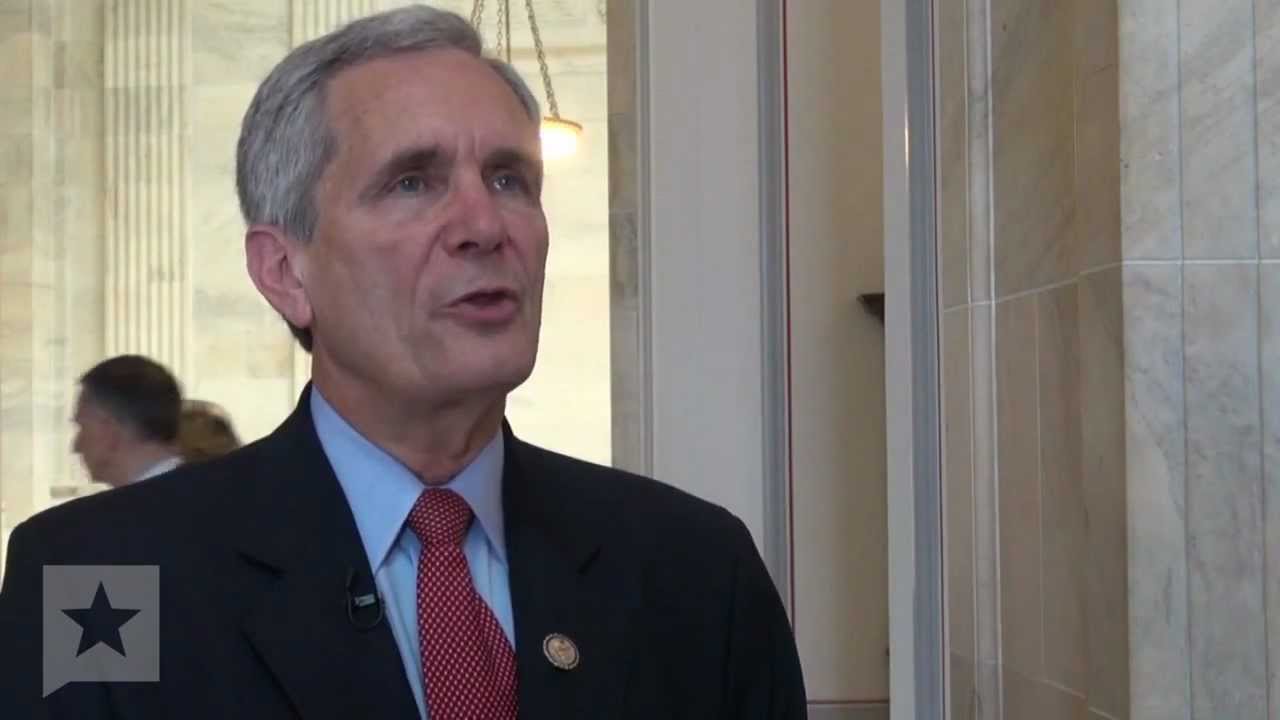
U.S. Rep. Lloyd Doggett
Of course, here in Texas, there is little we can do to stop the flow of red. A Democrat hasn’t won a statewide race in Texas in 20 years and that certainly won’t change tomorrow. I recently relocated from Dallas to Central Texas where my U.S. Representative, at least, is a progressive thinker and also a former associate from my days at the University of Texas, Lloyd Doggett. (Doggett was president of the UT student body which also made him head of student publications when I was the assistant managing editor of the university’s daily newspaper. We had numerous encounters in those roles.)

Wendy Davis
In Texas, the magic number progressives will be looking at is 42.3. That’s the percentage of the total votes won by Democratic gubernatorial candidate Bill White in 2010. This year the Democratic standard bearer is, of course, Wendy Davis, who is seen, by some (I am not among those) as the straw horse for an eventual Democratic takeover of the state. If this is true, she must win more than 42.3 percent of the vote. I would say, in order for her campaign to be called "successful," she needs to win at least 45 percent. If she wins less than 42.3 percent, her campaign will go down as an unmitigated disaster and a huge setback for Democrats’ hopes here in Texas, especially when you consider all the attention — even outside of Texas — Davis’s campaign has received. She is considered more than just a candidate by many; she has been elevated to "folk hero" status. It will also be interesting to see if she can collect significantly more than the 2.1 million votes White received four years ago. I sincerely hope she does, but I’m certainly not willing to wager anything of value on the possibility.
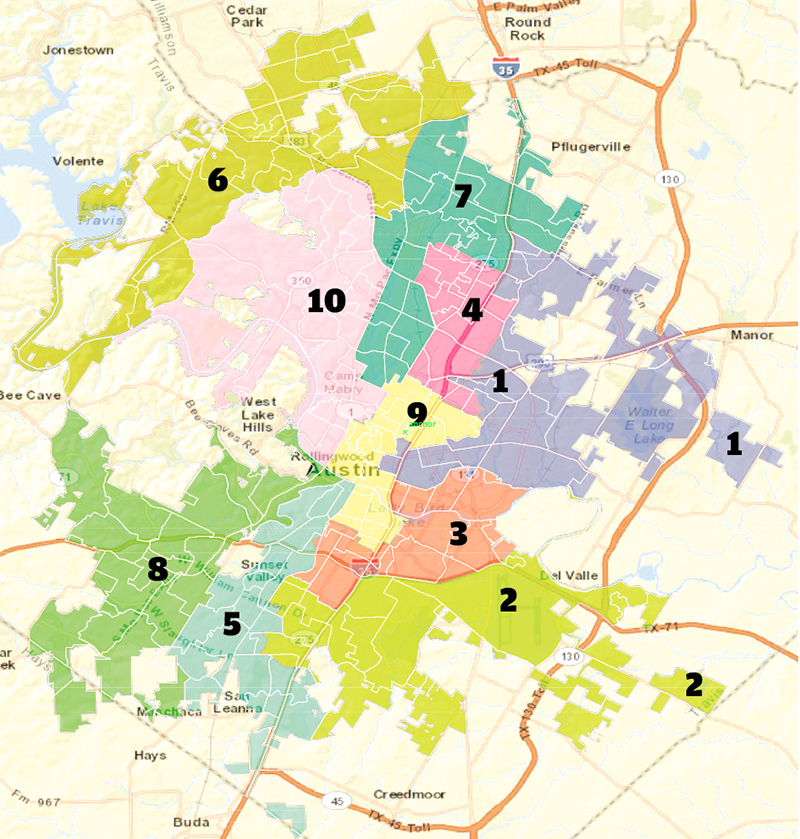
Austin's new 10 member city council districts
As a Dallas transplant as well as a significant player in the city’s transition from an at-large city council election system to a single-member district system, it’s fascinating to watch as Austin holds its first city election in which all 10 city council members will be elected from individual districts, with a mayor, of course, being the one at-large candidate. It’s interesting because in Dallas, where African Americans city council representatives fight tooth-and-nail to preserve four black city council districts, even though it could be argued the numbers no longer support that, in Austin only one district is considered winnable by an African American candidate and even in that district African Americans comprise only 35 percent of the voting age population. It would be enough to drive Dallas City Council members Dwaine Caraway, Carolyn Davis, Tennell Atkins and probably even Vonciel Hill over the edge. The black population here is quite evenly dispersed throughout all sections of the city because Austin leaders did not practice the systems of overt racism that resulted in the racially split North-South Dallas.

I will also give Austin credit for holding its municipal elections in November, which, of course, will mean more voter interest and a higher voter turnout than municipal elections in Dallas, which are held in May, when no other elections that might generate increased voter participation are on the ballot. On the other hand, I will give Dallas credit for doing rail right.

Austin voters will decide tomorrow if they want a light rail system in the city. I am a major proponent of mass transportation, especially in urban areas, but I have yet to make up my mind on Austin’s proposal. Dallas transportation visionaries (hopefully that’s not an oxymoron) wisely saw mass transportation as a regional issue and created, though a public referendum, a regional transportation authority that included 13 other municipalities in addition to Dallas. Plus, it isn’t just a light rail service: it operates buses, commuter rail and HOV lanes. DART is its own regulatory body. It is financed through sales taxes administered by all member cities.
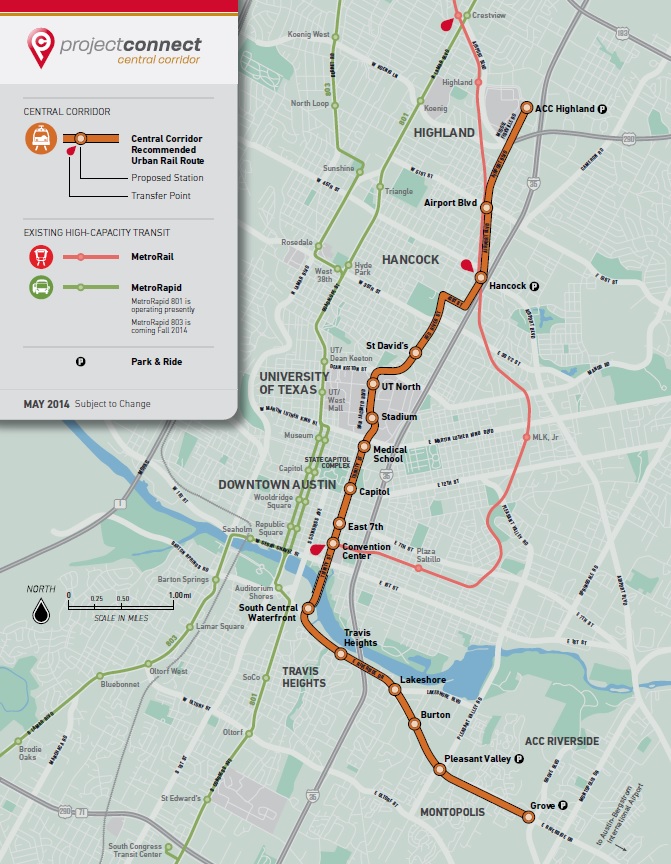
Austin's proposed rail line
Austin is going the light rail route on its own, with a proposal for only one line entirely within the city limits of Austin. It would be located along a north-south line just west of Interstate 35 until it crosses the Colorado river south of downtown where it would veer off to the southeast. One of the arguments against the rail proposal is that there is not that much rider ship along that corridor, that it should be located more to the west where more commercial areas are located. The problem is advocates agree with that assessment, but counter with the argument that "someday there will be more rider ship along the proposed route." I am not convinced that’s a compelling argument, but more than anything else I am chagrined that the rail proponents are thinking only locally and not regionally, especially when such neighborhood cities as Round Rock, Cedar Park, Kyle (my new home) and San Marcos (the fastest growing city in the United States the last two years) are growing as fast as they are. They need to be included in any transportation plan and Austin is shutting them out. In addition, the transportation system will be completely controlled by city government and will be funded by increased property taxes and a hoped-for windfall from the federal government (which probably won’t come if Republicans gain control of the Senate tomorrow).

I moved down here less than a month ago to retire close to the home of my son and granddaughter and I’m not going to live long enough the effects of mass transportation plans in Austin, let alone global climate change. (Neither are the heads of the oil and gas industries which is why they don’t give a damn if they destroy the planet – just as long as they continue to make their obscene profits). So I guess I shouldn’t be concerned about these things, but as the scorpion said to the frog, "It’s my nature." And if you don’t know what I mean by that last statement, rent and see the marvelous film The Crying Game, which, incidentally, a lot of us may be playing (the game, not the movie) this time tomorrow.

Friday, August 15, 2014

Plastic Bag Ban? What Plastic Bag Ban?


Born-again environmentalist D-Wayne Carriedaway, that District 4 Dallas city councilman who desperately wants to become mayor and hopes to achieve his goal through sheer bombast, came up with this idea that has become very popular among green cities: banning the use of plastic shopping bags.

Dallas wants you to believe it’s a "green city" and, in a moment of kindness, I’m willing to admit the city is lima bean green, at best. I also firmly believe a majority of Dallas citizens, when it is made clear to them all the harmful environmental effects as well as the detrimental financial effects resulting from the use of plastic bags, would support an all-out ban of plastic bags by a significant majority. Bans like those in already in effect in Austin; Los Angeles; San Francisco; Wasington, D.C.; Portland, Ore., and others. However, those who donate big bucks to the election coffers of those running for the Dallas City Council oppose an all-out ban by an even more significant majority. So, of course, Carriedaway’s Crusade had as much a chance of success as his hopes for higher office.

What he wound up settling for was an ordinance that allows store customers to continue to take their goods home in plastic bags, but they must pay 25 cents for each bag they use. (I still haven’t heard how this is going to be enforced at the self-checkout lanes, but that’s another story.) I guess Carriedaway figured (1) merchants would get weary of maintaining a separate product category for plastic bags, complete with their own scannable bar codes and/or (2) customers would quickly tire of shelling out 25 cents for a plastic bag and start using reusable shopping bags. Either one of those options would mean the end of plastic bags as we know them in Dallas. I don’t think either of those possible outcomes is realistic. Why?

Last night, in CFO Jeanne Chipperfield’s slide presentation during council member Adam Medrano’s budget town hall meeting, Ms. Chipperfield displayed a slide titled "Clean, Healthy Environment." The second bullet on that slide was: "Initiate enforcement of City’s new single-use bag ordinance." During the Q&A session following her presentation, one audience member asked Ms. Chipperfield what that bullet meant. Ms. Chipperfield replied "So (that’s the word she uses to begin the answer to every question directed her way) then went on to explain, from the city’s point of view, the purpose of the audience without ever once saying the "b" word, which led me to believe that word has been (pardon me for this) banned for use by city officials. She told the audience that the city nets 5 cents for every bag sold, money she suggested, would be used to pay for enforcing the ordinance. So, great news, folks, this ordinance pays for itself.

But the fact that the ordinance pays for itself was not what I was thinking when Ms. Chipperfield forecast the city would collect some $2 million in the 10 months of the fiscal year during which the ordinance will be law. What I was thinking was that amounts to 40 million new plastic bags introduced to the Dallas environment, 40 million additional plastic bags that will clog our water systems, strangle endangered wildlife and bringing a quicker demise to our landfill.

And Dallas has the gall to want to call itself a "green city."

Saturday, July 6, 2013

Eric Nadel on the proposed plastic bag ban

According to ace reporter Robert Wilonsky, Texas Rangers' legendary broadcaster Eric Nadel heartily supports Dwaine Carraway's proposal to ban plastic shopping bags.

Wilonsky reports he received the following from Nadel:

Eric Nadel
 
"Let’s stop the plastic bag madness, please. Plastic bags have a very slow rate of decomposition, and wind up on our streets, in land fills or eventually in our waterways and oceans. They are dangerous to marine life and harmful to the marine environment. They produce toxic microparticles that can enter the human food chain. Plastic bags can easily be replaced by biodegradable and re-usable materials that are not highly dispersed in the environment.

“Banning plastic bags is not the salvation of the environment, but it is a way to easily reduce the negative environmental impact of human activities. This one is a no-brainer. Now let’s move on to Styrofoam food packaging.”

Saturday, June 22, 2013

Da bag ban

Earlier this week, Los Angeles became the largest city in America to ban single-use plastic shopping bags. The ban will go into effect for large stores Jan. 1 and for all other stores July 1, 2014. Single-use paper bags were not banned, but customers who don’t bring their own reusable bags when they shop will have to pay 10 cents for each paper bag they need.

According to one story on the decision, "There is good financial reasoning behind the ban. Only five percent of single use plastic bags are recycled every year across the state and California municipalities spend almost $25 million a year to collect and throw away plastic bags that litter the streets and clog storm drains. Currently there are almost two billion plastic shopping bags and 400 million paper bags are distributed every year in Los Angeles."

The action by the Los Angeles Council, which enacted the ban on an 11-1 vote, came a week after two Dallas City Council committees were briefed on a ordinance proposed by Dwaine Caraway to ban both single use plastic and paper bags in Dallas. It’s not that Caraway is some sort of born-again environmentalist (even he admits he was the last person in Dallas to embrace recycling), but he’s laying the foundation for his mayoral campaign should incumbent Mike Rawlings decide not to seek a second term in two years, a time when term limits will force Caraway off the council.

Not that I fault Caraway for his actions. His goal is a sound one, although he should include Styrofoam containers in his ordinance as well. But some of his methods display his usual madness. His biggest mistake is insisting corporate sponsors, such as Coca-Cola , provide consumers reusable shopping bags free of charge. He doesn’t want to have consumers paying for them.

The way it appears, Caraway thinks only grocery stores pack their products in place plastic shopping bags. And even if that bit of lunacy was true, I doubt Coke is going to foot the bill for reusable shopping bags when the plastic containers their own products come in are coming under increasing attacks from environmentalists. Plus, if I was Tom Thumb, Kroger, Wal-Mart, etc., I would want my own logo on the bags — it’s called marketing.

Plus, what corporate sponsor is going to pay for the plastic bags used by such retail outlets as the Container Store, the Vitamin Shoppe and (ha! ha!) Condoms to Go, to name just three among thousands?

If Caraway has any hopes of passing his ban, he’s got to drop the idea of insisting that corporate sponsors pay for the reusable bags.

Of course, I’m not sure Caraway can get the pro-business council to buy into his ban idea even without the corporate sponsorship idea. While his proposed ordinance did seem to be greeted favorably by the Quality of Life Committee (even by committee chair Linda Koop who single handedly killed the last such proposed ordinance), it seemed to face a more hostile reaction from the Transportation and Environment Committee later the same day.

I still maintain that if the Dallas City Council wants to take a first-strike action to help the environment it should pass an ordinance that would not only prove the council was serious about all this "green stuff," but would also save taxpayers tens of thousands dollars annually as well as demonstrate unflinching support for a product the city itself fosters on all its citizens. That would be an ordinance prohibiting city funds be used for the purchase of water in plastic bottles. Take the first solo yourself, Dallas City Council, before you force others to sing your tunes.

Thursday, May 9, 2013

City gets to maintain Flow Control, but at a heavy price

The City of Dallas has won lost its battle to enact a Flow Control ordinance.

For those who have not been following this environmental issue, the City of Dallas wanted to turn the McCommas Bluff Landfill into a recycling center, a environmentally friendly place where all trash is converted into energy. In order to make such a development economically feasible, the center would need a lot more trash than it is receiving now. So the city passed an ordinance requiring that all trash collected in the city of Dallas be taken to McCommas Bluff for depositing.

The City wanted to use Flow Control to turn this ...
Now a bunch of private haulers, who needed more time to develop the technology needed to build and operate such a recycling center, so they could either (1) bid on the right to build the McCommas Bluff Center or (2) build one at their own landfills (which would be financially "iffy") took the city to court to challenge the ordinance.

... into this
And, lucky for them, the case landed in the court of a George W.-appointed judge who always sides with business interests in cases against the government even though the Supreme Court had ruled years earlier that flow control ordinances like the one the City passed were perfectly legal. So this business biased judge issued an injunction to stop the implementation of flow control.

The city appealed the ruling which put one of those private haulers, Waste Management, in a terrible predicament. Waste Management was the company that was stalling for time so it could figure out a way to bid on the McCommas recycling center. The problem for the private hauler was that another city ordinance prohibits any company that has a lawsuit pending against the City to bid on another City project. Waste Management had two options: Settle the suit or file another suit against the city challenging the "no-bid-allowed" ordinance.

The decision was made to settle.

At first glance, it may have looked like the city came out looking good. The Flow Control Ordinance, as it is written, is allowed to stand. It is legal. It’s when you get to the fine print that you see the City came out of this covered in garbage. Yes, the Flow Control Ordinance can stand but it can’t be enforced against any private haulers who signed a franchise with the city before the ordinance was passed during the life of that franchise agreement.

It wasn’t that long ago that the city charged private haulers a fee based on the number of dumpsters it placed throughout burg. Each dumpster was required to have a city sticker on it and those stickers had to be purchased from the City. Problem was the City didn’t have enough dumpster cops to go around inspecting every dumpster in the city to see if it had sticker on it and many of the private haulers knew this so they had dumpsters — lots and lots of dumpsters — out there without stickers.

So the City came up with a new plan in 2009: franchising the haulers. Under this proposal, in order to collect garbage within Dallas City Limits the haulers had to open their books to the City which would charge them a percentage of their income as a "franchise fee." The haulers went along with this and signed 20-year franchise agreements.

Get the picture now? That means the city can’t force these haulers to obey the perfectly legal Flow Control Ordinance until the year 2029. That doesn’t seem like too much of a "win" for the City as far as I can see. I’m at a loss to explain why the City agreed to this when it seemed, based on Supreme Court precedents, it had the winning hand.

But then the City of Dallas, especially when it comes to the City Attorney’s Office, has never been much of a fine-tuned fighting machine.

Of course, any new private hauling firm that wants to do business with the City of Dallas will have to obey Flow Control and take its collection to McCommas. But I don’t see any new haulers knocking on the City’s doors these days.

Tuesday, March 19, 2013

Houston trumps everyone with innovative trash plan

"One Day Dallas," a plan to pick up trash and recycling on the same day, was and is a great idea. But now the city of Houston has come up with a better plan: "One Bin for All."

Actually, it’s a throwback to the old days (and the present, if the absence of blue recycling carts in my neighborhood is any indication) when we never recycled at all. We just dumped everything into the garbage cans.

That’s what Houston is doing, except it’s taking everything in that garbage bin to a recycling center of some sort and not a landfill. This has all the earmarks of what some far-sighted Dallas sanitation officials (some of whom, sadly, are no longer making those decisions for the betterment of Dallas residents) wanted to accomplish at the McCommas Bluff Landfill.

A contest started by New York Mayor Michael Bloomberg designed to spur innovations in city government awarded Houston’s plan a runner-up prize of $1 million to pursue the idea. Here is the video Houston submitted to the Bloomberg Philanthropies’ Mayors Challenge. Watch it and eat your hearts out. It could have been us.

Wednesday, February 27, 2013

The winner and loser in today’s city council gas leases debate

Clear winner: City Manager Mary Suhm, who received the approval and support of 12 of the 15 council members for her actions.

Clear loser: District 14 council member Angela Hunt who, in calling for an independent investigation of Suhm’s actions regarding leasing city-owned land for gas drilling, called the city manager "a liar" and "dishonest," and then had the audacity, after 12 of her colleagues backed Suhm, to declare "no one has the right to attack my character." Thus, she goes on record as being the world’s thinnest skinned pit bull.

City Manager Mary Suhm
the winner and still champion
This whole debate has been much ado about nothing. It has to do with the difference between "city parks" and "city parklands." City parks are those places set aside by the city for some type of recreational purpose, whether it’s playing on swings, swimming, hiking, engaging in activities at a recreational center, cavorting at a splashground or just a marvelous semi-wilderness area like Moss Park where I can let my dog run wild and free without bothering another human soul. City parklands includes all these areas plus any other land owned by the Parks Department. It turns out some of this land is isolated swampland in the far corners of the city where no human being would venture unless they wanted to dump a body in place where they could be assured no one would find it.

When the city council said they didn’t want drilling on parklands it was obvious members were referring to city parks and not to Dallas’ answer to the swamps of the Meadowlands or Pelham Bay.

As a strict environmentalist, I do not support the concept of gas drilling within the city limits of Dallas. But an overwhelming majority of the city council disagrees with me on this issue and I would not argue with anyone who contends that a majority of the residents of this city supports drilling. Plus, when this matter first came up for debate almost six years ago, the city was going through such severe financial straits the council was forced to raise property tax rates just to continue to provide most basic services. At that time they instructed the city manager to "be creative" and (one of my least favorite expressions) "think outside the box" in finding new ways to increase revenues.

Now it seems a small handful of demagogues on the council want to chastise and punish her for doing exactly what they told her to do.

I worked alongside Mary Suhm for a few years when she was first assistant city manager. She has her faults. She tends to overreact in many situations. She can make decisions before all the facts are in. And, occasionally, she puts her faith and trust in individuals who do not deserve that faith and trust.

But I’ll tell you three things about Mary Suhm you can take to the bank. One: She is truthful. Two: She is honest. Three: She always — always — acts in a way she is convinced is in the best interest of the city and the citizens of Dallas.

Hopefully, when she does decide to step down, her replacement will have half of her integrity.

Thursday, August 23, 2012

What’s next for city’s Solid Waste Plan

"I believe we possess all the resources and talents necessary. But the facts of the matter are that we have never made the national decisions or marshaled the national resources required for such leadership. We have never specified long-range goals on an urgent time schedule, or managed our resources and our time so as to insure their fulfillment."

President John F. Kennedy uttered those words in a memorable speech delivered May 25, 1961, during which he also said this: "I believe that this nation should commit itself to achieving the goal, before this decade is out, of landing a man on the Moon and returning him safely to the Earth."

At the time, everyone applauded his determination while, at the same time, thinking such a goal was impossible. Yet, a little more than eight years after he laid down the gauntlet, Neil Armstrong and Buzz Aldrin landed on the moon on July 20, 1969, and, of course, returned safely to earth.

The Dallas City Council on Wednesday passed a Solid Waste Management Plan designed to achieve zero waste going to the city’s landfill. Originally the plan called for this goal to be achieved by the year 2040, but Council member Linda Koop successfully added an amendment to the plan that removed this and all other "timelines" contained in the plan. Basically, this gives the city a "do-over."

So where should the city do next?

The city should establish the goals of having a 75 percent diversion rate by the year 2020 and a 100 percent diversion rate by the year 2030.

Too ambitious? Not nearly as ambitious as Kennedy’s "man on the moon" before the end of the 1960s. I know, many of you weren’t alive in 1961. But I was. Television shows were still broadcast in black and white. (1965 was the first year in which more than half of all television shows were broadcast in color.) Not only were there no personal computers in1961, that was the year the IBM Selectric typewriter was introduced. (For those who have no idea what I’m talking about, that was a revolutionary electric typewriter that replaced typing bars with a small sphere). However, most of us continued to use manual, non-electric typewriters. It wasn’t until 1970, a year after man landed on the moon, that Japan introduced the first pocket calculator.

So if President Kennedy could set less than a 10-year timeline for putting a man on the moon in that era, then achieving zero waste in 18years now should be a walk in the park.

The city must also lead by example.

The solid waste plan outlines things all of us must do to achieve zero waste. By all of us I not only mean us as individuals, but us as business owners, apartment owners, manufacturers, etc. If the city really wants "all of us" to follow its plan, it should take some actions to make it accountable.

The first thing the city can and should do immediately is to prohibit all city departments from using public funds to purchase bottled water.

Bottled water costs anywhere from 240 to 10,000 times as much as tap water and tastes no better than Dallas’s pristine tap water. An ounce of bottled water costs more than an ounce of gasoline and everyone these days is complaining about the high cost of gas. According to the Container Recyling Institute, only 20 percent of plastic water bottles are actually recycled; the rest end up in landfills where they take 1,000 years to biodegrade. In addition, large amounts of other resources, like energy, oil and even water are depleted in the bottle manufacturing process and transporting these bottles long distances burns enormous amounts of fossil fuels.

Require all city departments to purchase products that maximize postconsumer recycled content and recyclable or compostable materials, and that favor durability, repairability, and reuse.

Appoint a Zero Waste Coordinator to oversee the city’s diversion efforts and assistant coordinators for each city department.
This coordinator should regularly update the City Council on how the city is "leading by example."

Actions the City Council should take immediately are:

An ordinance requiring the entire city to separate recyclables, compostables, and landfill trash.  The city now "asks" residents to separate recyclables, but doesn’t make it mandatory. The time for "asking" has passed and the city should provide composting containers in the same manner it provided the blue recycling containers.

An ordinance requiring the use of compostable plastic, recyclable paper and/or reusable checkout bags by all retail establishments starting October 1, 2015 and requiring these establishments charge a minimum of ten cents per bag. This ordinance should also apply to restaurants starting October 1, 2016.

An ordinance prohibiting restaurants and food vendors from using styrofoam food service ware and instead to use food ware that is compostable or recyclable.

Establish a cigarette litter abatement fee of 20 cents per pack of cigarettes sold in Dallas to recover the cost of abating cigarette litter from city streets, sidewalks, and other public property.

Require Yellow Pages distributors to get the approval, or opt-in agreement of all Dallas residents before delivering phone book directories.

If we could put a man on the moon in the 1960s, surely we can accomplish these aforementioned recommendations now.

Wednesday, August 15, 2012

A few observations

  • I was more than pleasantly surprised by the reception the long-term sanitation "zero waste" plan received yesterday from the Dallas City Council’s Environment and Transportation Committee. Ultra conservative Sandy Greyson went on record as saying her constituents are demanding a ban on plastic bags, which the plan proposes to implement within five years, and even Mr. Anti-Environment himself, Sheffie Kadane, couldn’t wait to make a motion to favorably recommend the plan to the full council.
  • Now that Jimmie Fallon has been nixed as the host for the next Academy Awards show, I have an off-the-wall suggestion: Tom Hanks. He is beloved by the Hollywood community and, by the way, have you seen his hosting gigs on Saturday Night Live? I think he could pull it off. My real first choice to host would be Hugh Jackman but there’s a good chance he’ll be one of the co-favorites (along with Daniel Day-Lewis) for the best actor trophy this year so that might present a conflict. So let’s give Hanks a shot, if his schedule permits.
  • You would think a new hotel opening in the Cedars area would receive more attention than it has, but I have not heard a word about the Nylo. Maybe because it’s only 70 rooms, but, still, the Cedars is a hot area right now.

Monday, August 13, 2012

Dallas may get a little greener

A while back I wrote about how Dallas likes to consider itself a "green city," which, in reality, it is, but only lima bean green, not forest green. However, the city is proposing what, for Dallas, can be considered an ambitious plan to get a little greener. (Cities like Austin, San Francisco and Los Angeles would call this plan less than "ambitious," but there you have it.)

Mary Nix at McCommas Bluff
Tomorrow, Dallas Sanitation Services Director Mary Nix will present to the City Council’s Transportation and Environment Committee something that is being billed as a "Local Solid Waste Management Plan."

Sounds simple enough and it’s main goal is particularly worthwhile: Eliminating buried waste (i.e., taking trash to landfills) by the year 2040, which seems too far in the future for me. But then I’ll be lucky to be around in 2020 when the goal of the plan is to divert 40 percent of our trash, which is where I would have wanted us to be today. But, like I said, Dallas is only lima bean green.

There is an interesting strategy at work here. Around this time last year, the big argument was over "flow control," a perfectly legal plan in which all the garbage collected within the city had to be taken to a municipal waste disposal facility, either the McCommas Bluff Landfill or the Bachman Transfer Station. That plan narrowly passed, but then private waste haulers, notably Waste Management Inc. (which, incidentally is solidly in favor of flow control, but only after its own landfill is filled), filed suit and a pro-business judge directly disavowed Supreme Court precedents and granted Waste Management an injunction.

With this new "Local Solid Waste Management Plan," the city is not making flow control (now the politically correct term is "resource recovery), a goal, but merely an unmentioned strategy needed to achieve a 100 percent diversion rate three decades from now. The way it’s being phrased now (on Page 15 of Nix’s presentation) is zero waste can be achieved through, among other things, "maximum resource recovery," which will require (although the presentation doesn’t specifically say so) flow control. Then on the next page of the presentation, labled "10 steps recommended in plan to achieve ‘Zero Waste’ status," steps nine and 10 call for the construction of a "Materials Recovery Facility" and to "develop a Resource Recovery Park to convert waste products to energy." We’ve already been told that the only way these two ideals are economically viable is through the implementation of flow control. So even though the words are explicitly mentioned, it’s still the elephant in the room.

But an even larger elephant is directly presented. On Page 17 of her presentation, Nix is going to call for banning the use of plastic bags and Styrofoam cups within the next five years. Why she’s stopping at plastic bags and not all non-reuseable bags as the real green cities have done is hard to figure out. Perhaps she just doesn’t want to push her luck with our obviously reactionary City Council. But it is definitely a step — a major step — in the right direction. The idea was floated not that long ago and was not warmly embraced by those council members.

I’ll be interested to see and hear how the discussion goes in tomorrow’s committee meeting. But perhaps we may begin to color Dallas a slightly deeper shade of green soon.


Saturday, March 3, 2012

Dallas too cowardly to follow Austin’s lead

I’m betting right now that Dallas doesn’t have the cajones to do right by our environment and follow Austin’s lead in banning plastic and paper shopping bags.

The Austin city council voted unanimously — unanimously — this week to enact a broad ban on the bags, requiring consumers to use reusable bags when shopping. The ban doesn’t go into effect until a year from now, giving the city more than enough time to educate residents on the change.

Can you imagine our city council — which is going to be far more protective of the Tom Thumbs and Central Markets than they are about our environment — taking a similar action? Our city council barely had the courage to pass a pro-environment flow control ordinance and now many on the council are having second thoughts about that since major business contributors are suing the city to stop its implementation. Plus, with all the furor over flow control, I doubt the city’s staff has the fortitude to even suggest such a plan.

But, as studies prove and Austin knows, such a ban is necessary. Plastic bags last for years and consume valuable landfill space. They have been discovered in the stomachs of marine animals. It takes 12 million barrels of oil a year to produce the number of plastic bags used in America every year. The manufacture of paper bags wastes energy and emits gases that contribute to global warning.

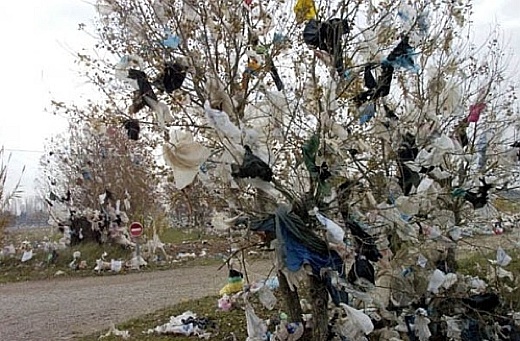
I love taking my dog to Moss Park because it contains fields and forests where she can romp around to her heart’s content. But I have been terribly saddened recently to see hundreds of plastic bags dangling from the branches of trees in that forest. Is that how we "Beautify Dallas?"

I would love to see the City of Dallas prove me wrong. I would also love to see world peace, Rush Limbaugh banished to a women’s prison and never hear another word about the Margaret Hunt Hill Bridge. The odds on all of those happening are just about the same.

Wednesday, February 1, 2012

GOP politics plays role in Flow Control ruling

Judge Reed O'Connor
I didn’t really have to confirm the fact that U.S. District Judge Reed O’Connor was appointed to the bench by 43. I could tell that by his ruling yesterday granting an injunction to put a halt, at least temporarily, to the city’s ambitious plan to convert the McCommas Bluff Landfill into an environmental center.

According to Judge Reed, using reasoning that comes directly from the Bush economic script that plunged this country into its current recession, increasing the profits of a private business at the expense of Dallas property tax payers "is in the public interest."

Yes, the 1 per cent wins again. The poor and the middle class get screwed again. And you wonder why those Occupy Wall Streeters are grumbling.

Wednesday, December 21, 2011

City tells waste haulers they can dump their suit — the law is on the City’s side

Dallas city attorneys have filed a response to the waste haulers attempting to stop the city’s perfectly legal move that would require all trash collected within the city limits to be taken to a city owned and operated dump site — either McCommas Bluff Landfill or the Bachman Transfer Station.

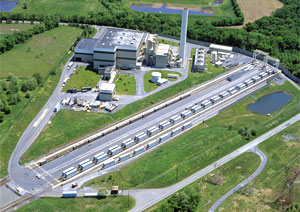
Dallas wants to replace this ...
The haulers filed suit seeking a temporary injunction to stop the implementation of the so-called Flow Control Ordinance which the City Council passed 9-6. But the City says basically, "Wait a minute. The Supremes up in Washington have already ruled on this and found that Flow Control is absolutely within the right of a city to invoke. What follows is a story about the entire mess that recently appeared in that ever-popular publication Waste & Recyling News (a subscription to which would make the perfect holiday gift for that special person in your life).


.... with this
Flow control directly advances Dallas "fundamental aim to operate in an environmentally sustainable manner as a leader and innovator in green management," the city’s attorney wrote in response to the lawsuit filed challenging the law.

City Attorney Peter Haskel responded to the National Solid Wastes Management Association and various waste haulers which challenged the city’s flow control ordinance passed in September. NSWMA has asked the court to approve a preliminary injunction to stop the ordinance from going into effect while the challenge works its way through the courts.

Dallas has already agreed to hold off implementing the ordinance until at least 30 days following the court’s ruling on the preliminary injunction, scheduled for Jan. 12.

The flow control ordinance dictates that all waste picked up in the city must be taken to either McCommas Bluff Landfill or the Bachman Transfer Station, both owned by the city. Waste Management Inc. operates two landfills right outside of the city and Republic Services Inc. operates one right outside of the city.

Previously, NSWMA argued the flow control ordinance violates the various franchise agreements it has with haulers and the ordinance is contrary to various state and federal laws.

Dallas disagrees.

"[NSWMA and the haulers] purport to identify preemptive conflicts with state law that simply do not exist," Haskel wrote in a filing Dec. 20 in U.S. District Court in Texas.

The 26-page filing, arguing against the preliminary injunction, said nowhere in the franchise agreements does it grant the right for franchises to dispose waste anywhere they want, and it specifically outlines that the franchisees bare the risk of regulatory change.

The city mentions the landmark United Haulers v. Oneida-Herkimer case several times, a previous flow control case that was settled when the U.S. Supreme Court sided with the municipality’s right to institute flow control.

"Plaintiffs’ views are also ultimately incompatible with the Supreme Court’s own assessment of flow control in United Haulers, a case they never once cite," Haskel wrote.

The Supreme Court ruled that police power supports flow control as a legitimate and traditional government function, the city argued in the filing. The state legislature also explicitly authorized municipalities to tackle waste management, the filing said, with cities being able to "adopt rules for regulated solid waste collection, handling, transportation, storage, processing and disposal."

The city argues flow control is the first in a multistep process to "make landfills obsolete by using emerging technologies to reuse the city’s solid waste in the form of energy, fuels and reusable products."

Dallas is the largest city in the country to pass a flow control ordinance, predicting it would bring an additional $13 million to the city annually because of tipping fees. The city estimates that about 700,000 tons to 900,000 tons of waste is picked up annually inside the city and disposed outside the city at private facilities.

NSWMA will be able to respond to the filing before the Jan. 12 preliminary injunction.

Wednesday, August 17, 2011

Schutze hijacked by trucking interests

It was interesting to read Dallas Observer columnist George Schutze’s article about Flow Control, which is nothing more than the ridiculous rehashing of the off-the-subject rantings espoused by the commercial garbage haulers who, for their own selfish reasons, naturally oppose the plan.

I, for one, can’t understand why anyone would be opposed to converting this into this, which, in short, is exactly what the result of Flow Control will be. When City Councilman Tennell Atkins recently visited such a recyling facility already up and operating in northern California a couple of weeks ago he returned extremely impressed by the possibilities. And Mayor Mike Rawlings is sold completely on the benefits Flow Control will bring to South Dallas. But Schutze seems to be against plans that will provide low cost energy to power thousands of homes and enough fuel to drive the City of Dallas’ entire sanitation fleet.

And I really can’t be believe Schutze couldn’t read between the lines of Mike Sorrell’s recent op-ed piece in the Dallas Morning News. He called it “very persuasive.” The only person I’ve heard it persuaded was Schutze. All that op-ed piece was about was positioning Sorrell as some self-appointed savior for South Dallas.

He also needs to talk to City Council member Carolyn Davis. She, too, was worried about the effect Flow Control would have on the landfill’s residential neighbors. So she took a trip to the landfill and discovered what eveyone else who has actually been to the place already knows — the landfill doesn’t have any residential neighbors.

Schutze wrote Flow control “does not include a single element of community consciousness.” I guess his complete ignorance of the situation may be forgivable here because it is obvious he only considered one side of this argument and relied completely on the city’s briefing materials for the other side. That means he is completely unaware of the entire Flow Control proposal which includes a lot of benefits to a wider area including new academic programs and incentives for Paul Quinn College, of which the aforementioned Sorrell is the president. Which makes Sorrell's actions doubly painful. Here is a school that has lost a lot of its accreditation, but is Sorrell interested in promoting the academic interests at his school? Obviously not. He is only interested in promoting himself and it’s a shame Schutze and others can’t see through this charade. The details of this “community consciousness” will be revealed during upcoming council briefings, but would have been available to Schutze before he wrote his piece had he only had the journalistic ethic to ask instead of being hijacked by the truckers.

Tuesday, August 9, 2011

Ever been attacked by an owl ... in slow motion?


Anyone remember the Cowboy Twinkies? Sure you do. That was the band that backed up Ray Wylie Hubbard just a scant 40 years or so ago. Anyway, the lead guitarist for the Cowboy Twinkies was a chap named Terry Ware (as I recall, Hubbard had the nickname “Buffalo” in there somewhere — I have no idea why). I mention this only because it is Ware who led me in the direction of this amazing clip.

Friday, July 29, 2011

Austin mayor to push ban on single-use plastic bag

Austin Mayor Lee Leffingwell and two other council members will introduce a resolution at the next council meeting Aug. 4 calling for the “phase-out of single use plastic check-out bags” in the city.

The bags “cost Austin taxpayers a significant amount of money,” Leffingwell wrote. “In fact, Austinites use about 263 million plastic bags annually, costing the city about $850,000 per year for collection, litter clean-up, landfill management and recycling contamination. This figure does not include the cost to our environment.”

Makes you wonder what impact single-use plastic bags have on the meager City of Dallas budget. Dallas needs to join such cities as San Francisco; Portland, Ore.; and Washington, D.C., in outlawing these things. Hey, aren’t we supposed to be this super-duper “Green City” or is that, like so much else, just a lot of talk?

Leffingwell said Austin engaged in an 18-month voluntary “Reduce, Reuse, Recycle” campaign with Whole Foods, Target, Walmart, Walgreens and Randalls (Tom Thumb to those of us here) hoping to achieve a 50 percent reduction of plastic bags sent to the landfill. The campaign resulted in only a 20 percent reduction, however, and that simply wasn’t good enough for Leffingwell. Hence his push for an out-right ban.

“Our resolution calls on the City Manager to conduct a stakeholder process and develop an ordinance to bring back to Council this November,” Leffingwell wrote. “Concerned citizens and affected businesses will have a chance to help shape the timeline of a phase-out and determine if any exceptions should be made for certain types of businesses or situations.”

Anyone listening on the Dallas City Council?

Wednesday, June 29, 2011

Burying the garbage, burying the lead

Last night a meeting was held at Paul Quinn College to talk about an idea that could not only bring many new jobs to South Dallas, but also completely eliminate the McCommas Bluff Landfill.

In journalism circles, “the lead,” or the opening of any news story, is supposed to contain the main news element. However, in this Channel 11 report, we didn’t learn about the potential for new jobs or converting the outdoor landfill into an indoor fuel-producing facility until the end and even then it seemed like an afterthought. DeWitt Riddick and C. Richard King, two of my old journalism professors at the University of Texas at Austin, would cringe watching this.

Bringing higher-tech jobs to South Dallas has always seemed to be a priority of many of our locally elected officials. It’s a shame that went an idea comes along to do just that it is treated this way by the media.

Saturday, May 28, 2011

The case for fracking

Fracking, as just about everybody knows by now, is short for hydraulic fracturing, a system of extracting oil that involves a high pressure mix of water, sand and hazardous chemicals. There is mounting evidence that fracking poses risks to water supplies. However, there is also mounting evidence that fracking could increase our country’s output of oil by 25 percent within the next 10 years.

According to this story in today’s New York Times, one of the most bountiful such oil fields is Eagle Ford in South Texas where more than a dozen companies are erecting 3,000 wells.

“The oil industry says any environmental concerns are far outweighed by the economic benefits of pumping previously inaccessible oil from fields that could collectively hold two or three times as much oil as Prudhoe Bay, the Alaskan field that was the last great onshore discovery,” the Times story says. “The companies estimate that the boom will create more than two million new jobs, directly or indirectly, and bring tens of billions of dollars to the states where the fields are located, which include traditional oil sites like Texas and Oklahoma, industrial stalwarts like Ohio and Michigan and even farm states like Kansas.”

Real estate values have reportedly doubled in the Eagle Ford area, which is already producing 100,000 barrels a day and could reach 420,000 by 2015. That’s the same amount of oil produced by the entire country of Ecuador.

I’m thinking that with all this mother lode of riches all over the place, there’s no need to try to find more inside the city limits of Dallas. An effort to protect our ground water won’t put a huge dent in this oil glut.

Saturday, April 16, 2011

Another damning report on fracking

Oil and gas companies injected hundreds of millions of gallons of hazardous or carcinogenic chemicals into wells in more than 13 states from 2005 to 2009, according to an investigation by Congressional Democrats. The chemicals were used by companies during a drilling process known as hydraulic fracturing, or hydrofracking, which involves the high-pressure injection of a mixture of water, sand and chemical additives into rock formations deep underground. The process, which is being used to tap into large reserves of natural gas around the country, opens fissures in the rock to stimulate the release of oil and gas. This is the process the Dallas City Council, led by Dave Neumann, wants to approve to help add even more pollutants to the air and water here.

Many of the ingredients were “extremely toxic,” including benzene, a known human carcinogen, and lead. Companies injected large amounts of other hazardous chemicals including 11.4 million gallons of fluids containing at least one of the toxic or carcinogenic B.T.E.X. chemicals — benzene, toluene, xylene and ethylbenzene. The companies used the highest volume of fluids containing one or more carcinogens in Colorado, Oklahoma and Texas.

The report comes two and a half months after an initial report that found that 32.2 millions of gallons of fluids containing diesel, considered an especially hazardous pollutant because it contains benzene, were injected into the ground during hydrofracking by a dozen companies from 2005 to 2009, in possible violation of the drinking water act.