
 Posts
Posts


Wednesday, November 30, 2011
Gov. Hair on the voting age
Thanks to the folks at D magazine for this hilarious compilation. It is a classic.


Available on DVD: “Putty Hill”
 |
| The young ladies of Putty Hill |
In this case, those grieving survivors are residents of suburban Maryland. They’re margin-dwelling Roseanne types, minus the punch lines at 45-second intervals. They’re decent people, but they’re sad people, which is often what happens when someone is one or two paychecks from nothingness.
And they’re all here to pay honor to a dead teen named Cory, an overdose victim.
There’s a shirtless tattoo artist. There’s a muscle-bound ex-con. There are cousins and a brother. There are troubled teens out the wazoo. Staying true to the film’s low-fi mumblecore roots, there’s nothing remarkable about any of them or their lives, really — aside from the fact that nobody seems particularly happy or anything resembling fulfilled. Maybe, it’s hard not to think, Cory is the lucky one.
We’ll never know for sure, because we never meet him, aside from the oversized photo at his karaoke-bar funeral. We do get to know a little about him, though, in the unconventional, confessional-style interviews with which Porterfield peppers his film — interviews with Cory’s friends, cousins and siblings. That blend of documentary and drama is an odd touch — and a jarring one at first — but it’s the fuel that makes this film go, mostly because of the high quality of the film’s naturalistic, often-improvised performances. With each succeeding interview, the story and the sense of quiet desperation trickles off the screen.
But "story" is probably the wrong word. Putty Hill isn’t a story-driven film as much as it is a situational one and a character-driven one. As such, it moves along at a measured, contemplative pace, the kind of film that is prone to long, lingering shots and that is awash in ambient sound.
In other words, it’s a film for patient moviegoers. But for those moviegoers, it stands to be a rewarding experience.
Tuesday, November 29, 2011

Gov. Perry: The ultimate hypocrite


How lavishly is Hair living off Texas taxpayers? Well, forget for a moment that we’re footing the $500,00 in rent
But then Hair has been disgracing Texas taxpayers for years now and although the country and the world at large can now be spared the prospect of Hair even winning the GOP Presidential nomination, let alone the presidency, he will return to Texas stronger than ever where he will continue to destroy the state, enriching the already wealthy, saturating boards and commissions with appointees determined to destroy the state’s environment and crippling our children’s history classes.
Why I am secretly hoping for an OSU blowout Saturday
The BCS lost any sense of credibility when the Associated Press decided several years ago it no longer wanted its poll used to help determine the BCS standings. Now two-thirds of the formula used to determine the BCS standings come from the two least credible football polls in existence — the USA Today Poll which is comprised of football coaches who never get to see a game other than their own at any point in the season, and the Harris Poll whose membership is made up of has-beens and never-weres who should not be permitted to express an opinion on any subject that requires rational judgment. (Can anyone really be as stupid as Craig James appears to be on ESPN’s BCS countdown show? But he’s typical of the Harris voter.)

The most recent AP poll has Oklahoma State ranked No. 3 as does ESPN’s Power Rankings and, mosty importantly, my rankings. (OK, that last was meant slightly in jest). However, the ignorant USA and Harris polls have OSU ranked fifth, behind a Virginia Tech team that hasn’t won one single game against a noteworthy opponent all year and was embarrassed by a Clemson squad that turned out to be all flash and no substance. That No. 5 ranking probably precludes OSU from having any chance of playing for the national title even though the objective computers rank OSU high enough that the Cowpokes are No. 3 in the overall BCS standings.
For personal reasons, I’m going to be rooting for Oklahoma Saturday, but secretly I would love to see Oklahoma State win Bedlam by four or five touchdowns — to put on such a display that even the ignoramuses at USA Today and Harris reconsider the error of their ways and bump the Cowboys up the rankings. How high? High enough so we don’t have to sit through another unbearable LSU-Alabama game.
That first meeting this year between those teams was one of the worst played, most abysmally coached, poorly quarterbacked games between two ranked teams in college football history. Some misguided fools, although none who know anything about college football, called it an epic defensive struggle. Give me a break! It took almost five quarters for LSU to score a measly nine points against Alabama while Georgia Southern scored 21 against the Tide in less than two quarters and Georgia Southern is in something called the Football Sub-Culture Division or whatever the old Division 2 is known as these days. If West Virginia could score three touchdowns against LSU, why couldn’t the great Alabama even manage one. Face it: LSU-Alabama Uno was rotten football.
And I don’t want to see it repeated in the BCS Championship game, but I’m afraid the fix is in. Not only do I not want to see a terribly played/coached/quarterbacked rematch, the BCS title game has a tradition, albeit a short one, of featuring at least one quality quarterback: Auburn’s Cam Newton earlier this year, Alabama’s Greg McElway and (almost) Texas’ Colt McCoy last year, Florida’s Tim Tebow and Oklahoma’s Sam Bradford in 2009, LSU’s Matt Flynn, currently Aaron Rodgers backup in Green Bay, in 2008, Ohio State’s Troy Smith in 2007 and, of course, the best one of all, the Vince Young/Matt Leinert matchup in 2006. Neither LSU’s Jordan Jefferson nor Alabama’s A.J. McCarron are in that discussion. But OSU’s Brandon Weeden is. So is Stanford’s Andrew Luck, Houston’s Case Keenum and Boise State’s Kellen Moore. And OSU, Stanford, Houston or Boise State, playing either Alabama or LSU (I really don’t care which), would provide a far more entertaining BCS Championship game than another round of Alabama-LSU.
Please, OSU, win Bedlam big Saturday. Win big enough so even the nincompoops at USA Today and Harris can see the error of their ways. Win big enough to save mankind from an Alabama-LSU rematch.
The most recent AP poll has Oklahoma State ranked No. 3 as does ESPN’s Power Rankings and, mosty importantly, my rankings. (OK, that last was meant slightly in jest). However, the ignorant USA and Harris polls have OSU ranked fifth, behind a Virginia Tech team that hasn’t won one single game against a noteworthy opponent all year and was embarrassed by a Clemson squad that turned out to be all flash and no substance. That No. 5 ranking probably precludes OSU from having any chance of playing for the national title even though the objective computers rank OSU high enough that the Cowpokes are No. 3 in the overall BCS standings.
For personal reasons, I’m going to be rooting for Oklahoma Saturday, but secretly I would love to see Oklahoma State win Bedlam by four or five touchdowns — to put on such a display that even the ignoramuses at USA Today and Harris reconsider the error of their ways and bump the Cowboys up the rankings. How high? High enough so we don’t have to sit through another unbearable LSU-Alabama game.
That first meeting this year between those teams was one of the worst played, most abysmally coached, poorly quarterbacked games between two ranked teams in college football history. Some misguided fools, although none who know anything about college football, called it an epic defensive struggle. Give me a break! It took almost five quarters for LSU to score a measly nine points against Alabama while Georgia Southern scored 21 against the Tide in less than two quarters and Georgia Southern is in something called the Football Sub-Culture Division or whatever the old Division 2 is known as these days. If West Virginia could score three touchdowns against LSU, why couldn’t the great Alabama even manage one. Face it: LSU-Alabama Uno was rotten football.
And I don’t want to see it repeated in the BCS Championship game, but I’m afraid the fix is in. Not only do I not want to see a terribly played/coached/quarterbacked rematch, the BCS title game has a tradition, albeit a short one, of featuring at least one quality quarterback: Auburn’s Cam Newton earlier this year, Alabama’s Greg McElway and (almost) Texas’ Colt McCoy last year, Florida’s Tim Tebow and Oklahoma’s Sam Bradford in 2009, LSU’s Matt Flynn, currently Aaron Rodgers backup in Green Bay, in 2008, Ohio State’s Troy Smith in 2007 and, of course, the best one of all, the Vince Young/Matt Leinert matchup in 2006. Neither LSU’s Jordan Jefferson nor Alabama’s A.J. McCarron are in that discussion. But OSU’s Brandon Weeden is. So is Stanford’s Andrew Luck, Houston’s Case Keenum and Boise State’s Kellen Moore. And OSU, Stanford, Houston or Boise State, playing either Alabama or LSU (I really don’t care which), would provide a far more entertaining BCS Championship game than another round of Alabama-LSU.
Please, OSU, win Bedlam big Saturday. Win big enough so even the nincompoops at USA Today and Harris can see the error of their ways. Win big enough to save mankind from an Alabama-LSU rematch.
Sunday, November 27, 2011
My top 25 college football teams
Last week's rank in parenthesis
1. LSU 12-0 (1)
2. Alabama 11-1 (2)
3. Oklahoma State 10-1 (3)
4. Stanford 11-1 (5)
5. Oklahoma 9-2 (4)
6. Oregon 10-2 (6)
7. Boise State 10-1 (7)
8. Arkansas 10-2 (8)
9. Houston 12-0 (10)
10. Southern California 10-2 (11)
11. Virginia Tech 11-1 (15)
12. Michigan 10-2 (9)
13. Wisconsin 10-2 (12)
14. Georgia 10-2 (13)
15. South Carolina 10-2 (16)
16. Kansas State 9-2 (14)
17. Michigan State 10-2 (17)
18. Baylor 9-3 (21)
19. TCU 9-2 (18)
20. Texas 7-4 (23)
21. Nebraska 9-3 (24)
22. Notre Dame 8-4 (22)
23. Penn State 9-3 (19)
24. Texas A&M 6-6 (20)
25. Missouri 7-6 (25)
1. LSU 12-0 (1)
2. Alabama 11-1 (2)
3. Oklahoma State 10-1 (3)
4. Stanford 11-1 (5)
5. Oklahoma 9-2 (4)
6. Oregon 10-2 (6)
7. Boise State 10-1 (7)
8. Arkansas 10-2 (8)
9. Houston 12-0 (10)
10. Southern California 10-2 (11)
11. Virginia Tech 11-1 (15)
12. Michigan 10-2 (9)
13. Wisconsin 10-2 (12)
14. Georgia 10-2 (13)
15. South Carolina 10-2 (16)
16. Kansas State 9-2 (14)
17. Michigan State 10-2 (17)
18. Baylor 9-3 (21)
19. TCU 9-2 (18)
20. Texas 7-4 (23)
21. Nebraska 9-3 (24)
22. Notre Dame 8-4 (22)
23. Penn State 9-3 (19)
24. Texas A&M 6-6 (20)
25. Missouri 7-6 (25)
Thursday, November 24, 2011
This week's top 10 college football games
All games Saturday unless otherwise noted. All times central.
1. Arkansas at LSU, Friday, 1:30 p.m., CBS
2. Texas at Texas A&M, Thursday, 7 p.m., ESPN
3. Notre Dame at Stanford, 7 p.m., ABC
4. Houston at Tulsa, Friday, 11 a.m., FSSW
5. Clemson at South Carolina, 6:45 p.m., ESPN
6. Georgia at Georgia Tech, 11 a.m., ESPN
7. Alabama at Auburn, 2:30 p.m., CBS
8. Ohio State at Michigan, 11 a.m., ABC
9. Penn State at Wisconsin, 2:30 p.m., ESPN
10. Virginia Tech at Virginia, 2:30 p.m., ESPN2
1. Arkansas at LSU, Friday, 1:30 p.m., CBS
2. Texas at Texas A&M, Thursday, 7 p.m., ESPN
3. Notre Dame at Stanford, 7 p.m., ABC
4. Houston at Tulsa, Friday, 11 a.m., FSSW
5. Clemson at South Carolina, 6:45 p.m., ESPN
6. Georgia at Georgia Tech, 11 a.m., ESPN
7. Alabama at Auburn, 2:30 p.m., CBS
8. Ohio State at Michigan, 11 a.m., ABC
9. Penn State at Wisconsin, 2:30 p.m., ESPN
10. Virginia Tech at Virginia, 2:30 p.m., ESPN2

Bruce plans tour, CD for 2012

"Info on the US dates and the World tour dates will be coming up shortly," Springsteen says on his Webpage. "In addition, we want you to know the music is almost done (but still untitled), we have almost settled on the release date (but not quite yet) and that we’re all incredibly excited about everything that we’re planning for 2012."
Monday, November 21, 2011
Available on DVD: “Submarine”
 |
| Craig Roberts and Yasmin Paige in Submarine |
"Submarine is an important film. Watch it with respect," an introductory note from this peculiar, engaging young man suggests. After obeying the second part of that message, I can’t quite agree with the first, which I doubt was meant entirely in earnest. Significance can be overrated, and Submarine makes the most of its whimsical triviality.
Not that what happens — first love, family trouble, stray encounters with the weirdness of the world — feels trivial to Oliver. The key to any coming-of-age story, whether the author is James Joyce or John Hughes, lies in calibrating the distance between how momentous and unprecedented certain experiences can feel and how normal, how usual they really are. Learning to live with that discrepancy is part of growing up, which Oliver realizes at the end of the film.
"I don’t know if I’ve come of age," he says in a voice-over. "But I’m certainly older. I feel shrunken." You could say that he has achieved his actual size, through a process that is both funny and sad.
It may tell you everything you need to know to note that one of Oliver’s favorite books is The Catcher in the Rye, that he has a drawing of a young Woody Allen tacked to his bedroom wall, and that his idea of a date movie is The Passion of Joan of Arc. It says a lot about the world imagined by Ayoade (and by Joe Dunthorne, who wrote the novel on which Submarine is based) that the small seaside town where Oliver lives has a cinema that shows old foreign movies. While no period is specified, Oliver is growing up in an era of small, bulky television sets, VHS tapes and ill-advised hairstyles. That would make him roughly my age. Yikes.
The boy’s own shaggy schoolboy ’do is not so bad; nor is the Prince Valiant bob favored by Jordana Bevan (Yasmin Paige), his moody first love. Oliver’s mother, Jill (Sally Hawkins), wears a blond helmet rivaled only by her husband’s unkempt flop-over. Transcending all of them is the spike-topped mullet favored by Graham Purvis (Paddy Considine), a neighbor of the Tates who is also an old flame of Jill’s and a new-age guru with a customized van.
In three chapters, framed by a prologue and an epilogue, Oliver must negotiate his own relationship with Jordana and an apparent crisis in his parents’ marriage. His dad, Lloyd (the brilliantly deadpan Australian actor Noah Taylor), is a marine biologist with a depressive streak, and Oliver worries that Jill is drifting toward Graham. Meanwhile he faces a test of his devotion to Jordana, and it all adds up to a big, drily hilarious ball of confusion.
And not really to anything new. This is the kind of story, as Oliver himself would admit, that we have already seen dozens of times. But Ayoade’s keen visual wit and clever, knowing touches keep it surprising and nimble, especially in the quick, lurching early scenes, which are startlingly funny. At moments he approaches the mordant, heady sense of the sorrows and freedoms of youth captured by François Truffaut in The 400 Blows, a movie that, come to think of it, Oliver has no doubt already seen.
The freshness wears off a bit as the story takes shape, and crucial passages are handled by means of montage sequences accompanied by broody tunes from Alex Turner, frontman of Arctic Monkeys. But the growing familiarity is in keeping with the logic of Oliver’s discovery that, unique as he may be, he’s also just like everybody else.
Sunday, November 20, 2011
My top 25 college football teams
Last week's rank in parenthesis
1. LSU 11-0 (1)
2. Alabama 10-1 (3)
3. Oklahoma State 10-1 (2)
4. Oklahoma 8-2 (4)
5. Stanford 10-1 (6)
6. Oregon 9-2 (5)
7. Boise State 9-1 (7)
8. Arkansas 10-1 (8)
9. Michigan 9-2 (12)
10. Houston 11-0 (17)
11. Southern California 9-2 (16)
12. Wisconsin 9-2 (13)
13. Georgia 9-2 (9)
14. Kansas State 9-2 (15)
15. Virginia Tech 10-1 (10)
16. South Carolina 9-2 (14)
17. Michigan State 9-2 (19)
18. TCU 9-2 (21)
19. Penn State 9-2 (24)
20. Texas A&M 6-5 (25)
21. Baylor 7-3 (NEW)
22. Notre Dame 8-3 (22)
23. Texas 6-4 (20)
24. Nebraska 8-3 (18)
25. Missouri 6-5 (NEW)
Dropped out: Clemson, Southern Mississippi
1. LSU 11-0 (1)
2. Alabama 10-1 (3)
3. Oklahoma State 10-1 (2)
4. Oklahoma 8-2 (4)
5. Stanford 10-1 (6)
6. Oregon 9-2 (5)
7. Boise State 9-1 (7)
8. Arkansas 10-1 (8)
9. Michigan 9-2 (12)
10. Houston 11-0 (17)
11. Southern California 9-2 (16)
12. Wisconsin 9-2 (13)
13. Georgia 9-2 (9)
14. Kansas State 9-2 (15)
15. Virginia Tech 10-1 (10)
16. South Carolina 9-2 (14)
17. Michigan State 9-2 (19)
18. TCU 9-2 (21)
19. Penn State 9-2 (24)
20. Texas A&M 6-5 (25)
21. Baylor 7-3 (NEW)
22. Notre Dame 8-3 (22)
23. Texas 6-4 (20)
24. Nebraska 8-3 (18)
25. Missouri 6-5 (NEW)
Dropped out: Clemson, Southern Mississippi
Thursday, November 17, 2011
This week's top 10 college football games
All games Saturday unless otherwise noted
1. Oklahoma at Baylor, 7 p.m., ABC
2. Nebraska at Michigan, 11 a.m., ESPN
3. Southern California at Oregon, no TV
4. Kansas State at Texas, 7 p.m., FX
5. Mississippi State at Arkansas, 2:30 p.m., CBS
6. Penn State at Ohio State, 2:30 p.m., ESPN
7. Oklahoma State at Iowa State, Friday, 7 p.m., ESPN
8. California at Stanford, 9:15 p.m., ESPN
9. North Carolina at Virginia Tech, Thursday, 7 p.m., ESPN
10. Wisconsin at Illinois, 11 a.m., ESPN2
1. Oklahoma at Baylor, 7 p.m., ABC
2. Nebraska at Michigan, 11 a.m., ESPN
3. Southern California at Oregon, no TV
4. Kansas State at Texas, 7 p.m., FX
5. Mississippi State at Arkansas, 2:30 p.m., CBS
6. Penn State at Ohio State, 2:30 p.m., ESPN
7. Oklahoma State at Iowa State, Friday, 7 p.m., ESPN
8. California at Stanford, 9:15 p.m., ESPN
9. North Carolina at Virginia Tech, Thursday, 7 p.m., ESPN
10. Wisconsin at Illinois, 11 a.m., ESPN2
Sunday, November 13, 2011
Available on DVD: “Buck”
 |
| Buck Brannaman |
In her first documentary, which won the coveted audience award at the Sundance Film Festival this year, director Cindy Meehl mirrors that sensibility. The film is deeply moving yet never maudlin in telling this hard-knocks-but-hope-infused story.
It would have been tempting given the broad strokes of Buck's life: A childhood marked by early stardom — he and his older brother were young trick-roping sensations — and vicious beatings at the hand of his father, the early death of his mother, the foster family that rescued him and the safety and solace he found in horses. Instead, Meehl allows the facts, simply told, to carry the weight.
The idea for the documentary came after Meehl attended one of the horse clinics Buck runs, a business that keeps him on the road most of the year. The fashion designer shelved her couture work for filmmaking, pushed, she says in production notes, by a story she felt compelled to tell.
The images — both beautiful and evocative — are culled from more than 300 hours of footage, much of it shot over two years by cinematographers Guy Mossman (Joan Rivers: A Piece of Work) and Luke Geissbuhler (Borat: Cultural Learnings of America for Make Benefit Glorious Nation of Kazakhstan). The filmmaker and editor Toby Shimin rely on a mix of old film clips, current interviews and lots of day-in-the life shots to build a remarkably candid and intimate look at Buck and his world.
The film opens with a shot of horses running free, manes flying in the wind, dust kicking up in their wake, an endless stretch of sky overhead. It is a smart setup that underscores the beauty and power of the animal — at the same time reminding us that the very act of owning and riding a horse takes away that freedom.
Then the camera shifts to Buck, who is introduced without a word. Long before you see his face, you get a measure of the man — solitary; a steady stride that is confident without being cocky; the cowboy hat, the chaps, the boots and the rest worn for utility, not style.
Later in the film, Robert Redford, who brought him on as a consultant during the filming of The Horse Whisperer, recalls Buck walking into his Santa Monica production office for a meeting, dressed exactly like that. But what Redford first took as affect he soon realized was authentic and adopted the essence of that authenticity for his character on-screen.
There is a funny story of the eight hours spent by the movie's horse trainer trying to get the trick horse to do what was required for one scene, and the 15 or so minutes it took Buck to get his horse to step in and pull it off when the filmmakers finally turned to him for help. His take on Hollywood is ironic, humorous and says as much about the ways and whims of Hollywood as the horse and the scene in question.
But most of the voices in the documentary, other than Buck's, are the people whose lives he has touched. They are an eclectic mix — some competing and showing thoroughbreds, other raising and refining working cattle horses, some riding for pleasure, nearly all coming into his workshops thinking there is little he can teach them. And then he does.
He's a natural in the training ring, as much raconteur as resource. As he walks his classes through what a rider is actually asking of the horse — from the halter on his head to the stranger climbing on his back — you come to understand the core of his philosophy, that horses are a mirror of the person riding them. Though he suggests anyone can learn his techniques, just watching him work with a horse, it's hard not to believe there is a mystical connection that no workshop can pass along.
It is a connection that comes at some cost. As he drives from one ranch to another, you see the tug between home and work, softened during the summer months, when his youngest daughter travels with him.
These days, Buck has an easy smile, which by the end of the film you know was hard won. He has a loving family, longtime friends, a thriving business, but mostly he has the horses. They remind him of who he is and where he came from.
Together, thanks to the equally gentle touch of the filmmaker, they transport us into a better world, if only for a bit.
My Top 25 college football teams
Last week's rank in parenthesis
1. LSU 10-0 (1)
2. Oklahoma State 10-0 (2)
3. Alabama 9-1 (3)
4. Oklahoma 8-1 (4)
5. Oregon 9-1 (7)
6. Stanford 9-1 (5)
7. Boise State 8-1 (6)
8. Arkansas 9-1 (9)
9. Georgia 8-2 (14)
10. Virginia Tech 9-1 (16)
11. Clemson 9-1 (10)
12. Michigan 8-2 (19)
13. Wisconsin 8-2 (13)
14. South Carolina 8-2 (12)
15. Kansas State 8-2 (15)
16. Southern California 8-2 (17)
17. Houston 10-0 (11)
18. Nebraska 8-2 (21)
19. Michigan State 8-2 (23)
20. Texas 6-3 (8)
21. TCU 8-2 (NEW)
22. Notre Dame 7-3 (24)
23. Southern Mississippi 9-1 (22)
24. Penn State 8-2 (18)
25. Texas A&M 5-5 (20)
Dropped out: Arizona State
1. LSU 10-0 (1)
2. Oklahoma State 10-0 (2)
3. Alabama 9-1 (3)
4. Oklahoma 8-1 (4)
5. Oregon 9-1 (7)
6. Stanford 9-1 (5)
7. Boise State 8-1 (6)
8. Arkansas 9-1 (9)
9. Georgia 8-2 (14)
10. Virginia Tech 9-1 (16)
11. Clemson 9-1 (10)
12. Michigan 8-2 (19)
13. Wisconsin 8-2 (13)
14. South Carolina 8-2 (12)
15. Kansas State 8-2 (15)
16. Southern California 8-2 (17)
17. Houston 10-0 (11)
18. Nebraska 8-2 (21)
19. Michigan State 8-2 (23)
20. Texas 6-3 (8)
21. TCU 8-2 (NEW)
22. Notre Dame 7-3 (24)
23. Southern Mississippi 9-1 (22)
24. Penn State 8-2 (18)
25. Texas A&M 5-5 (20)
Dropped out: Arizona State
Thursday, November 10, 2011
This week's top 10 college football games
All games Saturday unless otherwise noted. All times listed are Central Standard times.
1. Oregon at Stanford, 7 p.m., ABC
2. Texas at Missouri, 11 a.m., FX
3. Texas A&M at Kansas State, 2:30 p.m., ABC
4. Florida at South Carolina, 11 a.m., CBS
5. Alabama at Mississippi State, 6:45 p.m., ESPN
6. Nebraska at Penn State, 11 a.m., ESPN
7. TCU at Boise State, 2:30 p.m., Versus
8. Virginia Tech at Georgia Tech, 7 p.m., tonight, ESPN
9. Oklahoma State at Texas Tech, 11 a.m., ABC
10. Michigan at Illinois, 11 a.m., ESPN2
1. Oregon at Stanford, 7 p.m., ABC
2. Texas at Missouri, 11 a.m., FX
3. Texas A&M at Kansas State, 2:30 p.m., ABC
4. Florida at South Carolina, 11 a.m., CBS
5. Alabama at Mississippi State, 6:45 p.m., ESPN
6. Nebraska at Penn State, 11 a.m., ESPN
7. TCU at Boise State, 2:30 p.m., Versus
8. Virginia Tech at Georgia Tech, 7 p.m., tonight, ESPN
9. Oklahoma State at Texas Tech, 11 a.m., ABC
10. Michigan at Illinois, 11 a.m., ESPN2
The end of Gov. Hair's Presidential bid
Watch him commit political suicide right before your very eyes.
Available on DVD: “Viva Riva!”
 |
| Patsha Bay Mukuna has the title role in Viva Riva! |
Opening in Kinshasa (Munga’s hometown) amid the bedlam of a fuel shortage, the story swirls around Riva (Patsha Bay Mukuna), an irrepressible thief newly arrived from Angola with a truckload of hijacked gas. Pausing only to grab a fistful of cash and a partying partner (Alex Herabo), Riva embarks on a drinking-and-whoring spree that is abruptly derailed when he falls for Nora (Manie Malone), the flame-haired moll of a local gang lord. A swan among pigeons, Nora becomes Riva’s obsession and his Achilles’ heel — at least as far as a posse of bloodthirsty Angolan thugs is concerned. They and their chillingly debonair frontman (Hoji Fortuna) would like their gas returned and Riva’s head on a spike.
As fleshy love scenes knock up against gory gunfights, Viva Riva! is at pains to prove that where money leads, sex and violence flamboyantly follow. In nightclubs, brothels and back streets, Antoine Roch’s excited camera charges around corners and lingers, rapt, while a military commander enjoys a time out with her female lover. Crime and corruption grease every transaction, but the director regards the raw enterprise of his country without judgment. He — and his wily antihero — are much too busy riding the gas pedal.
Wednesday, November 9, 2011
Four things I need to get off my chest
First: All those misguided football non-experts calling for a rematch of Alabama/LSU in the BCS Championship Game are either poisoned by the Southeastern Conference Kool-Aid or, even worse, they are shills for the SEC. There’s this myth out there that the SEC is always college football’s strongest. That’s simply not true this year. The Big 12, which lost only one non-conference game this year, is 2011's top dog. Yes, the SEC has won the last five championships. But the only way — the only way — the conference will make it six is if Alabama plays LSU again.
Second: Penn State Joe Paterno, who used to be one of my college football heroes, must go, for the same reasons President Nixon had to go almost two decades ago. Nixon’s albatross was not the break-in at the Democratic headquarters at the Watergate. It was the coverup he engineered afterwards. Paterno is not, in any way as far as the world can tell, culpable in the abuse of young boys. But he is part of the coverup of those heinous acts. When, in 2002, assistant coach Mike McQueary reported witnessing an assault by another assistant, Jerry Sandusky, of a young boy in the football building’s showers, Paterno should have asked McQueary "Are you prepared to repeat these allegations to the athletic director, the police and possibly testify about them in a courtroom?". He should have then marched McQueary to the AD’s office and the three of them should have gone to the police. I am also convinced that in 2002, at least, Paterno was the most powerful individual on the Penn State campus — more powerful than the AD, more powerful even than the school’s president. And if he had said "From henceforth and forevermore, Jerry Sandusky is to be barred from the Penn State campus," that would have happened. Of course there is such a thing as innocent until proven guilty. But in this case there’s the higher responsibility to protect the innocent — in this case, the young boys. That didn’t happen and Paterno bears much of the responsibility for it.
Third: I was appalled by the court testimony in the trial of Tyrone McGill, who, it is charged, let a cat die an agonizing death trapped inside the walls of the City of Dallas’ Animal Shelter. All the man had to say when the desperate pleas of the animal were first heard were "Get me a hammer or something else to punch a hole in this wall and get it now." Instead he left the cat in there for more than two weeks. But my main question goes out to City Manager Mary Suhm: Why on earth is this man still employed by the City of Dallas?
Fourth: My father had a job that required us to move around a lot. It was almost like the military. I never lived in the same place more than two years and often it was less than a year. Thus I never had the opportunity to form much of a loyalty to any one school I attended before college. In fact, I only attended the high school I graduated from for one semester my senior year. But, still, that is the school that once or twice has asked me (I’m betting reluctantly) to attend its class reunions. So I must admit I was almost proud when I perused the high school football playoff schedule in today’s paper and discovered that high school at made it to the Division II Class 5A tournament. I say "almost proud" because, according to the paper, the team’s record is 3-7. What? How do you make the playoffs with a 3-7 record? I’m expecting a quick exit for the lads.
Second: Penn State Joe Paterno, who used to be one of my college football heroes, must go, for the same reasons President Nixon had to go almost two decades ago. Nixon’s albatross was not the break-in at the Democratic headquarters at the Watergate. It was the coverup he engineered afterwards. Paterno is not, in any way as far as the world can tell, culpable in the abuse of young boys. But he is part of the coverup of those heinous acts. When, in 2002, assistant coach Mike McQueary reported witnessing an assault by another assistant, Jerry Sandusky, of a young boy in the football building’s showers, Paterno should have asked McQueary "Are you prepared to repeat these allegations to the athletic director, the police and possibly testify about them in a courtroom?". He should have then marched McQueary to the AD’s office and the three of them should have gone to the police. I am also convinced that in 2002, at least, Paterno was the most powerful individual on the Penn State campus — more powerful than the AD, more powerful even than the school’s president. And if he had said "From henceforth and forevermore, Jerry Sandusky is to be barred from the Penn State campus," that would have happened. Of course there is such a thing as innocent until proven guilty. But in this case there’s the higher responsibility to protect the innocent — in this case, the young boys. That didn’t happen and Paterno bears much of the responsibility for it.
Third: I was appalled by the court testimony in the trial of Tyrone McGill, who, it is charged, let a cat die an agonizing death trapped inside the walls of the City of Dallas’ Animal Shelter. All the man had to say when the desperate pleas of the animal were first heard were "Get me a hammer or something else to punch a hole in this wall and get it now." Instead he left the cat in there for more than two weeks. But my main question goes out to City Manager Mary Suhm: Why on earth is this man still employed by the City of Dallas?
Fourth: My father had a job that required us to move around a lot. It was almost like the military. I never lived in the same place more than two years and often it was less than a year. Thus I never had the opportunity to form much of a loyalty to any one school I attended before college. In fact, I only attended the high school I graduated from for one semester my senior year. But, still, that is the school that once or twice has asked me (I’m betting reluctantly) to attend its class reunions. So I must admit I was almost proud when I perused the high school football playoff schedule in today’s paper and discovered that high school at made it to the Division II Class 5A tournament. I say "almost proud" because, according to the paper, the team’s record is 3-7. What? How do you make the playoffs with a 3-7 record? I’m expecting a quick exit for the lads.
The bad news about American jobs: they're gone, all gone
So if you're gonna leave your town where the north wind blow
To go on down where that sweet soda river flow
Well you better think twice on it Jack
You're better off buyin' a shotgun dead off the rack
You ain't gonna find nothin' down here friend
Except seeds blowin' up the highway in the south wind
Movin' on movin' on it's gone gone it's all gone
 The Boss was telling people not to come to Texas expecting to find oil company jobs when he wrote this song more than a quarter of a century ago. And, indeed, things were pretty bleak in Houston, which was where Springsteen was talking about in this song, back in the mid-80s when the energy industry went bust. I was in the crisis consulting business at the time and I remember flying into Houston around 8 a.m., picking up my rental car at Hobby Airport, motoring up the Gulf Freeway to downtown and seeing, perhaps, two or three other cars on the freeway the entire time. And this was during what was supposed to be morning rush hour! It was so bad in Houston the pawn shops were going out of business.
As a country, we have not sunk quite that low, but it has gotten pretty bad. The cry echoing throughout the land is "What about jobs! Where are they? Where have they gone?"
I’ve got some bad news for you. You ain’t gonna find nothin’ down here friend, except seeds blowin’ up that highway … those jobs are gone, they’re all gone.
What happened? Trickle down economics happened, that’s what.
Here was the idea behind trickle down economics as perpetuated by a series of misguided Republican presidents beginning with Ronald Reagan 30 years ago. Give massive tax breaks to the major corporations and their leaders because these generous folks will not only contribute to Republican political campaigns but they will re-invest all this money they don’t have to pay to the government in building additional factories and facilities that will create jobs.
And it worked! Only one problem. The Greedy Bastards (GBs) who ran these corporations built all these factories and facilities outside the United States where they created jobs for people willing to work for a fraction of the pay of U.S. workers. So where did all U.S. jobs disappear to? To Korea, India, Indonesia and, most of all, China. And they aren’t coming back.
The United States has become a service-based economy. For the most part, the jobs now available to U.S. citizens are in retail, the restaurant or hotel industries and the like. Oh, of course, there are a slew of high technology jobs for the taking out there, but our education system has de-evolved to such an extent that the only ones qualified for those jobs are those who have been educated outside the United States.
Is there a solution? Outside of major public works programs akin to the ones created by Franklin Roosevelt, there is not one that will put a significant amount of unemployed Americans to work. And a major public works program is not going to happen for a number of reasons. First and foremost: The Republicans running Congress won’t let it happen. Working stiffs don’t make political contributions, at least significant ones, and if they vote at all, it’s probably going to be for a damned Democrat, so Republicans are not about to be doing any favors for the average American working man or woman. Another reason is that there’s not much out there that needs to be built. We need less dams, not more. Fewer miles of highways, not more. Of course the United States could join the rest of the civilized world and construct a nationwide high speed rail system. But the Republicans won’t let that happen either because the GBs that run the oil companies as well as the Republican Party won’t let it happen. In fact, the wrongheaded Republican Presidential candidates are all advocating completely eliminating passenger rail service in this country!
Perhaps the best option for young Americans these days is a career in the military, especially if we can extricate ourselves from all these messy wars. The pay’s not great, but you get three square meals a day, housing and medical care all tossed in and, as long as you behave, you can do 30 years easy, then retire in your mid-50s with a nice, comfortable pension. Plus you get to travel. As available jobs go, it’s a helluva lot better than slinging fries at Henry’s Hamburger Haven, or even yelling "Next in line, please!" at Best Buy.
Cities will always need police and firefighters. Many communities can’t find enough dependable drivers with CDLs to man garbage trucks. (With options such as these, it’s easy to understand why so many of today’s youth opt for the illegal drug trade and a guaranteed six-figure, minimum, annual income.)
As for the dream of a standard of living superior to that of your parents: For the overwhelming majority of today’s American workforce it’s "gone, gone. It’s all gone."
To go on down where that sweet soda river flow
Well you better think twice on it Jack
You're better off buyin' a shotgun dead off the rack
You ain't gonna find nothin' down here friend
Except seeds blowin' up the highway in the south wind
Movin' on movin' on it's gone gone it's all gone
–Bruce Springsteen, Seeds
As a country, we have not sunk quite that low, but it has gotten pretty bad. The cry echoing throughout the land is "What about jobs! Where are they? Where have they gone?"
I’ve got some bad news for you. You ain’t gonna find nothin’ down here friend, except seeds blowin’ up that highway … those jobs are gone, they’re all gone.
What happened? Trickle down economics happened, that’s what.
Here was the idea behind trickle down economics as perpetuated by a series of misguided Republican presidents beginning with Ronald Reagan 30 years ago. Give massive tax breaks to the major corporations and their leaders because these generous folks will not only contribute to Republican political campaigns but they will re-invest all this money they don’t have to pay to the government in building additional factories and facilities that will create jobs.
And it worked! Only one problem. The Greedy Bastards (GBs) who ran these corporations built all these factories and facilities outside the United States where they created jobs for people willing to work for a fraction of the pay of U.S. workers. So where did all U.S. jobs disappear to? To Korea, India, Indonesia and, most of all, China. And they aren’t coming back.
The United States has become a service-based economy. For the most part, the jobs now available to U.S. citizens are in retail, the restaurant or hotel industries and the like. Oh, of course, there are a slew of high technology jobs for the taking out there, but our education system has de-evolved to such an extent that the only ones qualified for those jobs are those who have been educated outside the United States.
Is there a solution? Outside of major public works programs akin to the ones created by Franklin Roosevelt, there is not one that will put a significant amount of unemployed Americans to work. And a major public works program is not going to happen for a number of reasons. First and foremost: The Republicans running Congress won’t let it happen. Working stiffs don’t make political contributions, at least significant ones, and if they vote at all, it’s probably going to be for a damned Democrat, so Republicans are not about to be doing any favors for the average American working man or woman. Another reason is that there’s not much out there that needs to be built. We need less dams, not more. Fewer miles of highways, not more. Of course the United States could join the rest of the civilized world and construct a nationwide high speed rail system. But the Republicans won’t let that happen either because the GBs that run the oil companies as well as the Republican Party won’t let it happen. In fact, the wrongheaded Republican Presidential candidates are all advocating completely eliminating passenger rail service in this country!
Perhaps the best option for young Americans these days is a career in the military, especially if we can extricate ourselves from all these messy wars. The pay’s not great, but you get three square meals a day, housing and medical care all tossed in and, as long as you behave, you can do 30 years easy, then retire in your mid-50s with a nice, comfortable pension. Plus you get to travel. As available jobs go, it’s a helluva lot better than slinging fries at Henry’s Hamburger Haven, or even yelling "Next in line, please!" at Best Buy.
Cities will always need police and firefighters. Many communities can’t find enough dependable drivers with CDLs to man garbage trucks. (With options such as these, it’s easy to understand why so many of today’s youth opt for the illegal drug trade and a guaranteed six-figure, minimum, annual income.)
As for the dream of a standard of living superior to that of your parents: For the overwhelming majority of today’s American workforce it’s "gone, gone. It’s all gone."
Sunday, November 6, 2011
Available on DVD: “Bill Cunningham New York”
 |
| Bill Cunningham at work in New York City |
Later in the film, however, Kim Hastreiter, the co-editor of Paper magazine and a frequent subject of Cunningham’s, makes the same observation. "He’ll do anything for the shot," she says, as he runs into the street to get in front of a young woman in a sequined sheath. "I’ve been in deep conversations with him where he’ll just run from me because he sees someone."
By this point in Bill Cunningham New York, Richard Press’s captivating and moving portrait of a singular man and a passing era, it’s possible to view what Cunningham does as the flip side of war photography, and not entirely unrelated. He seeks out and captures humanity amid the maelstrom of life, looking for what Harold Koda, chief curator at the Costume Institute at the Metropolitan Museum of Art, describes in the film as "ordinary people going about their lives, dressed in fascinating ways." In these fleeting and otherwise unseen or unremarked moments, Cunningham finds something creative, life-affirming and free, and preserves it forever.
The film goes about its business just as its subject does — quietly, modestly, almost invisibly. Press, along with Philip Gefter, the producer, and the cinematographer Tony Cenicola (a staff photographer for The Times) followed Cunningham around New York for two years, with no crew, tagging along to charity events and runway shows. They visited him in the lost-in-time world of the Carnegie Hall studios, where Cunningham and the 98-year-old photographer Editta Sherman, the last two residents on their floor, faced eviction after decades. Interspersing lively insights from Cunningham with affectionate stories from longtime friends and subjects — socialites, editors, models, eccentrics, dandies, avant-gardists, curators and neighbors — Press has created an intimate portrait that feels more found or captured than it does constructed.
To pay attention to Cunningham’s work, especially since his On the Street column became a multimedia slide show featuring his seemingly improvised commentary, is to sense that something sets him apart, that his work is animated not only by a refined eye but also by a worldview. With his raspy Yankee drawl, he sounds like Katharine Hepburn’s bon vivant cousin. But in one of the many contradictions that define him, his life is one of monastic solitude and simplicity.
He owns what look to be roughly five articles of clothing. (His signature piece is the same royal blue workman’s jacket worn by Parisian street sweepers, which sells for about $20 and comes in a plastic bag.) He favors $3 lunches. Until he moved, when Carnegie Hall reclaimed the artists’ residences there for other uses, he lived in a tiny studio with no kitchen and with a bathroom down the hall. He gets around on an old bicycle and sleeps on a cot surrounded by filing cabinets containing every negative of every shot he has ever taken. And yet somehow the patrician image is further burnished by the radical lifestyle. He’s an aesthete and an ascetic, a member of the establishment and a bohemian, and among the last of his kind.
In an essay in The New York Review of Books shortly after J. D. Salinger’s death, Michael Greenberg described Salinger’s characters as being what Tolstoy called "aristocrats of the spirit" whose "quest is for an almost impossible purity that drives them away from the workaday world, toward a dangerous, self-burying seclusion." Cunningham could easily be the eighth Glass sibling, and the other seven would be glad to have him. He loves taking pictures of people in the rain because they "forget about you," he says. "If they see you, they don’t go putting on airs, people are who they are." When France names him an officer of the Order of Arts and Letters, he spends the time up to when he is about to receive the award snapping photos of the guests in attendance.
If the film suggests that there’s something bittersweet about a life dedicated to a single pursuit cultivated with an almost religious fervor, it also stands in awe of its subject’s seemingly inexhaustible, self-abnegating capacity to remain attuned to the expression of others.
"I’ve said many times that we all get dressed for Bill," Anna Wintour, editor in chief of American Vogue, says in the film.
By staying at a distance from the objects of his obsession, Cunningham has molded himself into the designated noticer and interpreter of the city, a kind of Lorax of New York fashion.
"I don’t decide anything," he says. "I let the street speak to me, and in order for the street to speak to you, you’ve got to stay out there and see what it is."
My Top 25 College Football Teams
Note: If last night's LSU/Alabama contest was, indeed, the Game of the Century, we're in for a miserable century. Last week's rank in parenthesis
1. LSU. 9-0 (1)
2. Oklahoma State 9-0 (3)
3. Alabama 8-1 (2)
4. Oklahoma 8-1 (4)
5. Stanford 9-0 (5)
6. Boise State 8-0 (6)
7. Oregon 8-1 (7)
8. Texas 6-2 (17)
9. Arkansas 8-1 (12)
10. Clemson 8-1 (11)
11. Houston 9-0 (13)
12. South Carolina 7-2 (9)
13. Wisconsin 7-2 (15)
14. Georgia 7-2 (19)
15. Kansas State 7-2 (16)
16. Virginia Tech 8-1 (14)
17. Southern California 7-2 (20)
18. Penn State 8-1 (23)
19. Michigan 7-2 (10)
20. Texas A&M 5-4 (22)
21. Nebraska 7-2 (8)
22. Southern Mississippi 8-1 (24)
23. Michigan State 7-2 (21)
24. Notre Dame 6-3 (25)
25. Arizona State 6-3 (18)
1. LSU. 9-0 (1)
2. Oklahoma State 9-0 (3)
3. Alabama 8-1 (2)
4. Oklahoma 8-1 (4)
5. Stanford 9-0 (5)
6. Boise State 8-0 (6)
7. Oregon 8-1 (7)
8. Texas 6-2 (17)
9. Arkansas 8-1 (12)
10. Clemson 8-1 (11)
11. Houston 9-0 (13)
12. South Carolina 7-2 (9)
13. Wisconsin 7-2 (15)
14. Georgia 7-2 (19)
15. Kansas State 7-2 (16)
16. Virginia Tech 8-1 (14)
17. Southern California 7-2 (20)
18. Penn State 8-1 (23)
19. Michigan 7-2 (10)
20. Texas A&M 5-4 (22)
21. Nebraska 7-2 (8)
22. Southern Mississippi 8-1 (24)
23. Michigan State 7-2 (21)
24. Notre Dame 6-3 (25)
25. Arizona State 6-3 (18)
Friday, November 4, 2011
Top Oscar nomination contenders as of early November
Overall trends: Support for The Artist is rising while support for J. Edgar is falling. The best picture list may end after the first eight films. Jonah Hill (Moneyball) and Jim Broadbent (The Iron Lady) are very much in contention for the fifth supporting actor's spot.
PICTURE
The Descendants
War Horse
The Artist
Midnight in Paris
J. Edgar
The Help
Moneyball
Extremely Loud and Incredibly Close
The Girl With the Dragon Tattoo
The Ides of March
DIRECTOR
Alexander Payne, The Descendants
Steven Spielberg, War Horse
Michel Hazanabvicius, The Artist
Woody Allen, Midnight in Paris
Clint Eastwood, J. Edgar
ACTOR
George Clooney, The Descendants
Jean Dujardin, The Artist
Brad Pitt, Moneyball
Leonardo DiCaprio, J. Edgar
Gary Oldman, Tinker Tailor Soldier Spy
ACTRESS
Meryl Streep, The Iron Lady
Viola Davis, The Help
Glenn Close, Albert Nobbs
Michelle Williams, My Week With Marilyn
Charlize Theron, Young Adult
SUPPORTING ACTOR
Christopher Plummer, Beginners
Albert Brooks, Drive
Max von Sydow, Extremely Loud and Incredibly Close
Kenneth Branagh, My Week With Marilyn
Nick Nolte, Warrior
SUPPORTING ACTRESS
Octavia Spencer, The Help
Vanessa Redgrave, Coriolanus
Shailene Woodley, The Descendants
Bérénice Bejo, The Artist
Jessica Chastain, The Tree of Life
PICTURE
The Descendants
War Horse
The Artist
Midnight in Paris
J. Edgar
The Help
Moneyball
Extremely Loud and Incredibly Close
The Girl With the Dragon Tattoo
The Ides of March
DIRECTOR
Alexander Payne, The Descendants
Steven Spielberg, War Horse
Michel Hazanabvicius, The Artist
Woody Allen, Midnight in Paris
Clint Eastwood, J. Edgar
ACTOR
George Clooney, The Descendants
Jean Dujardin, The Artist
Brad Pitt, Moneyball
Leonardo DiCaprio, J. Edgar
Gary Oldman, Tinker Tailor Soldier Spy
ACTRESS
Meryl Streep, The Iron Lady
Viola Davis, The Help
Glenn Close, Albert Nobbs
Michelle Williams, My Week With Marilyn
Charlize Theron, Young Adult
SUPPORTING ACTOR
Christopher Plummer, Beginners
Albert Brooks, Drive
Max von Sydow, Extremely Loud and Incredibly Close
Kenneth Branagh, My Week With Marilyn
Nick Nolte, Warrior
SUPPORTING ACTRESS
Octavia Spencer, The Help
Vanessa Redgrave, Coriolanus
Shailene Woodley, The Descendants
Bérénice Bejo, The Artist
Jessica Chastain, The Tree of Life
Available on DVD: “The Trip”
 |
| Rob Brydon (left) and Steve Coogan share one of their many meals in The Trip |
If anything, Michael Winterbottom’s latest film — his 25th in two decades, more or less — suggests a reality TV fusion of Sideways and a Bob Hope/Bing Crosby Road movie, or maybe My Dinner With Andre repurposed into a movable feast. Both a gastronomic tour of northern England (that part seems real, at least) and a hilarious battle of showbiz egos, it takes particular delight in the sound of grown men bickering as fast and inventively as they can. Above all, The Trip knows the special hell of being stuck in a car with a friend for a week. Maybe it’s a prison movie.
The setup is this: Coogan, a well-known British TV personality and Hollywood demi-star (the masses remember him as Octavius in the Night at the Museum movies), has been signed up to pen a magazine article on the finer restaurants of the Lake District. His girlfriend (Margo Stilley) has backed out — the two are "on hiatus," actually — and he asks old chum and frequent costar Brydon to come along instead.
If you saw these two in Winterbottom’s marvelous Tristram Shandy: A Cock and Bull Story, you know how well they work together, and so it is here. Brydon is (or plays) a family man with a loving wife and new baby at home. Coogan is (or plays) a divorced dad with a roving eye, happy to take advantage of his fame with a willowy hotel manager or freelance photographer. Brydon is unknown outside of England but cherished inside it; Coogan is admired but vaguely resented for his Hollywood airs. Brydon’s a mensch, Coogan’s a bit of a — well, the word one character uses is extremely unprintable, if more in use in England than here.
One other thing: Both men like to eat, so The Trip regularly pauses at the tables of upscale restaurants like L’Enclume, Hipping Hall, and the Yorke Arms while waiters trot out scallops, pigeon, rabbit, and lamb — and that’s just one meal. The dishes can get baroque — duck-fat lollipops, anyone? — and our heroes aren’t exactly practiced critics. "The consistency is a bit like snot but it tastes great," is how Coogan sums up a mysterious green broth.
One other other thing: Both Brydon and Coogan do impressions. Rather, they do competitive impressions, the way some men try to kill each other on the squash court. The Trip finds its lunatic groove on the very first evening, as the two squabble over the proper approach to Michael Caine. Do you do the young Caine or the old Caine (the difference is two octaves)? Can you do the break in the actor’s voice when he gets emotional? This is more than a matter of professional pride; all the resentment and companionship each man feels for the other is in those warring Cockney diphthongs.
The duel continues across the countryside, and no one is spared: not Anthony Hopkins, Ian McKellan, Richard Burton, Hugh Grant, Sean Connery, Al Pacino, nor even Woody Allen. Thankfully, The Trip breaks into the occasional blissful freestyle, as when Coogan and Brydon improvise a Braveheart-style period epic while driving across the moors ("To bed! For tomorrow we rise at 8:30ish!") or burrow into the meaning and majesty of ABBA’s The Winner Takes It All.
For all the inspired silliness, The Trip nimbly balances joy and melancholy: The pleasures of Britain’s back roads, of communing with the shades of Coleridge and Wordsworth, as well as the bitterness of the aging actor’s life. Coogan’s neuroses surface repeatedly, both in comic form (why does Michael Sheen get all the good roles?) and with unexpectedly touching self-pity. I know this because my son and I made a similar trip almost a decade ago: To travel through ancient England in the 21st century is to be both in constant touch with the wired world and to be isolated from those who matter: the one’s you love who are not with you.
It’s a tricky juggling act, and while the original TV series (as yet commercially unavailable here) developed it at leisure, the theatrical version of The Trip is no less delirious or profound. "Would you go to my funeral?" asks Brydon in a moment of owlish introspection. "Of course I would," says Coogan. "If only to pad out the numbers."
Thursday, November 3, 2011
This week's 10 best college football games
(All games Saturday unless otherwise noted)
1. LSU at Alabama (Duh!), 7 p.m., Channel 11
2. South Carolina at Arkansas, 6:15 p.m., ESPN
3. Texas A&M at Oklahoma, 2:30 p.m., Channel 8
4. Kansas State at Oklahoma State, 7 p..m., Channel 8
5. Oregon at Washington, 9:30 p.m., FSSW
6. Texas Tech at Texas, 11 a.m., FX
7. Michigan at Iowa, 11 a.m., ESPN
8. Arizona State at UCLA, 6:30 p.m., Versus
9. Notre Dame at Wake Forest, 6 p.m., ESPN2
10. Southern Mississippi at East Carolina, No area TV
1. LSU at Alabama (Duh!), 7 p.m., Channel 11
2. South Carolina at Arkansas, 6:15 p.m., ESPN
3. Texas A&M at Oklahoma, 2:30 p.m., Channel 8
4. Kansas State at Oklahoma State, 7 p..m., Channel 8
5. Oregon at Washington, 9:30 p.m., FSSW
6. Texas Tech at Texas, 11 a.m., FX
7. Michigan at Iowa, 11 a.m., ESPN
8. Arizona State at UCLA, 6:30 p.m., Versus
9. Notre Dame at Wake Forest, 6 p.m., ESPN2
10. Southern Mississippi at East Carolina, No area TV
Available on DVD: “Good Neighbors”
 |
| Emily Hampshire in Good Neighbors |
Set in the Notre-Dame-de-Grâce neighborhood of Montreal in the autumn of 1995, this third feature from Jacob Tierney unfolds mostly indoors yet leans critically on its time and location. Quebec is on the verge of a nail-biting secession referendum, but for three residents of a spacious apartment building personal matters trump political uncertainty.
The film’s hub is Louise (Emily Hampshire), an intense young waitress with an unhealthy attachment to her two cats. Each day Louise shares her newspaper with the sexy widower downstairs (Scott Speedman) — whose wheelchair has earned him a ripped upper body and a nonthreatening reputation — but their cozy friendship is disrupted when a neurotic schoolteacher (Jay Baruchel) moves into the building and moves in on Louise. Naturally, she is far more drawn to his imported puss.
Based on a 1982 novel by the Québécois writer Chrystine Brouillet, Good Neighbors is an extended tease whose twisty pleasures require carefully gauged performances. Hampshire’s unsettling misanthropy, Speedman’s shark-like grin and Baruchel’s bewildered-nudnik shtick cement their characters’ oddball alliance.
We are never in any doubt as to the identity of the serial killer who haunts the news and the neighborhood’s shadowy corners, but suspense is not the point — alienation is. For three English-speaking Montrealers, facing an outside threat means relying only on one another. And sometimes on their pets.
Wednesday, November 2, 2011
Another sign that the end of the world is near
The Village at Allen shopping center installed its Christmas decorations yesterday. Hey, I'm Jewish, but even I know that in civilized society the Christmas season doesn't start until Santa makes his appearance in the Macy's Thanksgiving Day Parade.
Time for another round of “College Football What If”
What if Alabama beats LSU this Saturday night?
And what if, in the following weeks, Oregon defeats Stanford and Oklahoma knocks off Oklahoma State?
And, finally, in the only one of these hypotheticals that would really be considered a surprise, what if Auburn ends its regular season by shocking Alabama for the second year in a row or South Carolina upends the Tribe in the SEC championship game?
If those outcomes come to pass, which two teams do you put in a National Championship game?
If these games do turn out as I have described above — and that’s certainly not beyond the realm of possibility — then college football would have experienced what many have advocated for many years: an actual playoff. And if these misguided idiots who have been clamoring for a playoff have the courage of their convictions, they would have to accept the reality that only one National Championship matchup passes the credibility test.
And that would be Boise State vs. Houston.
And you know what? That could easily be the most entertaining, the most exciting, BCS Championship game since Texas/USC.
And what if, in the following weeks, Oregon defeats Stanford and Oklahoma knocks off Oklahoma State?
And, finally, in the only one of these hypotheticals that would really be considered a surprise, what if Auburn ends its regular season by shocking Alabama for the second year in a row or South Carolina upends the Tribe in the SEC championship game?
If those outcomes come to pass, which two teams do you put in a National Championship game?
If these games do turn out as I have described above — and that’s certainly not beyond the realm of possibility — then college football would have experienced what many have advocated for many years: an actual playoff. And if these misguided idiots who have been clamoring for a playoff have the courage of their convictions, they would have to accept the reality that only one National Championship matchup passes the credibility test.
And that would be Boise State vs. Houston.
And you know what? That could easily be the most entertaining, the most exciting, BCS Championship game since Texas/USC.
Tuesday, November 1, 2011

Monday, October 31, 2011
Wash bears most of the blame for Rangers’ failure
I always thought the 1961 Texas Longhorn football team was the school’s best, at least until the 1969 National Championship squad. That ‘61 team was far superior to the one that won the national title two years later. It featured three running backs who were the best trio to ever — ever — play for the Horns at the same time: halfbacks James Saxton and Jack Collins along with fullback Ray Poage. The quarterback was Mike Cotten. There were games when all four rushed for more than 100 yards each.
After winning the Southwest Conference, they were scheduled to play Ole Miss in the Cotton Bowl. I attended all the practices leading up to that game. I didn’t have much else to do. It was the Christmas break period, but back then that break didn’t come between semesters and most professors loved to give major exams the first class session after the break. Not only that, I really had no place else to go. I was also a sportswriter for the school newspaper, The Daily Texan, which was daily in name only — it published five days a week during the regular school year and not at all during the Christmas break.
Anyway, I was out at one of the practices during the week leading up to the Cotton Bowl game and the offense ran this incredibly complex trick play that actually worked. After the practice, the two or three sportswriters who were there huddled around head coach Darrell Royal and asked him if he was going to use that play or one like it in the bowl game.
"Nah," he drawled. "You gotta dance with who brung ya," meaning the Horns were going to rely on the same dynamic running game that had been successful all season.
Now I immediately recognized that as I great quote and was silently screaming at the gods for not having a place to publish it. But it was published by the others who were there and it immediately became a sports truism and earned a permanent spot in sports lexicon.
I have been thinking a lot about that moment lately because if manager Ron Washington had followed it, the Texas Rangers might be the current reigning major league baseball champions.
For most of the season, reliever Neftali Feliz was the Rangers’ closer. It wasn’t Feliz’s fault that in the ninth inning of Game 6 Nelson Cruz badly misplayed a routine fly ball that allowed the Cardinals to score a pair of runs and send the game into extra innings. But then Josh Hamilton gave the team new life with a two-run homer in the top of the 10th.
Why wasn’t Feliz on the mound in the bottom of the 10th?
This is the crucial moment in the Series. There is no reason to protect Feliz for a game the next day that should never take place. You think the Yankees’ Joe Giraldi would have pulled Manny Riviera had he been in this situation? Not a chance. You gotta dance with who brung ya.
I have yet to see an explanation from Wash on why he lifted Feliz. I’m not sure anyone has posed the question. I just hope general manager Josh Daniels and majority owner Nolan Ryan bring it up in their post-season interviews with Washington and that they receive an answer that warrants keeping Wash around another year as the Rangers skipper.
 |
| Texas manager Ron Washington |
Anyway, I was out at one of the practices during the week leading up to the Cotton Bowl game and the offense ran this incredibly complex trick play that actually worked. After the practice, the two or three sportswriters who were there huddled around head coach Darrell Royal and asked him if he was going to use that play or one like it in the bowl game.
"Nah," he drawled. "You gotta dance with who brung ya," meaning the Horns were going to rely on the same dynamic running game that had been successful all season.
Now I immediately recognized that as I great quote and was silently screaming at the gods for not having a place to publish it. But it was published by the others who were there and it immediately became a sports truism and earned a permanent spot in sports lexicon.
I have been thinking a lot about that moment lately because if manager Ron Washington had followed it, the Texas Rangers might be the current reigning major league baseball champions.
For most of the season, reliever Neftali Feliz was the Rangers’ closer. It wasn’t Feliz’s fault that in the ninth inning of Game 6 Nelson Cruz badly misplayed a routine fly ball that allowed the Cardinals to score a pair of runs and send the game into extra innings. But then Josh Hamilton gave the team new life with a two-run homer in the top of the 10th.
Why wasn’t Feliz on the mound in the bottom of the 10th?
This is the crucial moment in the Series. There is no reason to protect Feliz for a game the next day that should never take place. You think the Yankees’ Joe Giraldi would have pulled Manny Riviera had he been in this situation? Not a chance. You gotta dance with who brung ya.
I have yet to see an explanation from Wash on why he lifted Feliz. I’m not sure anyone has posed the question. I just hope general manager Josh Daniels and majority owner Nolan Ryan bring it up in their post-season interviews with Washington and that they receive an answer that warrants keeping Wash around another year as the Rangers skipper.
Sunday, October 30, 2011
The “You-Don’t-Say” Dumb Headline of the Month Award
This month it goes to the jump headline in Sunday’s "Arts & Life" section of the Dallas Morning News on a story about film critic Roger Ebert’s recently published autobiography: "Ebert is a writer, too".
My Top 25 College Football Teams
Last week's rank in parenthesis
1. LSU 8-0 (1)
2. Alabama 8-0 (2)
3. Oklahoma State 8-0 (3)
4. Oklahoma 7-1 (6)
5. Stanford 8-0 (5)
6. Boise State 7-0 (4)
7. Oregon 7-1 (7)
8. Nebraska 7-1 (20)
9. South Carolina 7-1 (13)
10. Michigan 7-1 (16)
11. Clemson 7-1 (8)
12. Arkansas 7-1 (15)
13. Houston 8-0 (19)
14. Virginia Tech 8-1 (14)
15. Wisconsin 6-2 (12)
16. Kansas State 7-1 (9)
17. Texas 5-2 (24)
18. Arizona State 6-2 (18)
19. Georgia 6-2 (21)
20. USC 6-2 (17)
21. Michigan State 6-2 (11)
22. Texas A&M 5-3 (10)
23. Penn State 8-1 (22)
24. Southern Mississippi 7-1 (NEW)
25. Notre Dame 5-3 (25)
Dropped out: Texas Tech
1. LSU 8-0 (1)
2. Alabama 8-0 (2)
3. Oklahoma State 8-0 (3)
4. Oklahoma 7-1 (6)
5. Stanford 8-0 (5)
6. Boise State 7-0 (4)
7. Oregon 7-1 (7)
8. Nebraska 7-1 (20)
9. South Carolina 7-1 (13)
10. Michigan 7-1 (16)
11. Clemson 7-1 (8)
12. Arkansas 7-1 (15)
13. Houston 8-0 (19)
14. Virginia Tech 8-1 (14)
15. Wisconsin 6-2 (12)
16. Kansas State 7-1 (9)
17. Texas 5-2 (24)
18. Arizona State 6-2 (18)
19. Georgia 6-2 (21)
20. USC 6-2 (17)
21. Michigan State 6-2 (11)
22. Texas A&M 5-3 (10)
23. Penn State 8-1 (22)
24. Southern Mississippi 7-1 (NEW)
25. Notre Dame 5-3 (25)
Dropped out: Texas Tech
Friday, October 28, 2011

Thursday, October 27, 2011
If I were an all-day college football couch potato
Here are the games I would watch this Saturday:
11 a.m. Michigan State at Nebraska, ESPN
2:30 p.m. Oklahoma at Kansas State, ESPN
7 p.m., Stanford at Southern California, Channel 8
11 a.m. Michigan State at Nebraska, ESPN
2:30 p.m. Oklahoma at Kansas State, ESPN
7 p.m., Stanford at Southern California, Channel 8
Available on DVD: “Carlos”
 |
| Edgar Ramirez in the title role in Carlos |
Beginning with a literal bang in 1973 Paris, when a car bomb takes out a PLFP agent, Carlos delves deep into the ignominious career of its titular subject. Although director Assayas (Irma Vep, Demonlover, Summer Hours), continuing to display a wholly unpredictable artistic palette, opens with the film with a title card labeling it as a work of fiction, a lot of what we see — the day-to-day machinations of grassroots terrorism, the exploitation of small-time criminals by world superpowers, the precise methods to carry out kidnapping raids — has the ring of documentary truth.
Big chunks of the film are devoted to some of Ilich’s most notorious assassinations, bombings and crimes, such as his siege on the OPEC delegation in 1975 Vienna on the orders of his PFLP commander Wadid Haddad (Ahmad Kaabour), rumored to have been handed down by Saddam Hussein. The raid and ensuing hostage standoff consume nearly 90 minutes of screen time — practically a stand-alone movie — but Assayas’ extended and detailed re-enactment places you inside that horrible room, and later in an airplane sitting on a runway, as the tension mounts and the terrorists must contend with the reality that their demands are not going to be met.
Ramirez, in a bravura performance that was unjustly but predictably ignored by Oscar voters, doesn’t so much put us inside Ilich’s head as make us bask in the man’s vanity and grandeur (the pop music artists heard during certain montages, from The Feelies to New Order, are part of the soundtrack playing inside his self-enamored head). The movie also details Ilich’s multitude of romantic relationships, the most critical being his marriage to German revolutionary Magdalena Kopp (Nora von Waldsatten), who refused to be manhandled the way Ilich liked to treat his women.
His world view is a frightening one — a volatile landscape in which heads of state negotiate with terrorists, the same way the CIA has been known to cooperate with revolutionaries. When the head of the KGB meets with Ilich and other members of his group and promises "unlimited financial support" to whoever can assassinate Egyptian president Anwar El Sadat, you see these criminals for what they really are: Pawns used by forces that could squash them in an instant, but instead employ them to shovel their dirt.
Ilich either doesn’t realize he’s being used or intentionally takes a half-full approach, using the offer as a validation of his own righteousness. Working alongside German terrorist cells and the Japanese Red Army, he’s constantly spouting ideology that eventually begins to sound like anti-Semitism. He uses his political stance to mask his hatred, yet remains a charismatic and fascinating figure — a seductive hypocrite.
Originally made as a French TV miniseries to be shown in three parts, Carlos was released theatrically in the United States as one long film, a la Che, a man whose ethics and image Ilich aspires to, right down to the iconic beret. (The Criterion DVD release restores it to three parts.) But Ilich lacked the Argentine revolutionary’s conviction: Guevara would have never whined "I’m a soldier! I’m not a martyr!" when backed into a corner in which the only options were suicide or defeat.
A shorter cut of the movie, running 2 hours and 45 minutes, was also distributed to some theaters, but part of the accomplishment of Carlos is the sheer accumulation of detail the full movie amasses, and the longer running time gives you a deeper sense of the terrorist lifestyle, and when and why Ilich gradually succumbed to ego and self-glorification without realizing it. By the end of Carlos, the once-proud and vain warrior who stood naked in front of a mirror, admiring himself, has been reduced to a fat nobody, persona non grata the world over, crippled by a testicular condition and treated like a common thug — which is, for all his pomposity, exactly what he was, really. He just got lucky a few times.
Wednesday, October 26, 2011
Herb Wyans comes out of the closet. Any way we can stuff him back in?
I’m not sure what to make of Herb Wynans of Denton. Either the guy is dumber than someone who thinks Bucky Larson: Born to be a Star is good movie or more completely out of touch than someone who sat through Bucky Larson and enjoyed it.
One thing’s for sure: Herb Wynans is a racist.
But is he aware of that? That’s the crucial question. I know this, however: By having this letter appear on the editorial page of today’s Dallas Morning News, I’m not sure any of his oars reach the water:
"Whenever I visit my local Walmart, I’m struck by the number of Hispanics I typically see. And even more striking is the abundance of young Hispanic women, either pregnant or pushing a basketful of bambinos. I automatically think: illegals, anchor babies, America’s generosity and tax dollars being taken advantage of.
I wonder, God forbid, does this make me a racist?"
Two questions. First, Herb, why do you even ask the question? Second, Morning News, what public good did you think you were serving by printing this letter from this racist?
One thing’s for sure: Herb Wynans is a racist.
But is he aware of that? That’s the crucial question. I know this, however: By having this letter appear on the editorial page of today’s Dallas Morning News, I’m not sure any of his oars reach the water:
"Whenever I visit my local Walmart, I’m struck by the number of Hispanics I typically see. And even more striking is the abundance of young Hispanic women, either pregnant or pushing a basketful of bambinos. I automatically think: illegals, anchor babies, America’s generosity and tax dollars being taken advantage of.
I wonder, God forbid, does this make me a racist?"
Two questions. First, Herb, why do you even ask the question? Second, Morning News, what public good did you think you were serving by printing this letter from this racist?
Tuesday, October 25, 2011
Not buying LaRussa’s communications story
St. Louis Cardinals manager Tony LaRussa is blaming this for last night’s World Series loss to the Texas Rangers. Here’s what happened: Right-handed hitting Texas catcher Mike Napoli hit a two-run double in the eighth inning off left-handed reliever Marc Rzepczynski to break a 2-2 tie — the last runs scored in the game.
LaRussa claims Rzepczynski shouldn’t have been in the game at the moment, that the bullpen coach warmed up and sent in the wrong pitcher. He said the crowd noise at Rangers Stadium was so intense that the bullpen coach couldn’t hear LaRussa’s instructions over the phone connecting the bullpen with the dugout. (Rangers Stadium is constructed in such a way that you can’t see what’s happening in the visiting team’s bullpen from its dugout, but that’s just one of the reason it’s called "a home field advantage." Another reason is local crowd noise.)
But I digress. There are those who say LaRussa is throwing his bullpen coach under the bus. One St. Louis columnist quoted someone in the Cardinals’ bullpen as saying LaRussa’s account "is not what happened."
But even if I give LaRussa the benefit of the doubt, I’m not buying his story. This is the World Series. This is the time when you wear both a belt and suspenders. The crowd noise/bullpen issue probably wasn’t much of a concern in the blowout Game 3, but I’m betting it was there in Game 4, which the Rangers also won. I have to believe that LaRussa meets with all his coaches after each game to discuss issues/problems and what can be done to address them. If the crowd noise was that much of an issue, it should have been discussed after Game 4 and addressed then.
But back to my "belt and suspenders" comment. Even if the noise wasn’t discussed, LaRussa, if he’s the genius who thinks of all angles like we’ve been led to believe, should have come up with a simple plan, telling his bullpen coach: "When I call you, be sure to repeat what I’ve told you. If you don’t hear anything from me, it means I have hung up because you heard me correctly. If you still hear my voice, that means get out your cell phone because I’m about to text you."
But Napoli did more than hit the crucial double. I thought his signature play was in the ninth inning when Rangers closer Neftali Feliz hit Allen Craig on a 1-2 pitch bringing Albert Pujols, the best hitter in the game today, to the plate as the tying run. But Felix not only struck out Pujols on a 3-2 pitch, but Napoli gunned down Craig trying to advance to second for a double play to empty the bases. (Napoli also threw out Craig in the seventh with Pujols at the plate in what was later described as a botched hit-and-run called by Pujols, not the coaches.)
By the way, has anyone else noticed how the won-loss pattern in this World Series is mirroring the W-L pattern of the NBA championship series? When the Rangers win this Series in six, I can’t see anyone other than Napoli being named the Most Valuable Player.
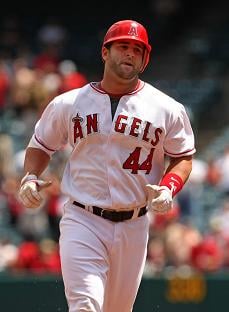 |
| Mike Napoli |
But I digress. There are those who say LaRussa is throwing his bullpen coach under the bus. One St. Louis columnist quoted someone in the Cardinals’ bullpen as saying LaRussa’s account "is not what happened."
But even if I give LaRussa the benefit of the doubt, I’m not buying his story. This is the World Series. This is the time when you wear both a belt and suspenders. The crowd noise/bullpen issue probably wasn’t much of a concern in the blowout Game 3, but I’m betting it was there in Game 4, which the Rangers also won. I have to believe that LaRussa meets with all his coaches after each game to discuss issues/problems and what can be done to address them. If the crowd noise was that much of an issue, it should have been discussed after Game 4 and addressed then.
But back to my "belt and suspenders" comment. Even if the noise wasn’t discussed, LaRussa, if he’s the genius who thinks of all angles like we’ve been led to believe, should have come up with a simple plan, telling his bullpen coach: "When I call you, be sure to repeat what I’ve told you. If you don’t hear anything from me, it means I have hung up because you heard me correctly. If you still hear my voice, that means get out your cell phone because I’m about to text you."
But Napoli did more than hit the crucial double. I thought his signature play was in the ninth inning when Rangers closer Neftali Feliz hit Allen Craig on a 1-2 pitch bringing Albert Pujols, the best hitter in the game today, to the plate as the tying run. But Felix not only struck out Pujols on a 3-2 pitch, but Napoli gunned down Craig trying to advance to second for a double play to empty the bases. (Napoli also threw out Craig in the seventh with Pujols at the plate in what was later described as a botched hit-and-run called by Pujols, not the coaches.)
By the way, has anyone else noticed how the won-loss pattern in this World Series is mirroring the W-L pattern of the NBA championship series? When the Rangers win this Series in six, I can’t see anyone other than Napoli being named the Most Valuable Player.
Sunday, October 23, 2011
My Top 25 College Football Teams
Last week's rank in parenthesis
1. LSU 8-0 (2)
2. Alabama 8-0 (1)
3. Oklahoma State 7-0 (5)
4. Boise State 7-0 (4)
5. Stanford 7-0 (6)
6. Oklahoma 6-1 (3)
7. Oregon 6-1 (9)
8. Clemson 8-0 (8)
9. Kansas State 7-0 (10)
10. Texas A&M 5-2 (11)
11. Michigan State 6-1 (18)
12. Wisconsin 6-1 (7)
13. South Carolina 6-1 (13)
14. Virginia Tech 7-1 (15)
15. Arkansas 6-1 (12)
16. Michigan 6-1 (14)
17. Southern California 6-1 (New)
18. Arizona State 5-2 (20)
19. Houston 7-0 (23)
20. Nebraska 6-1 (16)
21. Georgia 5-2 (22)
22. Penn State 7-1 (19)
23. Texas Tech 5-2 (New)
24. Texas 4-2 (21)
25. Notre Dame 4-3 (24)
Dropped Out: West Virginia, Auburn
1. LSU 8-0 (2)
2. Alabama 8-0 (1)
3. Oklahoma State 7-0 (5)
4. Boise State 7-0 (4)
5. Stanford 7-0 (6)
6. Oklahoma 6-1 (3)
7. Oregon 6-1 (9)
8. Clemson 8-0 (8)
9. Kansas State 7-0 (10)
10. Texas A&M 5-2 (11)
11. Michigan State 6-1 (18)
12. Wisconsin 6-1 (7)
13. South Carolina 6-1 (13)
14. Virginia Tech 7-1 (15)
15. Arkansas 6-1 (12)
16. Michigan 6-1 (14)
17. Southern California 6-1 (New)
18. Arizona State 5-2 (20)
19. Houston 7-0 (23)
20. Nebraska 6-1 (16)
21. Georgia 5-2 (22)
22. Penn State 7-1 (19)
23. Texas Tech 5-2 (New)
24. Texas 4-2 (21)
25. Notre Dame 4-3 (24)
Dropped Out: West Virginia, Auburn
Saturday, October 22, 2011
Available on DVD: “Bride Flight”
 |
| Waldemar Torenstra and Anna Drijver in Bride Flight |
The film introduces its principals midflight into a historic air race from Europe to the Antipodes. The human cargo on the Dutch plane includes women bound for Wellington to meet their fiances, hence the movie’s title.
There is the flirty Esther (Anna Drijver), a fashion designer who has lost her family in Nazi concentration camps. There is the sensible Marjorie (Elise Schaap), already planning how many children she will have. And there is the shy Ada (Karina Smulders), a voluptuous blonde who catches the eye of Frank (Waldemar Torenstra), a farmer who has lost his family — Dutch colonials in Indonesia — in Japanese concentration camps.
The beauty of the actors and the ravishing landscape of New Zealand goes a long way to make Ben Sombogaart’s sudsy film so eminently watchable. But it’s fair to say that, despite an indiscretion or three, the characters don’t develop much beyond our first impressions.
Still, one should never discount the appeal of pretty people in pretty places. This, even though Bride Flight’s plot is reminiscent of the hoary 1950 women’s film Three Secrets.
Like that film, Bride Flight is schmaltz with illicit sex. For men of a certain age, there’s the added attraction of ample female nudity. For women of a certain age, there’s the bonus of Frank, played by Torenstra, a handsome hunk of Gouda, maturing into Rutger Hauer.
Thursday, October 20, 2011
Want more representation on the council? Then vote!
 I’m sorry, but I have absolutely no sympathy with Hispanic activists demanding another seat on the Dallas City Council when the Hispanic community doesn’t participate in the electoral process. For whatever reason, Hispanics don’t vote proportionately to their population. Some say much of the Hispanic population in the city is too young, below the voting age. That could be true. Others say much of the population is illegal and can’t vote. That could be true also. I would also argue that recent Republican efforts to depress voting by minorities — namely the requirement to show photo identification — will accomplish exactly what these racists want.
But representation should be based on voting strength. In its latest redistricting effort, the City Council created one district with a 75 percent Hispanic population. The activists claim a Hispanic can’t win in this district and they are probably right. But that’s not the fault of those drawing the map. I can’t see the Justice Department agreeing with the argument that a district that is 75 percent Hispanic is a non-Hispanic district.
Instead of wearing ridiculous T-shirts and protesting at City Hall, former city councilman and head activist Domingo Garcia should be initiating voter education programs and registration drives among his constituency. Initiate grassroots get-out-the-vote campaigns. Recruit talented Hispanic leaders such as Domingo’s wife and Delia Jasso, place them before this now-educated and voter-savvy constituency and keep getting them elected.
The recently redistricted city council map contains four districts with a majority Hispanic population: District 1 with 74.19%; District 2 with 56.1%; District 5 with 65.57%; and District 6 with 64.55%. African-Americans have only three districts in which they are a population majority and one of them is by the slimmest of margins: District 4 with 59.36%; District 7 with 50.76%; and District 8 with 60.57%. Yet, according to all the "experts," African-Americans are guaranteed four seats on the City Council. Why? Because African-Americans know they will send enough voters to the polls to win a seat (District 3) in which they comprise 45.19% of the population. Yet Hispanics claim they can’t win District 1. That’s their fault, not the demographers’.
But now the Hispanic activists are yelling for five council seats, something even Garcia, who was on the redistricting committee, couldn’t figure out how to accomplish and remain with the voting population guidelines for each district. The Hispanic population is too geographically dispersed to create a fifth district and have that district pass Justice Department muster. In four other districts in which they are not a majority — districts 3, 4, 7, and 9 — Hispanics comprise at least a third of the population and I’m betting those numbers will increase.
The seats are out there for the taking. But the way democracy works is quite simple: the one with the most votes wins.
Tuesday, October 18, 2011
No. 1 on my Must See list
 |
| Alexander Payne |
Monday, October 17, 2011
My Top 25 College Football Teams
Last week's rank in parenthesis
1. Alabama 7-0 (1)
2. LSU 7-0 (3)
3. Oklahoma 6-0 (2)
4. Boise State 6-0 (4)
5. Oklahoma State 6-0 (5)
6. Stanford 6-0 (7)
7. Wisconsin 6-0 (6)
8. Clemson 7-0 (9)
9. Oregon 5-1 (10)
10. Kansas State 6-0 (17)
11. Texas A&M 4-2 (21)
12. Arkansas 5-1 (11)
13. South Carolina 6-1 (15)
14. Michigan 6-1 (8)
15. Virginia Tech 6-1 (25)
16. Nebraska 5-1 (19)
17. West Virginia 5-1 (18)
18. Michigan State 5-1 (New)
19. Penn State 6-1 (22)
20. Arizona State 5-2 (14)
21. Texas 4-2 (16)
22. Georgia 5-2 (24)
23. Houston 6-0 (New)
24. Notre Dame 4-2 (20)
25. Auburn 5-2 (New)
Dropped Out: Georgia Tech, Illinois, Baylor
1. Alabama 7-0 (1)
2. LSU 7-0 (3)
3. Oklahoma 6-0 (2)
4. Boise State 6-0 (4)
5. Oklahoma State 6-0 (5)
6. Stanford 6-0 (7)
7. Wisconsin 6-0 (6)
8. Clemson 7-0 (9)
9. Oregon 5-1 (10)
10. Kansas State 6-0 (17)
11. Texas A&M 4-2 (21)
12. Arkansas 5-1 (11)
13. South Carolina 6-1 (15)
14. Michigan 6-1 (8)
15. Virginia Tech 6-1 (25)
16. Nebraska 5-1 (19)
17. West Virginia 5-1 (18)
18. Michigan State 5-1 (New)
19. Penn State 6-1 (22)
20. Arizona State 5-2 (14)
21. Texas 4-2 (16)
22. Georgia 5-2 (24)
23. Houston 6-0 (New)
24. Notre Dame 4-2 (20)
25. Auburn 5-2 (New)
Dropped Out: Georgia Tech, Illinois, Baylor
Thursday, October 13, 2011
Available on DVD: “True Legend”
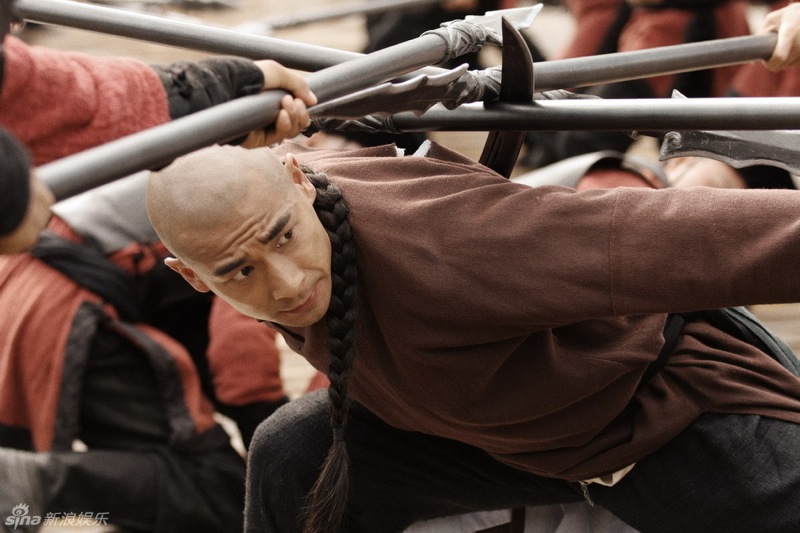 |
| Vincent Zhao in True Legend |
True Legend stars Vincent Zhao as a warrior who retires from the battlefield to get married and start a wu shu school, but has his idyllic life shattered when his adopted brother Andy On beats him nearly to death — with the help of his literally poisonous "Five Venom Fists" technique — and kidnaps his son. So Zhao retreats into alcoholism and despair, until his industrious wife (Zhou Xun) and his imaginary master, "The God Of Wu Shu," whip him into shape for a rematch. Then the movie tacks on a bizarre third act that sees Zhao using his "drunken fighting" technique in a series of matches staged for decadent colonialists. True Legend weaves the fantastical, the technique-driven, and the historical sides of kung fu movies together with wire-work. It practically defines the term "warmed over."
Still, anyone who fondly remembers the kung-fu glory years will likely get a nostalgic rush from True Legend, and not just because of the cameo appearances by Michelle Yeoh, Gordon Liu, and David Carradine. The movie is wall-to-wall action, and features an eye-popping image roughly every 10 minutes: warriors clinging to the underside of a hanging bridge with claw-gloves; On’s veins and skin turning blackish-purple with venom; On’s body-armor, which is made of gold and has been sewn into his skin; Zhao using a sword to deflect the tiny flying daggers thrown by the costumed "Iron Twins"; Zhao fighting on a slippery rail by a rushing river; and so on. True Legend’s heart is in the right place. It’s just the body that’s weary.
Republican serial killers

So what do Congressional Republicans do? They kill the legisation and offer nothing in its place.
Fourteen million Americans are out of work, wages are falling, poverty is rising and many are forecasting the coming of a second recession. And the Republicans, who care only about removing the first black President from office, refuse to do anything to help. Their only response is "cut regulations and everything will magically be okay." Cutting regulations does nothing to put people back to work. It’s all talk and no action.
This is criminal.
The last Republican presidential debate — the one earlier this week in New Hampshire — was supposed to be about the state of the economy, but what they debated had nothing to do with the economy that exists in America today. There was Herman Cain’s absolutely asinine "9-9-9" plan that would do nothing but cut taxes for the rich, increase them for the poor, raise the national debt and have absolutely no effect on economic growth.
Then along comes Gov. Hair who is so out of touch he thinks the entire country should have an environment as dirty as we have here in Texas by proposing to drill oil wells on every acre in America.
Was Obama’s bill the panacea to completely rescue the economy to the level it was before No. 43 and his Wall Street cadre destroyed it? No, but at least it was a solid plan combining a middle-class tax break and public works projects that would have created actual jobs and given the economy a needed jolt.
I just hope the American people are smart enough to realize who is coming up with solid plans to revive the economy and who is systematically killing them.
Tuesday, October 11, 2011
Who is this guy?
I’m not that familiar with former Rep. Alan Grayson of Florida, but I must admit I really love this guy after watching this clip of him explaining Occupy Wall Street. See for yourself.
Major Oscar predictions for the second week in October
All predictions lifted alphabetically.
PICTURE
The Artist
The Descendants
Extremely Loud and Incredibly Close
J. Edgar
The Help
Midnight in Paris
Moneyball
War Horse
DIRECTOR
Woody Allen, Midnight in Paris
Clint Eastwood, J. Edgar
Michael Hazanabvicus, The Artist
Alexander Payne, The Descendants
Steven Spielberg, War Horse
ACTOR
George Clooney, The Descendants
Leonardo DiCaprio, J. Edgar
Jean Dujardin, The Artist
Gary Oldman, Tinker Tailor Soldier Spy
Brad Pitt, Moneyball
ACTRESS
Glenn Close, Albert Nobbs
Viola Davis, The Help
Meryl Streep, The Iron Lady
Charlize Theron, Young Adult
Michelle Williams, My Week With Marilyn
SUPPORTING ACTOR
Kenneth Branaugh, My Week With Marilyn
Jim Broadbent, The Iron Lady
Albert Brooks, Drive
Christopher Plummer, Beginners
Max Von Sydow, Extremely Loud and Dangerously Close
SUPPORTING ACTRESS
Bérénice Bejo, The Artist
Jessica Chastain, The Tree of Life
Vanessa Redgrave, Coriolanus
Octavia Spencer, The Help
Shailene Woodley, The Descendants
PICTURE
The Artist
The Descendants
Extremely Loud and Incredibly Close
J. Edgar
The Help
Midnight in Paris
Moneyball
War Horse
DIRECTOR
Woody Allen, Midnight in Paris
Clint Eastwood, J. Edgar
Michael Hazanabvicus, The Artist
Alexander Payne, The Descendants
Steven Spielberg, War Horse
ACTOR
George Clooney, The Descendants
Leonardo DiCaprio, J. Edgar
Jean Dujardin, The Artist
Gary Oldman, Tinker Tailor Soldier Spy
Brad Pitt, Moneyball
ACTRESS
Glenn Close, Albert Nobbs
Viola Davis, The Help
Meryl Streep, The Iron Lady
Charlize Theron, Young Adult
Michelle Williams, My Week With Marilyn
SUPPORTING ACTOR
Kenneth Branaugh, My Week With Marilyn
Jim Broadbent, The Iron Lady
Albert Brooks, Drive
Christopher Plummer, Beginners
Max Von Sydow, Extremely Loud and Dangerously Close
SUPPORTING ACTRESS
Bérénice Bejo, The Artist
Jessica Chastain, The Tree of Life
Vanessa Redgrave, Coriolanus
Octavia Spencer, The Help
Shailene Woodley, The Descendants
Monday, October 10, 2011
Voter fraud is a myth
From the editorial pages of today's New York Times:
It has been a record year for new legislation designed to make it harder for Democrats to vote — 19 laws and two executive actions in 14 states dominated by Republicans, according to a new study by the Brennan Center for Justice. As a result, more than five million eligible voters will have a harder time participating in the 2012 election.
Of course the Republicans passing these laws never acknowledge their real purpose, which is to turn away from the polls people who are more likely to vote Democratic, particularly the young, the poor, the elderly and minorities. They insist that laws requiring government identification cards to vote are only to protect the sanctity of the ballot from unscrupulous voters. Cutting back on early voting, which has been popular among working people who often cannot afford to take off from their jobs on Election Day, will save money, they claim.
None of these explanations are true. There is almost no voting fraud in America. And none of the lawmakers who claim there is have ever been able to document any but the most isolated cases. The only reason Republicans are passing these laws is to give themselves a political edge by suppressing Democratic votes.
The most widespread hurdle has been the demand for photo identification at the polls, a departure from the longstanding practice of using voters’ signatures or household identification like a utility bill. Seven states this year have passed laws requiring strict photo ID to vote, and similar measures were introduced in 27 other states. More than 21 million citizens — 11 percent of the population — do not have government ID cards. Many of them are poor, or elderly, or black and Hispanic and could have a hard time navigating the bureaucracy to get a card.
In Kansas, the secretary of state, Kris Kobach (who also wrote Arizona’s notorious anti-immigrant law), pushed for an ID law on the basis of a list of 221 reported instances of voter fraud in Kansas since 1997. Even if that were true, it would be an infinitesimal percentage of the votes cast during that period, but it is not true.
When The Wichita Eagle looked into the local cases on the list, the newspaper found that almost all were honest mistakes: a parent trying to vote for a student away at college, or signatures on mail-in ballots that didn’t precisely match those on file. In one case of supposed “fraud,” a confused non-citizen was asked at the motor vehicles bureau whether she wanted to fill out a voter registration form, and did so not realizing she was ineligible to vote.
Some of the desperate Republican attempts to keep college students from voting are almost comical in their transparent partisanship. No college ID card in Wisconsin meets the state’s new stringent requirements (as lawmakers knew full well), so the elections board proposed that colleges add stickers to the cards with expiration dates and signatures. Republican lawmakers protested that the stickers would lead to — yes, voter fraud.
Other states are beginning to require documentary proof of citizenship to vote, or are finding other ways to make it harder to register. Some are cutting back on programs allowing early voting, or imposing new restrictions on absentee ballots, alarmed that early voting was popular among black voters supporting Barack Obama in 2008. In all cases, they are abusing the trust placed in them by twisting democracy’s machinery to partisan ends.
It has been a record year for new legislation designed to make it harder for Democrats to vote — 19 laws and two executive actions in 14 states dominated by Republicans, according to a new study by the Brennan Center for Justice. As a result, more than five million eligible voters will have a harder time participating in the 2012 election.
Of course the Republicans passing these laws never acknowledge their real purpose, which is to turn away from the polls people who are more likely to vote Democratic, particularly the young, the poor, the elderly and minorities. They insist that laws requiring government identification cards to vote are only to protect the sanctity of the ballot from unscrupulous voters. Cutting back on early voting, which has been popular among working people who often cannot afford to take off from their jobs on Election Day, will save money, they claim.
None of these explanations are true. There is almost no voting fraud in America. And none of the lawmakers who claim there is have ever been able to document any but the most isolated cases. The only reason Republicans are passing these laws is to give themselves a political edge by suppressing Democratic votes.
The most widespread hurdle has been the demand for photo identification at the polls, a departure from the longstanding practice of using voters’ signatures or household identification like a utility bill. Seven states this year have passed laws requiring strict photo ID to vote, and similar measures were introduced in 27 other states. More than 21 million citizens — 11 percent of the population — do not have government ID cards. Many of them are poor, or elderly, or black and Hispanic and could have a hard time navigating the bureaucracy to get a card.
In Kansas, the secretary of state, Kris Kobach (who also wrote Arizona’s notorious anti-immigrant law), pushed for an ID law on the basis of a list of 221 reported instances of voter fraud in Kansas since 1997. Even if that were true, it would be an infinitesimal percentage of the votes cast during that period, but it is not true.
When The Wichita Eagle looked into the local cases on the list, the newspaper found that almost all were honest mistakes: a parent trying to vote for a student away at college, or signatures on mail-in ballots that didn’t precisely match those on file. In one case of supposed “fraud,” a confused non-citizen was asked at the motor vehicles bureau whether she wanted to fill out a voter registration form, and did so not realizing she was ineligible to vote.
Some of the desperate Republican attempts to keep college students from voting are almost comical in their transparent partisanship. No college ID card in Wisconsin meets the state’s new stringent requirements (as lawmakers knew full well), so the elections board proposed that colleges add stickers to the cards with expiration dates and signatures. Republican lawmakers protested that the stickers would lead to — yes, voter fraud.
Other states are beginning to require documentary proof of citizenship to vote, or are finding other ways to make it harder to register. Some are cutting back on programs allowing early voting, or imposing new restrictions on absentee ballots, alarmed that early voting was popular among black voters supporting Barack Obama in 2008. In all cases, they are abusing the trust placed in them by twisting democracy’s machinery to partisan ends.
© 2011 New York Times
My Top 25 College Football Teams
Last week's rank in parenthesis. AP rank in brackets
1. Alabama 6-0 (1) [2]
2. Oklahoma 5-0 (2) [3]
3. LSU 6-0 (3) [1]
4. Boise State 5-0 (4) [5]
5. Oklahoma State 5-0 (5) [6]
6. Wisconsin 5-0 (8) [4]
7. Stanford 5-0 (6) [7]
8. Michigan 6-0 (9) [11]
9. Clemson 6-0 (7) [8]
10. Oregon 4-1 (11) [9]
11. Arkansas 5-1 (16) [10]
12. Georgia Tech 6-0 (12) [12]
13. Illinois 6-0 (17) [16]
14. Arizona State 5-1 (22) [18]
15. South Carolina 5-1 (15) [15]
16. Texas 4-1 (10) [22]
17. Kansas State 5-0 (23) [17]
18. West Virginia 5-1 (20) [13]
19. Nebraska 5-1 (13) [14]
20. Notre Dame 4-2 (19) [NR]
21. Texas A&M 3-2 (25) [21]
22. Penn State 5-1 (New) [NR]
23. Baylor 4-1 (New) [20]
24. Georgia 4-2 (New) [NR]
25. Virginia Tech 5-1 (21) [19]
Dropped Out: Florida, Auburn, Washington
1. Alabama 6-0 (1) [2]
2. Oklahoma 5-0 (2) [3]
3. LSU 6-0 (3) [1]
4. Boise State 5-0 (4) [5]
5. Oklahoma State 5-0 (5) [6]
6. Wisconsin 5-0 (8) [4]
7. Stanford 5-0 (6) [7]
8. Michigan 6-0 (9) [11]
9. Clemson 6-0 (7) [8]
10. Oregon 4-1 (11) [9]
11. Arkansas 5-1 (16) [10]
12. Georgia Tech 6-0 (12) [12]
13. Illinois 6-0 (17) [16]
14. Arizona State 5-1 (22) [18]
15. South Carolina 5-1 (15) [15]
16. Texas 4-1 (10) [22]
17. Kansas State 5-0 (23) [17]
18. West Virginia 5-1 (20) [13]
19. Nebraska 5-1 (13) [14]
20. Notre Dame 4-2 (19) [NR]
21. Texas A&M 3-2 (25) [21]
22. Penn State 5-1 (New) [NR]
23. Baylor 4-1 (New) [20]
24. Georgia 4-2 (New) [NR]
25. Virginia Tech 5-1 (21) [19]
Dropped Out: Florida, Auburn, Washington
Saturday, October 8, 2011
Available on DVD: “Incendies”
 |
| Lubna Azabal and Melissa Desormeaux-Poulin in Incendies |
The source material is the play Scorched (2003) by Wajdi Mouawad, a Lebanese-born theater artist who emigrated to Quebec and then Montreal. Brilliantly adapted, his play has become the Oscar-nominated drama Incendies by writer-director Denis Villeneuve. Both play and movie owe a debt to the Sophoclean tragedy Oedipus Rex. It’s a testament to the effectiveness of Mouawad’s story, taking place in a Montreal-like city as well as an unnamed Middle Eastern country resembling Lebanon, that once you’re hit with its enormous, logic-stretching revelation you’re emotionally prepared to follow these people anywhere.
Incendies is no mere riff on a Greek mainstay. It is its own entity, delicate and fierce. Already I’ve risked making it sound like homework. It’s not; it’s an enthralling drama of survival. It begins simply, with a meeting of siblings. Grown twins Jeanne and Simon are told by a notary that their late mother’s will requires them to deliver two sealed and utterly mysterious envelopes, one to their father (presumed dead but very much alive), the other to a brother they didn’t realize existed.
This requires a trip to the homeland of their mother, Nawal. Her early life was never much discussed. Incendies gradually illustrates the reasons, weaving an intricate web of flashbacks, revealing more and more about Nawal’s early pregnancy, her promise to track down her lost son, her involvement in one corner of her country’s latest civil war. There is only one way Nawal’s children can learn enough to become whole beings: by digging further and further back into the past.
Guiding the performances with an unerring hand, director Villeneuve removes all traces of schematics from Incendies. Two performances are key. As Jeanne, the haunting Melissa Desormeaux-Poulin is an ideal audience-identification figure; even when the narrative events practically goad the performers into overstatement, she’s there, quietly, holding back enough to pull us forward into every scene to which her character pays witness. Nawal is portrayed by Lubna Azabal, who conceals so much behind war-ravaged eyes, she rivets the attention even without saying a word.
As a six-year-old boy, playwright Mouawad witnessed a brutal attack by Christian militiamen on a bus carrying unarmed Palestinians outside Beirut. This was in retaliation for the unprovoked killing of a Christian outside a church. The revenge slaughter ignited a full-scale war. In Incendies, a variation on this horrific scene becomes a piece of Nawal’s puzzle. Every detail in the scene, as arranged and framed by Villeneuve (note the selectively unrealistic use of sound), adds to the impact without cheapening the visceral effect. Human beings do things like this every day, somewhere. Not monsters. Men.
The original play runs three hours, and its English-language version often groans under the weight of its brand of poetic language. The movie, nearly an hour shorter, moves like water and uses only as many words as needed to keep us oriented (some of the past/present jumps risk confusion) and ever-more compelled by Nawal’s destiny. The opening shot of Incendies shows a group of boys getting their heads shaved, presumably by those training them for a life of terrorism. One boy’s eyes, fixed on the camera, are not easy to forget. Nothing in this remarkable drama is.
Subscribe to:
Comments (Atom)